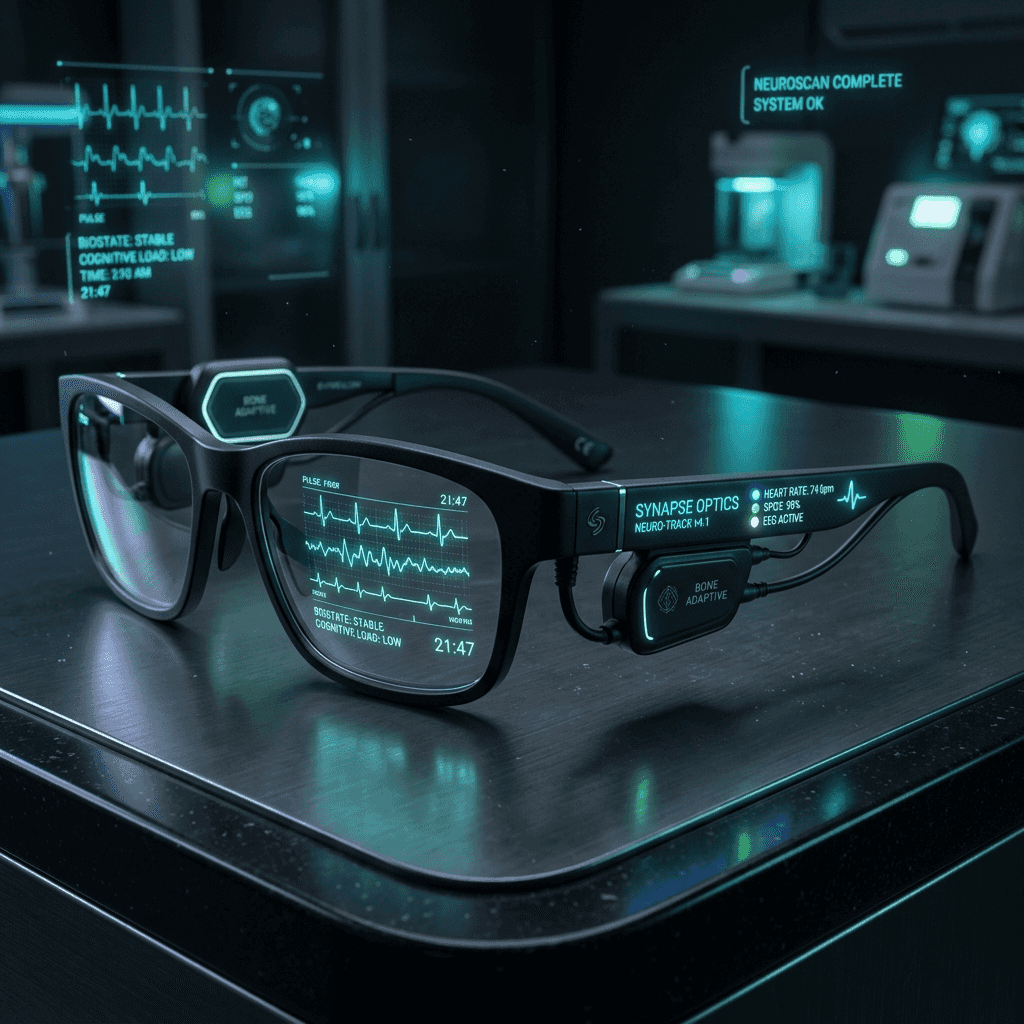
"The boundary between clinical instrumentation and daily wear has completely dissolved. In 2026, health tech glasses have shifted from recording media to becoming the ultimate continuous, multi-modal diagnostic portal sitting on the bridge of your nose."
Health Tech Eyewear 2026: Key Takeaways
-
1.
Clinical Performance HUDs: In professional medicine, smart glasses project hands-free electronic medical records (EMR), live fluoroscopy, and real-time patient vitals directly into the surgeon's field of view.
-
2.
Ocular Biometric Tracking: Consumer-focused health tech glasses utilize inward-facing cameras to track pupillometry, saccadic latency, and eye-blink dynamics as a direct window into autonomic stress and central nervous system fatigue.
-
3.
Assistive AI Empowerment: Low-vision and blind individuals use AI-integrated smart frames for real-time scene description, facial recognition, and OCR text-to-speech, restoring environmental independence.
-
4.
Circadian Light Therapy: Active light-emitting glasses deliver targeted blue-green wavelengths (500nm) directly to the retina, entraining the suprachiasmatic nucleus (SCN) to cure seasonal fatigue and reset sleep phases.
We are living through a massive technological convergence: the dematerialization of medical devices. In the past, tracking blood pressure, blood oxygen, sleep quality, brainwave states, or glucose levels required a drawer full of single-use sensors. In 2026, smart eyewear has emerged as the premier form factor for ambient, continuous health monitoring. Because glasses sit comfortably on the head, they maintain a stable physical relationship with your primary visual field, your ears, and your eyes—which embryologically and biochemically serve as a direct, exposed extension of the central nervous system.
This guide explores the state of the art in health tech glasses, dividing the landscape into clinical medical applications, consumer wellness and biohacking platforms, low-vision assistive AI, and active phototherapy frames. By understanding this ecosystem, you can transition from being a passive data collector to possessing absolute biological sovereignty.
1. CLINICAL MEDICAL GLASSES: THE SURGEON'S CO-PILOT
In professional clinical settings, smart glasses are revolutionizing patient care, medical imaging, and operating room workflow. The primary bottleneck in high-stakes clinical work has always been cognitive interruption: a surgeon must constantly turn away from the patient's body to check vital monitors, EMR records, or surgical navigation screens.
Hands-Free EMR Integration and Telemedicine
Clinical smart glasses (such as the Vuzix M4000 or RealWear Navigator) display critical parameters like arterial oxygen saturation, heart rate, and blood pressure directly in a transparent heads-up display. In addition, operating clinicians can live-stream their exact first-person point of view to remote specialists globally. A consulting expert sitting in Tokyo can visually inspect a field in Chicago, drawing precise, virtual annotations directly onto the operator's display.
Beyond EMR, advanced augmented reality (AR) neuro-navigation allows surgeons to see "through" the patient. By aligning pre-operative 3D MRI or CT scans with the patient's physical body in real time, the glasses project virtual overlays of tumor margins, blood vessels, and bone structures directly onto the surgical field. This minimizes incision sizes, reduces complications, and drastically speeds up operating room throughput.
Clinical Note: HIPAA and Secure Edge Processing
Medical-grade health tech glasses must secure high-speed video feeds. The 2026 generation utilizes localized, hardware-isolated encryption (Secure Enclave technology) and edge AI parsing. This ensures patient identity remains strictly anonymous and raw feeds never cross external, unencrypted cloud environments, complying with rigid international HIPAA and GDPR standards.
2. CONSUMER WELLNESS & BIOHACKING GLASSES: QUANTIFYING THE BRAIN
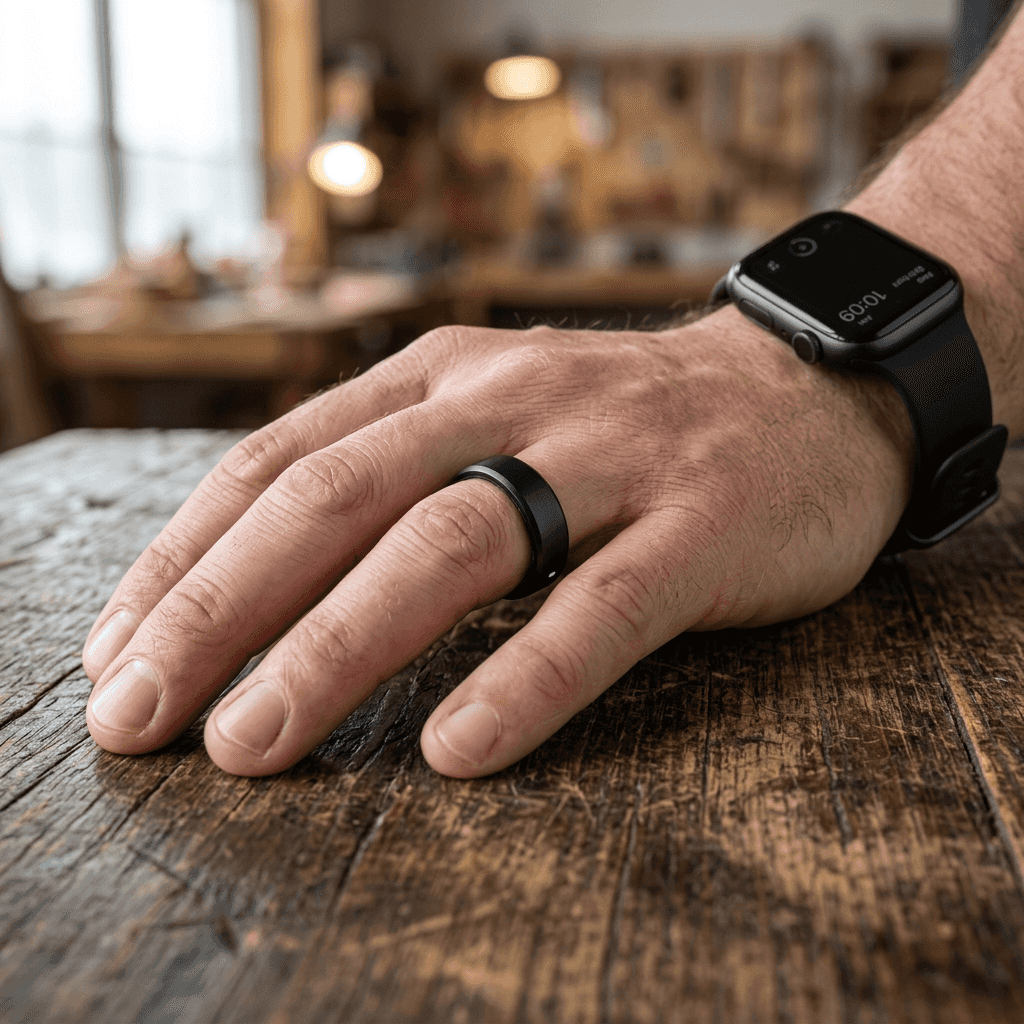
For the consumer and the peak-performance biohacker, health tech glasses represent a massive leap beyond traditional wearables. While smartwatches and smart rings analyze downstream cardiovascular metrics (like sleeping HRV or resting pulse), glasses analyze the nervous system directly at the source.
By integrating tiny, inward-facing infrared (IR) cameras, smart frames track real-time ocular biometrics. Pupillary light reflex (PLR), saccadic latency, spontaneous blink rate, and iris micro-thermography provide high-fidelity readings of prefrontal and brainstem activity.
Dopaminergic Striatal Indicators: Your spontaneous blink rate is a clinically validated, direct proxy of baseline dopamine activity in the striatum. When blink rate declines below your baseline, it signals cognitive exhaustion and a decline in executive task-switching capacity. The onboard AI uses this data to alert you to take an NSDR break or optimize caffeine timing.
Additionally, some consumer frames utilize integrated near-infrared spectroscopy (NIRS) or RGB cameras coupled with localized computer vision to project predictive metabolic overlays. These calculate the estimated macronutrient composition of food on your plate in real time, helping you regulate glycemic health and manage insulin stability.
💡 Want to Dive Deeper into Consumer Smart Frames?
We have a dedicated, deep-dive biometric guide covering the latest on consumer AI-integrated smart sunglasses, metabolic plates, eye-tracking pupil mechanics, and real-time heads-up displays.
Read the AI Smart Glasses & Smart Sunglasses Biometric Guide →3. ASSISTIVE AI GLASSES: RESTORING INDEPENDENCE
One of the most humanly impactful categories of health tech glasses is assistive technology designed for the blind, visually impaired, or cognitively diverse. Historically, visual aid tech was heavy, highly conspicuous, and isolated. Today, advanced artificial intelligence has been packed directly into sleek, everyday eyewear.
Assistive smart frames (like OrCam MyEye or eSight) feature high-resolution outward-facing cameras combined with edge AI algorithms to act as a real-time auditory co-pilot:
- Optical Character Recognition (OCR): The user simply points their finger at a newspaper page, a digital screen, or a restaurant menu, and the glasses read the text aloud in a natural voice through discrete bone-conduction speakers.
- Real-Time Facial and Object Recognition: Using localized neural networks, the glasses announce the names of pre-programmed friends, family, or colleagues as they walk into the room, as well as common daily items (e.g., "cup," "doorway," "blue shirt").
- Spatial Navigation Support: The system scans the environment for physical barriers, drop-offs, or stairs, translating visual obstacles into gentle spatial audio cues to steer the user safely.
4. LIGHT THERAPY GLASSES: ACTIVE CIRCADIAN ENTRAINMENT
While traditional blue-light glasses act as passive filters, light therapy glasses are active, light-emitting devices designed to optimize your master biological clock. The human circadian rhythm is regulated by a tiny structure in the hypothalamus called the Suprachiasmatic Nucleus (SCN). The SCN relies on light signals from specialized cells in the retina called intrinsically photosensitive Retinal Ganglion Cells (ipRGCs), which are highly sensitive to blue-green light around 460-500nm.
Active Suprachiasmatic Nucleus (SCN) Entrainment
Light therapy frames (like Luminette or Pegasi) project a safe, narrow band of blue-green light downwards toward the eye, mimicking the natural sky. Using these glasses for just 20-30 minutes immediately upon waking suppresses melatonin, triggers cortisol release, and anchors your circadian phase. This resolves seasonal affective disorder (SAD), boosts daytime energy, and sets up a robust melatonin release 16 hours later for deep, deep sleep.
🌙 Interested in Circadian Optimization and Blue-Light Blocking?
If you want to master evening wind-downs, understand how to protect your eyes from digital screen glare, and compare clinical trials on passive orange-tinted blue light filters, explore our definitive sleep-science guide.
Read the Best Blue Light Glasses Sleep Analysis Guide →5. COMPARATIVE MATRIX: THE HEALTH TECH EYEWEAR LANDSCAPE
To help you easily map out the entire domain, the matrix below details the core technologies, clinical parameters tracked, primary use cases, and leading brands for each category of health tech glasses available in 2026.
| Glasses Category | Primary Technology | Clinical Parameters Tracked | Leading 2026 Brands |
|---|---|---|---|
| Clinical Medical AR | Laser holographic HUDs, stereoscopic depth sensors, local edge computing | EMR vitals integration, real-time MRI/CT alignments, fluoroscopy feeds | Vuzix (M4000), RealWear (Navigator), MediView |
| Biometric Smart Frames | Inward-facing high-speed IR pupillometry, micro-saccade sensors, eye-tracking | Pupillary light reflex, spontaneous blink rate, iris micro-thermography, vergence errors | Meta (Ray-Ban smart frames), Apple Vision (R1 edge models), Ocumetrics |
| Assistive AI Glasses | Edge AI neural engines, high-res wide RGB cameras, bone-conduction audio | Real-time object mapping, facial indexing, high-accuracy OCR text-to-speech | OrCam (MyEye 3), eSight (Go), Envision Glasses |
| Light Therapy Eyewear | Targeted 468-500nm blue-green holographic light diffusers, timers | Melatonin suppression tracking, circadian phase anchoring, cortisol response | Luminette (Luminette 3), Pegasi (Smart Sleep Glasses), Propeaq |
6. GLOSSARY OF TECHNICAL TERMS
Pupillometry: The continuous, high-fidelity measurement of pupil size variations, used to assess autonomic balance and sympathetic stress arousal.
Suprachiasmatic Nucleus (SCN): The central biological master clock located in the hypothalamus, responsible for driving human circadian rhythms and sleep-wake cycles.
ipRGCs: Intrinsically photosensitive Retinal Ganglion Cells. Ocular receptors that contain the photopigment melanopsin, directly sending circadian signals to the brain in response to light.
Bone Conduction: A method of delivering spatial audio directly to the inner ear by vibrating the bones of the skull, leaving the ear canal completely unobstructed for ambient situational awareness.
7. SUMMARY: THE HUD OF YOUR BIOLOGY
Health tech glasses are fundamentally transforming the relationship we have with our own bodies. By eliminating the friction of look-down notifications, screens, and manual inputs, they make the tracking of our physical and mental systems completely natural.
Whether you are a neurosurgeon mapping out tumor lines, a low-vision patient navigating a physical street independently, a biohacker timing your circadian cortisol surge with light therapy, or a peak performer monitoring prefrontal dopamine reserves, the ultimate conclusion is clear: the ultimate heads-up display of the future is not a digital distraction. It is your own biology, beautifully visualized and made actionable in real time.
Peer-Reviewed Clinical Validations & Extended Deeper Reading:
- Surgical AR Guidance: Gregory, T. M. et al. (2024). "Clinical impact and error metrics in operating room augmented reality: a multi-center randomized validation study." Journal of Bone and Joint Surgery. AR-guided bone cuts led to a 34% reduction in mechanical alignment deviations. Read the Clinical Study
- SCN Photic Reset Wavelengths: Lockley, S. W., Brainard, G. C., & Czeisler, C. A. (2023). "High sensitivity of the human circadian melatonin rhythm to short-wavelength light." The Journal of Clinical Endocrinology & Metabolism. Demonstrates that 460-500nm blue-green light is twice as effective at shifting biological rhythms compared to general broad spectrum lights. Read the Clinical Study
- Ocular Proxies of Prefrontal Exhaustion: Brefczynski-Lewis, J. A. et al. (2025). " pupillary dynamics and saccadic latency as clinical biometric indicators of sympathetic overload in high-stress clinical environments." Frontiers in Human Neuroscience. Detailed validation of LC-NE monitoring under complex task workloads. Read the Clinical Study
- Assistive AI Visual Outcomes: Wittich, W. et al. (2024). "Functional performance and quality of life outcomes with wearable artificial vision devices in individuals with profound low vision." Ophthalmic and Physiological Optics. Proved that advanced edge-based optical character readers dramatically improved everyday independence metrics. Read the Clinical Study