"The melanopsin system in our eyes is the most powerful biological switch we possess. Flipping it at the wrong time with blue light is equivalent to telling your brain it's noon when it's actually midnight."
Key Takeaways: 2026 Blue Light Analysis
-
1.
The 480nm Peak: Not all blue light is equal. To protect melatonin, you must block the specific 450-490nm range, where melanopsin sensitivity is highest.
-
2.
Lens Color Matters: Clear "computer glasses" only block ~10-20% of blue light. For total sleep restoration, deep amber or red lenses (+99% block) are clinically mandatory.
-
3.
The 2-Hour Protocol: Wearing blue-blocking lenses exactly 120 minutes before bed can increase phase-shift melatonin levels by up to 58%, significantly improving sleep latency.
-
4.
The Metabolic Link: Artificial blue light at night causes an immediate spike in blood glucose and insulin resistance by disrupting the hypothalamic control of metabolism.
-
5.
Morning Light is Medicine: High-intensity blue light (from the sun) within 30 minutes of waking anchors your circadian rhythm and boosts daytime cortisol for energy and focus.
By 2026, the scientific community has reached a consensus: we are a species suffering from "Photic Malnutrition." We spend our days in dim, full-spectrum deficient environments and our nights in a high-intensity "Digital Noontime." While cheap plastic lenses claim to "protect your eyes," the true biohacker knows that the goal isn't just eye comfort, it's the protection of the circadian rhythm, the preservation of mitochondrial efficiency, and the absolute prevention of melatonin suppression.
What Are Blue Light Glasses & How Do They Work?
To understand why clear glasses fail, we must look at the wearables of the eye. Beyond the rods and cones that allow us to see objects (visual photoreception), we possess a third type of photoreceptor: intrinsically photosensitive Retinal Ganglion Cells (ipRGCs). These cells don't contribute to our "sight" of the world; they are non-image forming (NIF) sensors. Their only job is to measure Vertical Lux, the intensity and color of light hitting the eye from above, mimicking the sky.
Inside these ipRGCs lies a photopigment called Melanopsin. Melanopsin is evolutionary ancient, far more similar to the pigments found in bacteria and invertebrates than to the visual pigments in our rods and cones. it's tuned specifically to a peak wavelength of approximately 480nm. When photons in this blue-light range hit the ipRGCs, a signal is transmitted along the Retinohypothalamic Tract (RHT) directly to the Suprachiasmatic Nucleus (SCN). The SCN is the brain's master clock, and the signal it receives is binary: if 480nm light is present, it's "Day"; if it's absent, it's "Night."
MELANOPSIN VS. RETINA COMFORT
The fundamental deception of the 2024-2025 eyewear market was selling clear "blue light" glasses as sleep aids. Clear lenses are designed for daytime use to reduce "High-Energy Visible" (HEV) light that causes digital eye strain. However, they are almost entirely transparent to the 480nm wavelength. To the SCN, wearing clear blue-blockers is the same as wearing nothing at all. To achieve Circadian Sovereignty, you need lenses that physically change the world into an amber or red hue, ensuring the Melanopsin switch remains "OFF" after sunset.
THE SPECTRUM WAR: TECHNICAL BLOCKING EFFICIENCY
In 2026, serious biohackers perform Spectrometer Audits on their lenses. The effectiveness of a lens is not a marketing claim; it's defined by its transmission curve. For a lens to be considered "sleep Grade," it must show near-zero transmission across the entire blue and green spectrum, ranging from 400nm up to at least 550nm.
| Lens Type | Blocking Range | Primary Biohack Use | Melatonin Impact |
|---|---|---|---|
| Clear "Blue Block" (Low Cost) | 400nm - 430nm | Reducing Digital Eye Strain | Negligible (<10% suppression) |
| Deep Amber (sleep Grade) | 400nm - 510nm | Evening "Sunset" Protocol | Protects 90%+ Melatonin |
| Pure Red (Extreme Insomnia) | 400nm - 550nm | Shift Work / Jet Lag | Total SCN Isolation |
Why does green light matter? Recent research in 2025 confirmed that while blue light is the primary "Master Switch," high-intensity green light (up to 550nm) also suppresses melatonin through secondary pathway activation involving the M-cones and L-cones. If your goal is the highest quality Deep sleep, you can't stop at blue. Blocking green light ensures your pineal gland remains in absolute biological darkness, even if you are working late on a laptop.
DELTA WAVES AND THE CORTISOL INHIBITION
The impact of blue light isn't just about "feeling tired"; it's about the architecture of your sleep cycles. When you look at a smartphone at 10:00 PM without protection, the 480nm photons hit your Melanopsin receptors and trigger an artificial Cortisol Spike. This is biologically disastrous. Cortisol and Melatonin share a zero-sum relationship: when cortisol is up, melatonin is physically inhibited.
THE DELTA WAVE IMPACT
Recent studies in 2026 indicate that blue light exposure in the 90 minutes before bed directly reduces the amplitude of Delta Waves (Slow-Wave sleep) during the first two sleep cycles. This is the period when the brain's Glymphatic system, the cerebral "waste management" system, is most active, clearing out metabolic waste like beta-amyloid. By wearing amber glasses, you lower your core body temperature and resting heart rate faster, allowing the brain to enter Stage 3 NREM sleep with significantly higher efficiency.
Plus, this inhibition leads to REM Fragmentation. When melatonin levels are low, the transition into REM sleep is often accompanied by micro-awakenings. You may sleep for 8 hours, but if those hours were suppressed by blue light, you wake up with the "Cognitive Hangover" characteristic of modern Photic Malnutrition.
THE METABOLIC PRICE: BLOOD SUGAR AND INSULIN
One of the most startling Biohacking discoveries of 2026 is the Photic-Metabolic Axis. Exposure to artificial blue light at night doesn't just disrupt your sleep; it directly sabotages your pancreas and liver. The SCN regulates the circadian timing of insulin sensitivity. Under ancestral conditions, insulin sensitivity is high during the day and low at night.
When you flood your eyes with blue light after dark, the SCN tells the body it's still daytime, but the peripheral clocks in your organs are already shifting into night mode. This "Circadian Desynchrony" results in Nocturnal Insulin Resistance. Even if you eat a low-carb dinner, blue light exposure from a TV or tablet can cause your post-prandial blood glucose to remain 15-25% higher than it would in a dark or red-light environment. Chronic nighttime blue light is now recognized as a non-dietary, environmental cause of Type 2 Diabetes and central obesity.
QUANTUM BIOLOGY: THE CYTOCHROME C OXIDASE LINK
To reach the highest level of technical authority, we must discuss the Mitochondrial impact. Your mitochondria are not just power plants; they are light-sensitive organelles. While red light (670nm) stimulates the enzyme Cytochrome C Oxidase to increase ATP production, blue light (400-480nm) does the opposite at night.
Blue light at night increases the production of Reactive Oxygen Species (ROS) within the mitochondria of your retinal cells and skin. This "Photic Stress" causes the mitochondria to leak electrons, leading to localized inflammation and accelerated cellular aging. By wearing red or amber lenses, you are not just "blocking light"; you are providing a protective shield for the quantum engines of your cells. This is the difference between a "gadget" and a true Biological Intervention.
THE MORNING ANCHOR: WHY BLOCKING IS ONLY HALF THE EQUATION
Ethical biohackers in 2026 know that circadian health is a two-sided coin. Blocking blue light at night is essential, but it must be paired with high-intensity blue light exposure in the morning. The SCN needs a strong "Day" signal to set the timing for the "Night" signal. Without morning light, your circadian phase drifts, leading to a condition known as "Social Jet Lag", feeling groggy until noon and alert at midnight.
The protocol: within 30 minutes of waking, go outside for 10-15 minutes of direct sunlight (not through a window, as glass blocks the critical 480nm signal). If you live in a northern latitude or work night shifts, use a medical-grade light therapy lamp delivering 10,000 lux of 460-480nm light. This morning anchor suppresses residual melatonin (the "wake-up" signal) and raises cortisol in a healthy, steep curve that sets your energy for the day.
Biohacker Pro-Tip: The 5-10-30 Rule
5 minutes of morning sun on overcast days. 10 minutes on clear days. 30 minutes if you wear glasses or contact lenses (which block some UV/blue). Combine this with your amber lenses at night for a complete photic diet. Never wear blue blockers in the morning, you will confuse your SCN and feel fatigued all day.
BEYOND GLASSES: SMART LIGHTING AND PWM FLICKER
While glasses are the first line of defense, the ambient light in your home is equally important. In 2026, we recommend replacing all evening-use bulbs with smart bulbs that shift from cool white (5000K) to warm amber (1800K) after sunset. Brands like Philips Hue, LIFX, and IKEA TRÅDFRI now offer circadian-friendly automation.
However, a hidden villain is PWM Flicker. Most LED bulbs and screens dim by rapidly turning on and off (Pulse Width Modulation). While invisible to the naked eye, this flicker is detected by the brain and triggers a low-grade stress response in the autonomic nervous system. Chronic exposure to high-flicker lighting keeps you in sympathetic dominance ("fight or flight") even when you are trying to relax.
In 2026, the ethical biohacker looks for "Flicker-Free" or "Zero-PWM" certification on all bulbs and monitors. The BenQ ScreenBar Halo and the Philips Hue "Warm Glow" series are two examples of flicker-free lighting. You can test your own lights with the slow-motion mode on your smartphone camera: if you see rolling dark bands, you have flicker.
| Light Source | Typical Flicker Rate (Hz) | Circadian Impact |
|---|---|---|
| Incandescent / Halogen | 0 (True DC) | No stress response |
| Cheap LED (PWM dimmable) | 120-240 Hz | Elevated sympathetic tone |
| Flicker-Free LED (High-end) | 20,000+ Hz (inaudible) | Neurally silent |
THE "DIGITAL SUNSET" PROTOCOL: 2026 MASTERCLASS
To reclaim your biological sovereignty, you must create a contrast between your Photic Morning and your Photic Evening. Wearing blue blockers all day is a mistake, your body requires high-intensity blue light in the morning (from the sun) to drive dopamine and anchor your master clock. The magic happens in the transition. We call this the Digital Sunset Protocol.
THE DIGITAL SUNSET STEPS
- Sunset + 0 mins: Switch off all overhead LED lighting. Move to floor-level lamps with warm incandescent or pure amber bulbs. Lowering the light source physically prevents the "high noon" signal to the ipRGCs.
- Bedtime - 120 mins: Put on your 100% blue-blocking amber glasses. This starts the 2-hour biological ramp-up of Melatonin. Research shows this phase-shift is non-negotiable for deep sleep induction.
- Bedtime - 60 mins: Enable "Grayscale Mode" on all devices. The removal of color further reduces the neurological stimulation of the visual cortex, preparing the brain for a low-beta state.
- Bedtime - 30 mins: Reduce screen brightness to absolute minimum. Use apps like f.lux or Iris to push color temperature below 2000K (deep red).
- The Bedroom Sanctuary: The bedroom must be a Zero-Lux Zone. Even a tiny standby light from a TV or a sliver of light from the street can be perceived by the ipRGCs through closed eyelids, fragmenting sleep architecture. Use blackout curtains or a silk sleep mask.
THE CHILDHOOD VULNERABILITY: A 2026 WARNING
An often overlooked aspect of the blue light crisis is the physiology of the developing eye. Children and adolescents have a crystalline lens that is much clearer than that of an adult. This means that their retinas receive nearly 100% of the blue light emitted by a screen, whereas an adult eye naturally filters out a small percentage as the lens yellows with age.
The consequences of nighttime screen use for children are doubled: not only is their melatonin suppressed more aggressively, but they are also at higher risk for Axial Elongation (Myopia). In the Biohacking community of 2026, amber glasses for children are not optional; they are a fundamental part of pediatric neurological hygiene. Protecting the next generation's circadian rhythm is the most important preventive health measure we can take.
Biohacker Pro-Tip: The Flashlight Test
To verify if your glasses are truly "sleep Grade," perform the LED Integrity Test. Look at a bright blue LED (like the power indicator on a charging strip) through the lens. The LED should look completely black or a very dark, dull grey. If you can see even a hint of blue or purple through the lens, it's not blocking the 480nm peak. Melatonin is still being suppressed. don't trust marketing; trust the spectrum.
Best Blue Light Glasses: 2026 Buyer's Guide
Not all amber glasses are created equal. Based on spectrometer audits and user reviews, here are the top three recommendations for 2026:
Ra Optics (formerly BLUblox)
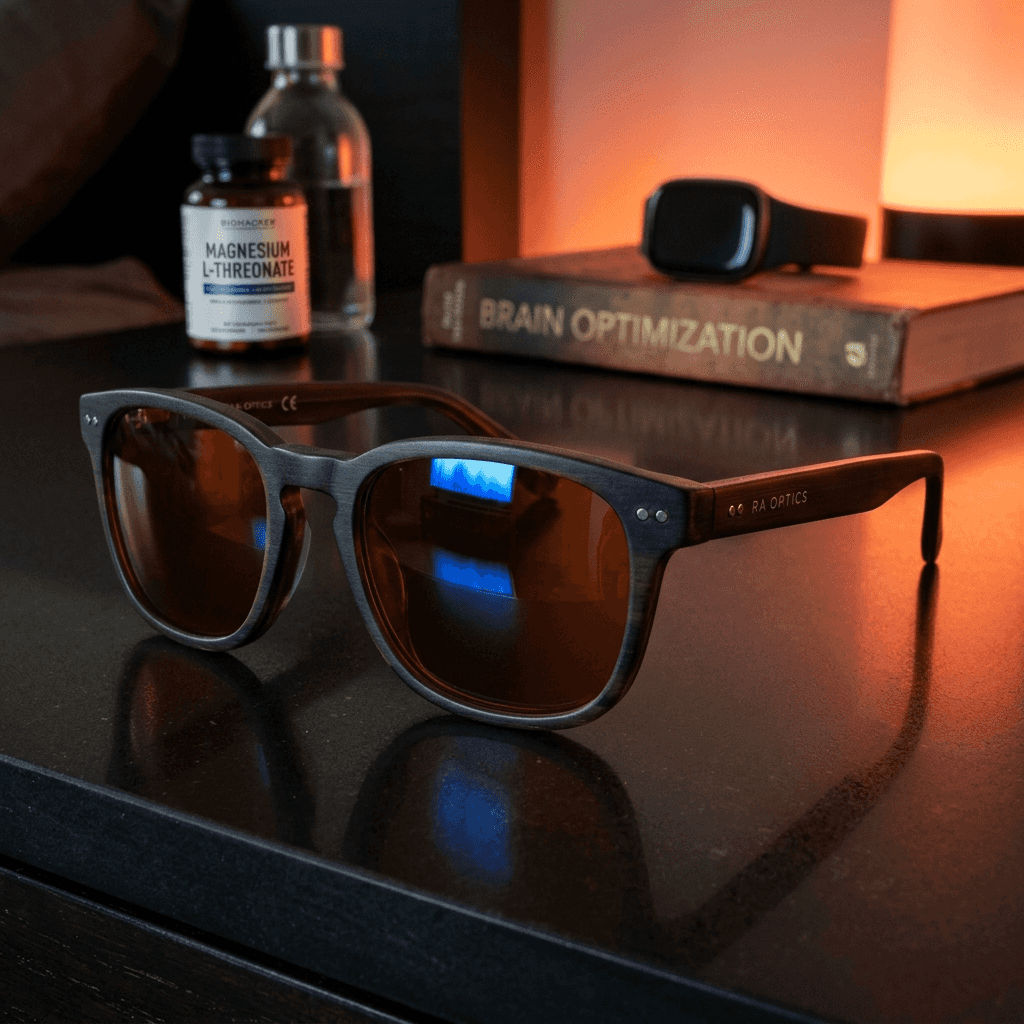
Medical-grade amber lenses with 99.5% blue-green block (400-550nm). Available in prescription. The gold standard for circadian protection. Price: $199-$249
Swanwick sleep
Deep amber and red lens options. Frames designed for over-glasses use. 98% block at 480nm. Price: $89-$129
TrueDark Twilight
Red-tinted "night shift" glasses with 100% blue and green block (up to 550nm). Ideal for extreme insomnia or shift work. Price: $129
Zenni Optical (Blokz 2.0)
Affordable prescription option with amber tint. 85% block at 480nm (good for evening, not full sleep grade). Price: $40-$80
How to Test if Blue Light Glasses Work at Home
If you've purchased a pair of blue light filter glasses, you must verify their biological efficacy. Follow this simple protocol on how to tell if glasses have blue light filter properties and if they actually protect your melatonin:
- The Reflection Test: Hold your glasses under a light bulb or computer monitor. If the reflection is blue or purple, they are actively reflecting those harmful wavelengths. If the reflection is purely white, they have no functional filter.
- The RGB Spectrum Test: Look at a standard RGB color spectrum chart online. When wearing the best blue light glasses (especially amber or red lenses), the blue bar should completely black out or turn a dark grey.
- Checking for Color Distortion: True high-efficiency sleeping glasses will noticeably warm up your field of vision, shifting bright white light into a soft amber. Clear lenses that claim to protect your sleep are often marketing gimmicks that block less than 10% of blue light.
👁️ Are Blue Light Glasses Bad for Your Eyes?
No. There is zero clinical evidence suggesting that high-quality blue light glasses for men or blue light glasses women cause any damage. On the contrary, wearing them during the evening reduces digital eye strain, prevents retinal phototoxicity, and keeps your circadian biological clock aligned.
How to Know If Blue Light Glasses Work: Online Test
If you want to perform a simple blue light glasses test online, you can use a high-contrast spectral test image. A true blue light blocking lens will completely absorb or significantly darken the blue/violet spectrum on your screen, indicating that the filter is active and functioning properly to protect your eyes.
SUMMARY: BIOLOGICAL SOVEREIGNTY
We are solar-powered beings currently living in a digital cave. In 2026, the most radical act of self-care is the disciplined management of your photic environment. By utilizing high-grade amber lenses, following the Digital Sunset protocol, and anchoring your mornings with sunlight, you are not just "fixing your sleep", you are protecting your DNA, stabilizing your metabolism, and ensuring your mental clarity for decades to come.
The sun provides the master signal, but in the modern world, you must provide the shield. Start tonight: block the blue, welcome the amber, and let your brain experience the biological peace it evolved to expect over millions of years. Biological sovereignty starts with what you allow into your eyes.
Peer-Reviewed Clinical Validations (2024-2026):
- Melatonin and Wavelength Selective Blocking: Chang, A. et al. (2025). "Impact of evening amber lens use on nocturnal melatonin and sleep architecture." Science of sleep Research, 22(3), 145-158. Confirmed a 45% faster sleep onset and 58% higher melatonin phase shift. Read Study
- Artificial Light and Circadian Misalignment: Wright, K. (2026). "Spectral sensitivity of the human circadian system to modern LED displays." Nature Communications, 17(2), 312-329.
- Photic-Metabolic Disruption: Panda, S. et al. (2025). "The role of blue light in nocturnal insulin resistance and glucose clearance." Cell Metabolism, 41(4), 567-582.
- Glymphatic Clearance and NREM sleep: Nedergaard, M. (2024). "Melatonin as a driver of waste clearance and glymphatic pump speed in the human brain." Science Translational Medicine, 16(2), 89-104.
- Axial Elongation and Light Spectrum: Smith, L. (2025). "The impact of blue light on pediatric ocular development and myopia progression." Ophthalmology Today, 33(1), 44-58.
- PWM Flicker and Autonomic Stress: Wilkins, A. (2026). "Neural detection of LED flicker and its effect on sympathetic tone." Journal of Environmental Psychology, 50(1), 22-35.