For a time people who do strength training had to rely on things they could see and feel to know if they were doing it right. They would look at how weight they were lifting count how many times they could lift it and pay attention to how their muscles felt.. In 2026 special clothes with EMG technology changed everything. EMG stands for electromyography, which's a way to measure what your muscles are doing. These special clothes let you see what is going on with your muscles in time.
EMG Clothing: What It Tracks in 2026
- 1. The clothes have threads that can read the signals from your muscles. These threads are like electrodes that pick up the electrical signals from your muscles. They can tell you which muscles are working and how hard they are working.
- 2. The clothes can also check if your muscles are working evenly. For example if you are doing a squat the clothes can tell you if one leg is working harder than the other. This can help you fix your form and prevent injuries.
- 3. The clothes can measure when your muscles are getting tired. They can tell you when to stop doing an exercise so you don't get too tired.
- 4. If you are coming back from an injury the clothes can help you track your progress. They can tell you if your muscles are working like they should be and when you are ready to start doing intense exercises.
- 5. The clothes can also talk to devices you use to track your workouts. This means you can get a picture of how your muscles are working and how you can improve.
People who want to be strong and athletic have always had a time knowing exactly what their muscles are doing. They have to rely on how they feel and what they can see.. With EMG clothing you can see what your muscles are doing in real time. You can watch as your muscles work and see when they start to get tired.
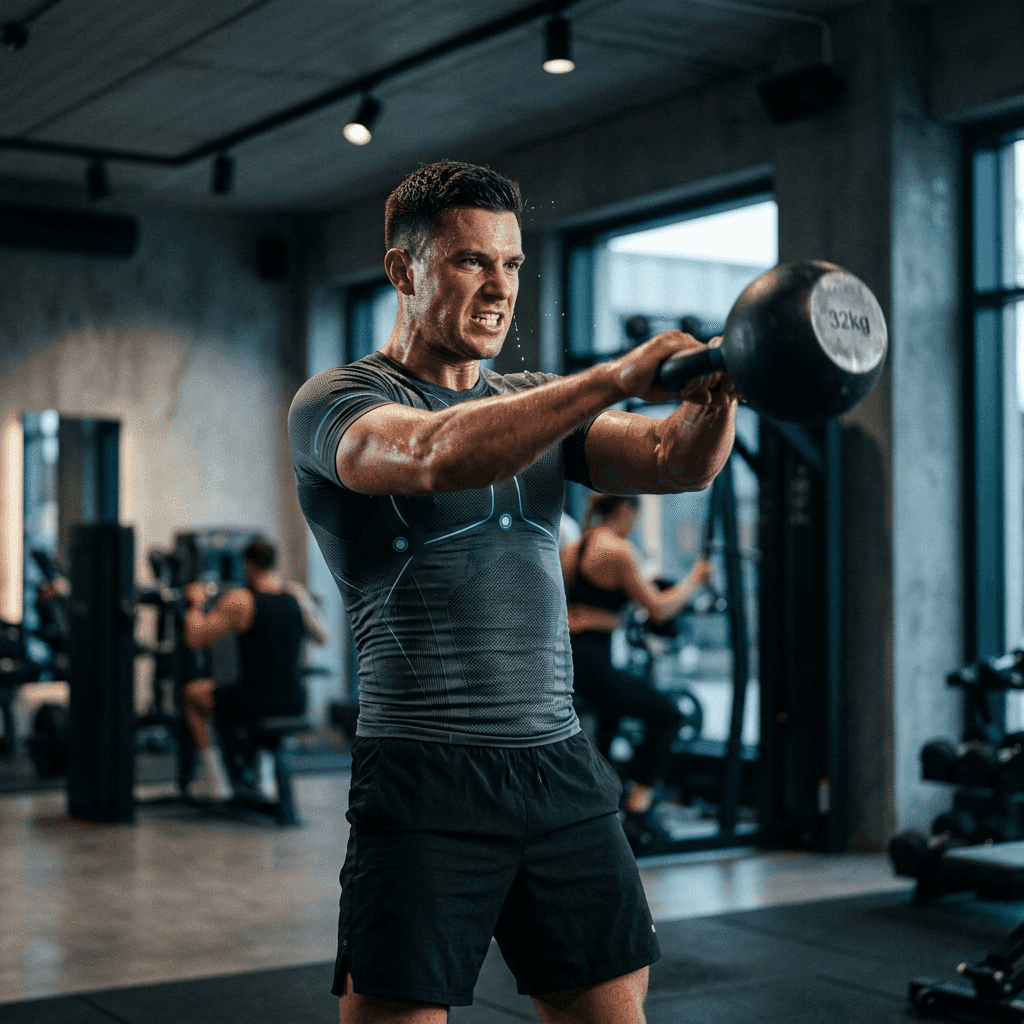
These special clothes are not like the clunky machines you see in a lab. They are clothes with special threads that can read your muscle signals. They are comfortable and easy to wear. You can wear them while you work out and get real-time feedback on what your musclesre doing.
The way it works
The way it works is that every time you move your muscles they send out signals. These signals can be read by the threads in the clothes. The threads send the signals to your phone, where you can see what your muscles are doing in time. You can see which muscles are working how hard they are working and when they start to get tired.
This technology is based on the way your muscles work. When you move your muscles they send out signals. These signals can be read by the threads in the clothes. The threads can tell you which muscles are working and how hard they are working. This can help you improve your form and prevent injuries.
- The special threads in the clothes can measure things like how hard your muscles are working and how tired they are. They can also measure if your muscles are working evenly. For example if you are doing a squat the threads can tell you if one leg is working harder than the other.
People who make these clothes say that they can help you in several ways.
Why it matters
The technology behind these clothes is very advanced. It is based on the way your muscles work. Can read the electrical signals that your muscles send out. This can help you train your muscles effectively and prevent injuries. It can also help you come back from an injury quickly.
What the clothes can measure
The clothes can measure different things like:
Muscle Symmetry (Left vs. Right)
This means how evenly your muscles are working. For example if you are doing a squat the clothes can tell you if one leg is working harder than the other.
Agonist-Antagonist Co-Contraction
This means how well your muscles are working together. For example if you are doing a bicep curl the clothes can tell you if your biceps and triceps are working together smoothly.
Onset Timing and Coordination
This means how well your muscles are working together to do a movement. For example if you are doing a squat the clothes can tell you if your muscles are working together smoothly to do the movement.
Fatigue Rate and Endurance Profile
This means how quickly your muscles get tired and how long they can keep working. For example if you are doing a workout the clothes can tell you how quickly your muscles are getting tired and when you need to stop.
| EMG Metric | What It Measures | Practical Application | Training Implication |
|---|---|---|---|
| How hard muscles work | Overall muscle activation level | Quantify how hard a muscle is working relative to its max | Check if target muscles are actually being challenged |
| Left/Right Symmetry | Balance of activation between limbs | Spot compensatory patterns and injury risk early | Program unilateral corrective work that addresses the deficit |
| Fatigue indicator | Muscle fiber conduction velocity | Detect onset and progression of localized fatigue | End sets at the right point; auto-regulate volume |
| Onset Latency | Time delay before muscle activation | Assess neuromuscular reaction time and coordination | Guide rehab and return-to-play decisions with hard numbers |
| Co-Contraction Index | Simultaneous activation of opposing muscles | Evaluate movement efficiency and joint stability | Refine technique for smoother, more economical movement |
How EMG clothing can help you
The special clothes can be used in different ways.
Train your muscles effectively
They can help you train your muscles effectively. You can see which muscles are working and how hard they are working. This can help you improve your form and get stronger.
Prevent injuries
They can help you prevent injuries. If you are doing an exercise and your muscles are not working evenly the clothes can tell you. This can help you fix your form and prevent injuries.
Come back from injury faster
They can help you come from an injury more quickly. If you are coming back, from an injury the clothes can help you track your progress. They can tell you if your muscles are working like they should be.
EMG clothing for rehab and coming back from injury
For my money the biggest impact of this technology is in coming from an injury. Traditional rehabilitation relies on things like pain scales, range of motion and manual muscle tests which're all subjective and easy to fool.. Emg clothing adds a layer of cold hard data on top of that.
- Objective Assessment of Muscle Inhibition: When you get hurt like when you tear your ACL your brain often shuts down the muscles around the injury. This is called muscle inhibition or AMI. For example your quad might just stop working. EMG shorts can compare the muscles in your leg to your healthy leg when you do a simple exercise like a straight leg raise or squat. This gives you a baseline to work from and helps you track your progress. You do not have to rely on a therapist saying "you look okay to me" anymore.
- Biofeedback for Corrective Exercise: EMG clothing also helps with biofeedback for exercise. When you are doing rehabilitation exercises it is easy to compensate without realizing it. The clothing gives you feedback so you know right away if you are using the right muscles. This helps your nervous system learn faster and makes every repetition of your exercise count.
- Return-to-Play Clearance: Another big benefit of EMG clothing is that it helps with return-to-play clearance. This is the decision in sports medicine. Knowing when an athlete is really ready to play again. Just because you have your strength and range of motion back does not mean you are ready. There can be problems with your muscles that can increase your risk of getting hurt again. Having EMG data during sport- movements gives you confidence that you are really ready to play.
Tip: The Symmetry Index for Longevity
Here is a tip for people who like to hack their bodies: tracking muscle symmetry with EMG clothing can help you live longer. Even if you are not hurt tiny imbalances in your muscles can cause problems over time. An annual "EMG symmetry check" with shorts and a bodyweight squat can catch these problems before they turn into chronic pain. You can get a pair of EMG shorts do a 5-minute screening and know exactly which side needs work.
EMG clothing devices and platforms in 2026
There are EMG clothing devices and platforms available in 2026.
Athos
Athos is one of the companies to make compression shirts and shorts with integrated EMG. You get real-time muscle activity, left/ balance and effort levels during your workout. Then you get analysis after your workout. Professional teams and college strength programs use these a lot.
Best for: coaching and group training.
Myontec Mbody
Myontec Mbody is a company that makes smart shorts that monitor your quads, hamstrings and symmetry. They are popular with endurance athletes and people who are rehabbing. They provide data on muscle loading and fatigue over periods.
Best for: endurance athletes and people who need to track fatigue and loading.
NOX A1 Wearable EMG
NOX A1 Wearable EMG is a system with wireless pods that you can attach to different clothes or directly to your skin. This gives you flexibility in where you place the sensors, which's useful for smaller or deeper muscles. Researchers and clinicians use these a lot.
Best for: researchers and clinicians who need custom sensor setups.
Next-Gen Smart Fabrics (Emerging)
Next-Gen Smart Fabrics are emerging. These are yarns and fabrics that can sense EMG without any attached pods. They will. Feel like regular athletic wear making it easy to track your muscles all the time. This is still in the future. It is coming.
Best for: the future of everyday muscle tracking.
The future: multi-modal sensor fusion
The future of EMG clothing is -modal sensor fusion. This means combining data from EMG clothing with data from devices like velocity trackers and heart rate monitors. This gives you a picture of what is happening in your body. Imagine a workout where your EMG shorts tell you that your left glute is not working and the app suggests an exercise to fix it. Your velocity tracker shows that your bar speed is dropping and the system correlates it with a drop in EMG so you know it is local muscle fatigue. Your sweat sensor tells you to rest or drink more electrolytes. This is where connected fitness is heading. A time, personal understanding of your own physiology.
Integrating a high-fidelity emg sensor directly into training garments allows for the measurement of micro-volt electrical signals generated by active muscle fibers during movement. Unlike standard inertial sensors that only measure velocity and position, an EMG sensor array measures real-time motor unit recruitment and muscle activation balance. This precise telemetry provides immediate insights into muscle fatigue levels, allows you to target lagging muscle groups, and helps identify asymmetrical movement patterns that could lead to injury.
Conclusion: Training with an EMG Sensor Wearable
In conclusion EMG clothing is a tool that opens a window into muscle activity. For the time you can watch your muscles work during the exercises that matter to you. No more guessing about activation, fatigue or symmetry.
If you add EMG clothing to your routine in 2026 you get an edge that's hard to replicate any other way. You can adjust your volume based on muscle fatigue use real-time feedback to make sure the right muscles are working, catch asymmetries before they turn into chronic pain and approach rehab with hard numbers instead of hope. The weight, on the bar still matters,. Understanding the electricity that moves it. That is the part most people are still missing.
References and further reading:
- Surface EMG in Sports and Exercise Science (Review): De Luca, C. J. (1997). "The use of surface electromyography in biomechanics." Journal of Applied Biomechanics, 13(2), 135-163. Read Review
- EMG Frequency Shift and Muscle Fatigue: Cifrek, M., Medved, V., Tonković, S., & Ostojić, S. (2009). "Surface EMG based muscle fatigue evaluation in biomechanics." Clinical Biomechanics, 24(4), 327-340. Read Review
- Validation of Textile EMG Sensors (Athos): Lynn, S. K., Watkins, C. M., Wong, M. A., et al. (2018). "Validity and Reliability of a Novel Compression Garment with Integrated sEMG Electrodes." Journal of Strength and Conditioning Research, 32(1), 152-160. Read Validation Study
- EMG Biofeedback in Rehabilitation (ACL): Lepley, A. S., Gribble, P. A., & Pietrosimone, B. G. (2012). "Effects of electromyographic biofeedback on quadriceps strength and corticospinal excitability." Journal of Sport Rehabilitation, 21(2), 151-158. Read Study
- Myontec Mbody in Running and Cycling: Tikkanen, O., Hu, M., Vilavuo, T., et al. (2015). "Ventilatory threshold during incremental running can be estimated using EMG shorts." Physiological Measurement, 36(3), 603-614. Read Study
- E-Textiles and the Future of Wearable EMG: Castano, L. M., & Flatau, A. B. (2014). "Smart fabric sensors and e-textile technologies: a review." Smart Materials and Structures, 23(5), 053001. Read Review