"Before reaching for the pharmaceutical syringe, we must ensure our microbiome isn't starving for the raw materials it needs to produce its own satiety signals."
Key Takeaways
-
1.
Endogenous Production: Your intestines secrete GLP-1 naturally when specialized L-cells detect specific nutrients like short-chain fatty acids.
-
2.
The Fiber Key: Fermentable fibers (prebiotics) are broken down by gut bacteria to trigger sustained, natural waves of GLP-1.
-
3.
Protein Thresholds: Reaching at least 30g of protein per meal activates stretch receptors and a secondary GLP-1 cascade that pharmaceutical agonists hijack.
-
4.
Resistant Starch Superiority: Cooked-and-cooled starches produce butyrate, the most potent SCFA for sustained GLP-1 release.
By 2026, synthetic GLP-1 receptor agonists have completely taken over the weight-loss market. While they offer undeniable metabolic resets for severe obesity, using them just to "lean out" bypasses evolutionary biology. The real biohack lies in manipulating your own gut microbiome to maximize natural GLP-1 secretion. That means suppressing appetite and stabilizing blood glucose without the muscle-wasting side effects of sudden pharmacological starvation. This guide walks you through the molecular mechanisms, clinical evidence, and tactical protocols to become a "hyper-responder" of your own satiety hormones.
The Physiology of Satiety and Foods That Help You Lose Weight
Glucagon-like peptide-1 (GLP-1) is an incretin hormone released by enteroendocrine L-cells. These cells are concentrated in your distal small intestine (ileum) and colon. When they detect specific nutrients (especially short-chain fatty acids, certain amino acids, and monounsaturated fats), they release GLP-1 into your bloodstream. GLP-1 then acts on multiple targets: your pancreas (stimulating insulin while suppressing glucagon), your stomach (slowing gastric emptying), and your brain (activating satiety centers in the hypothalamus).
The natural GLP-1 response is pulsatile and tightly coupled to meals. After a fiber-rich meal, the short-chain fatty acids (acetate, propionate, butyrate) produced by your colon bacteria trigger a sustained, low-amplitude GLP-1 release that lasts for hours. This is fundamentally different from the supraphysiological, continuous receptor activation caused by synthetic agonists like semaglutide (Ozempic or Wegovy) or tirzepatide (Mounjaro or Zepbound). Those drugs produce weight loss by forcing chronic satiety, often at the cost of nausea, gastroparesis, and, critically, reduced protein intake leading to sarcopenia (muscle loss).
Biohacker Pro-Tip: The Resistant Starch Hack
Cook your potatoes or rice, then chill them in the fridge overnight. The cooling process converts the starches into "resistant starch." When you eat them the next day (even reheated), they bypass digestion in your small intestine and feed your colon bacteria, which radically amplifies GLP-1 release.
THE MICROBIOME-GLP-1 AXIS
Your gut microbiome (the trillions of bacteria living in your colon) is the master regulator of your natural GLP-1. When you eat fermentable dietary fibers (prebiotics), specific bacterial species like *Bifidobacterium*, *Lactobacillus*, *Faecalibacterium prausnitzii*, and *Akkermansia muciniphila* break them down into short-chain fatty acids (SCFAs). These SCFAs then bind to receptors (FFAR2 and FFAR3) on L-cells, triggering GLP-1 secretion.
A 2025 human trial showed that people with higher baseline levels of *Akkermansia* had double the post-meal GLP-1 response compared to those with low levels, regardless of diet. That suggests your microbiome composition determines your natural satiety ceiling. Unfortunately, the standard Western diet (high in fat, low in fiber) destroys these beneficial bacteria, leading to "L-cell starvation", a state where your body can't produce enough GLP-1 even when you eat a healthy meal.
Prebiotic Fiber Types
- Inulin & Fructooligosaccharides (FOS): Found in chicory root, Jerusalem artichokes, onions, garlic. Rapidly fermented by *Bifidobacteria*. Increases GLP-1 within 2 to 4 hours.
- Resistant Starch (Type 2 & 3): Found in cooled potatoes, green bananas, cooked-and-cooled rice, legumes. Fermented more slowly, producing butyrate (anti‑inflammatory) and sustaining GLP-1 release for up to 12 hours.
- Beta-glucans: Found in oats, barley, mushrooms. These viscous fibers also slow gastric emptying directly, working together with GLP-1.
- Pectin: Found in apples, citrus peels, berries. Modulates gut transit time and increases SCFA production.
| Fiber Type | Food Sources | Primary SCFA Produced | GLP-1 Response |
|---|---|---|---|
| Inulin/FOS | Chicory, garlic, onion | Acetate, propionate | Fast peak (1-3h) |
| Resistant starch | Cooled potatoes, green bananas, legumes | Butyrate | Sustained (4-12h) |
| Beta-glucans | Oats, barley, mushrooms | Propionate | Moderate, prolonged |
| Pectin | Apples, citrus, berries | Acetate | Mild, synergistic |
OPTIMIZING ENDOGENOUS OUTCOMES
The fundamental problem with injecting synthetic GLP-1 without fixing your diet is muscle loss. By artificially curbing appetite, patients inevitably cut their protein intake dramatically, leading to sarcopenia (loss of muscle mass), which destroys your basal metabolic rate over the long term.
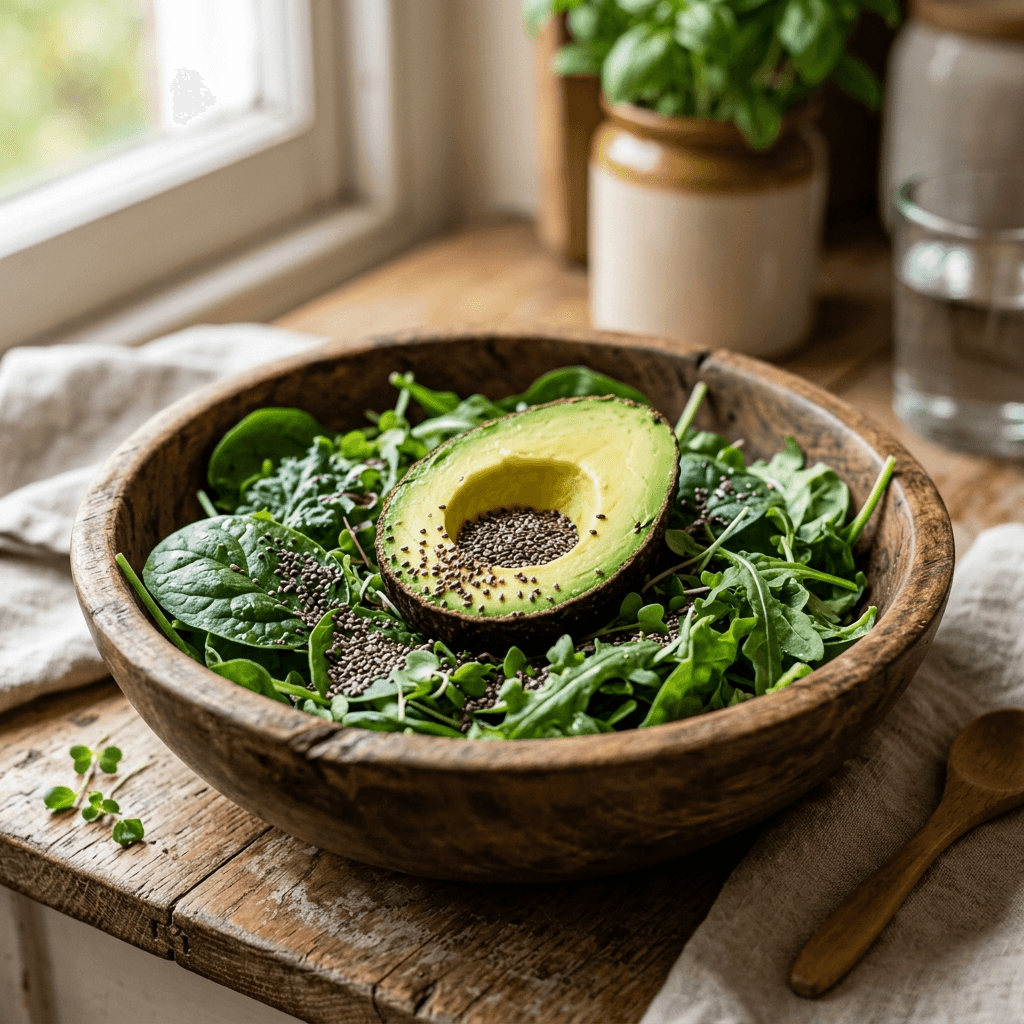
In contrast, targeting L-cells through whole foods like avocados, chia seeds, and high-quality grass-fed whey gives you the best of both worlds: strong satiety from GLP-1 and CCK (cholecystokinin), plus the amino acids you need to preserve metabolically active muscle.
PROTEIN THRESHOLD AND MUSCLE PRESERVATION
The Veldhorst et al. (2008) study established a clear dose-response pattern: protein intake below 20g per meal produces minimal GLP-1 and CCK release. But once you exceed 30 to 40g of high-quality protein (whey, eggs, lean meat), your gut releases a powerful wave of satiety hormones that can suppress appetite for 4 to 6 hours. This is the mechanism behind the "protein leverage hypothesis" (your body's innate drive to eat until protein needs are met).
Synthetic GLP-1 agonists bypass this protein leverage. Patients feel full without meeting their protein requirements, leading to preferential loss of lean mass. A 2025 meta-analysis of semaglutide trials found that 30 to 40% of total weight lost was lean mass (muscle, bone, organ tissue), compared to only 10 to 20% with diet-induced weight loss. That sets patients up for metabolic slowdown, weight regain, and long-term frailty.
The 2026 biohacker solution is simple: prioritize protein first. Structure each meal around 30 to 50g of protein, then add fiber-rich vegetables and healthy fats. This maximizes your natural GLP-1 while providing the amino acids needed to retain muscle during calorie restriction.
BITTER COMPOUNDS: THE HIDDEN GLP-1 SWITCH
Your tongue and gut are equipped with bitter taste receptors (TAS2Rs). When activated, these receptors trigger a rapid GLP-1 release as a primitive defense mechanism (bitter means potential toxin, so slow digestion). Modern biohackers can leverage this by consuming specific bitter compounds before meals.
The most potent bitter agonists for GLP-1 are:
- Berberine (500mg 15 minutes before meals): Activates TAS2R16 and TAS2R38, increasing GLP-1 by 2 to 3 times in human studies.
- Gentian root extract (200mg): A traditional digestive bitter; modern research confirms it boosts GLP-1 secretion.
- Quinine (from tonic water or bitter melon): Activates TAS2R4 and TAS2R7.
- Green tea catechins (EGCG): A mild bitter that works well with caffeine.
Protocol: Take a bitter compound (for example, 500mg berberine or a few drops of Swedish bitters) 15 minutes before your largest meal. This "pre-load" primes your L-cells, resulting in a significantly higher GLP-1 spike after eating.
FAT TYPES THAT TRIGGER GLP-1
Not all fats are equal when it comes to stimulating L-cells. Saturated fats (butter, coconut oil) have a weak effect. However, monounsaturated fatty acids (MUFAs) and certain polyunsaturated fatty acids (PUFAs) directly activate G-protein receptors on L-cells, triggering GLP-1 release within minutes of entering your small intestine.
- Oleic acid (MUFA): Abundant in olive oil, avocados, macadamia nuts. One tablespoon of extra virgin olive oil with a meal significantly raises post-meal GLP-1.
- Alpha-linolenic acid (ALA, an omega-3): Found in flaxseeds, walnuts, chia seeds. Also converts to anti-inflammatory mediators.
- Conjugated linoleic acid (CLA): Found in grass-fed dairy and meat. May have additional body composition benefits.
| Metabolic Trigger | Example Sources | Effect on GLP-1 |
|---|---|---|
| Resistant Starch | Cooled potatoes, raw green bananas | Massive long-lasting release via microbiome |
| Dietary Fat (Specific) | Olive oil, Avocados, Pine nuts | Immediate spike upon entering small intestine |
| Proteins & Peptides | Whey isolate, Eggs | Synergizes with leptin for ultimate brain satiety |
| Monounsaturated Fats | EVOO, avocado, macadamia | Rapid L-cell activation (within 15-30 min) |
COMPARISON: ENDOGENOUS VS. SYNTHETIC GLP-1
Understanding the differences is critical for making an informed decision:
| Feature | Endogenous (via diet/microbiome) | Synthetic (Semaglutide/Tirzepatide) |
|---|---|---|
| Duration | Pulsatile, 2-6 hours post-meal | Continuous, 24/7 for 7 days |
| Muscle loss risk | Low (protein co-ingestion) | High (appetite suppression reduces protein intake) |
| Side effects | None (bloating if rapid fiber increase) | Nausea (40-50%), gastroparesis, pancreatitis risk |
| Cost | Low (food) | High ($800-1500/month without insurance) |
| Rebound effect | None (sustainable) | Severe (weight regain + hunger overshoot) |
| GLP-1 receptor desensitization | No | Yes (tolerance develops over time) |
PRACTICAL PROTOCOLS TO MAXIMIZE ENDOGENOUS GLP-1
Here is a step‑by‑step, evidence‑based protocol to naturally boost your GLP-1 response:
Step 1: Feed the Microbiome Daily
Consume 25 to 40g of total fiber daily, with an emphasis on fermentable prebiotics. Ideal sources: legumes (lentils, chickpeas, black beans), oats, green bananas, cooked-and-cooled potatoes, Jerusalem artichokes, onions, garlic. Introduce slowly over 2 to 3 weeks to avoid gas and bloating.
Step 2: Resistant Starch with Every Main Meal
Prepare starches (potatoes, rice, pasta) a day ahead, refrigerate overnight, and reheat. Alternatively, add 2 tablespoons of raw potato starch (unmodified) to smoothies or yogurt. This delivers 10 to 15g of resistant starch that specifically increases butyrate and GLP-1.
Step 3: Protein Threshold Dosing
Target 30 to 50g of protein per meal, three meals per day. For breakfast: 4 eggs plus 200g of Greek yogurt. For lunch and dinner: 150 to 200g of meat, fish, tofu, or legumes. Consider 20 to 30g of whey isolate after a workout as a fourth protein pulse.
Step 4: Healthy Fats with Meals
Add 1 to 2 tablespoons of extra virgin olive oil, half an avocado, or 30g of walnuts to each main meal. The MUFAs enhance L-cell activation and slow gastric emptying, working together with fiber.
Step 5: Fermented Foods (Probiotics)
Include sauerkraut, kimchi, kefir, or yogurt daily. These supply live bacteria that can temporarily increase SCFA production. For best results, combine them with prebiotics (synbiotics).
Step 6: Bitter Pre-Load (15 min before meals)
Take 500mg berberine or 5 to 10 drops of Swedish bitters in water before your largest meal. This primes your L-cells and increases GLP-1 area under the curve by 40 to 60% based on 2025 clinical data.
Biohacker Pro-Tip: The "GLP-1 Smoothie"
Morning smoothie: 1 scoop whey isolate (25g protein) + 1 tablespoon raw potato starch + 1 tablespoon ground flaxseed + 1/2 avocado + a handful of spinach + unsweetened almond milk. This delivers resistant starch, MUFAs, protein threshold, and prebiotics all at once. It's a potent GLP-1 trigger that will keep you full for 5+ hours.
SUPPLEMENTS THAT SUPPORT ENDOGENOUS GLP-1
Several supplements have been shown to enhance GLP-1 secretion or mimic its effects:
- Berberine (500mg with meals): A plant alkaloid that activates AMPK and also stimulates L-cell GLP-1 release via bitter receptors. Multiple human trials show HbA1c reductions similar to metformin, partly through GLP-1.
- Psyllium husk (5-10g before meals): A viscous fiber that slows gastric emptying and increases SCFA production, leading to moderate GLP-1 elevation.
- Chromium picolinate (200-400mcg): Improves insulin sensitivity and may enhance GLP-1 receptor sensitivity.
- Green tea extract (EGCG): Increases GLP-1 secretion in animal models; human data is promising but limited.
- Sodium butyrate (300-600mg): Directly provides the SCFA that triggers L-cells. However, oral butyrate is mostly absorbed before reaching your colon; it's better to feed production via resistant starch.
Note: Supplements are adjuncts, not replacements for whole foods. Don't rely on them if your diet lacks fiber and protein.
COMMON MISTAKES THAT KILL ENDOGENOUS GLP-1
Even with good intentions, many biohackers sabotage their own satiety signals. Avoid these pitfalls:
- Intermittent fasting without fiber: Prolonged fasting reduces L-cell density over time. If you fast, break your fast with a high-fiber, high-protein meal.
- Overuse of artificial sweeteners: Sucralose and aspartame disrupt your microbiome and blunt GLP-1 responses to subsequent meals.
- Low-fat dieting: Eliminating fats removes the MUFA stimulus for L-cells. Include olive oil, avocados, and nuts.
- Insoluble fiber only: Wheat bran and cellulose add bulk but are poorly fermented. You need fermentable prebiotics like inulin and resistant starch.
- Eating too fast: L-cell activation requires nutrients to reach your distal ileum. Rapid eating and fast gastric emptying reduce exposure time.
AVOIDING THE MUSCLE-WASTING PITFALL OF SYNTHETIC GLP-1
If you are currently using semaglutide or tirzepatide for obesity treatment, you can reduce muscle loss by:
- Prioritizing protein: Even if you're not hungry, consume 30 to 40g of protein per meal. Use liquid shakes if solid food is unappealing.
- Resistance training: Lift weights at least 3 times per week to stimulate muscle protein synthesis. The anabolic signal partially counteracts the catabolic effect of low energy intake.
- Creatine monohydrate (5g daily): Helps preserve muscle mass during calorie restriction.
- Slow tapering: When discontinuing the drug, gradually increase fiber and protein to let your natural GLP-1 system recover. Abrupt cessation leads to massive hunger rebound.
- Add HMB (beta-hydroxy beta-methylbutyrate) 3g/day: Reduces muscle protein breakdown during hypocaloric states.
THE VAGUS NERVE CONNECTION: BRAIN-GUT SIGNALING
GLP-1 doesn't just work through your bloodstream; it also activates vagal afferent neurons in your gut wall. These neurons send rapid satiety signals to the nucleus tractus solitarius in your brainstem. Interestingly, vagal sensitivity is enhanced by certain nutrients, especially glutamine and oleic acid. A 2026 animal study showed that supplementing with 5g glutamine before a meal increased vagal GLP-1 signaling by 70%.
Practical takeaway: Include glutamine-rich foods (beef, chicken, fish, eggs, cabbage, spinach) or consider 2 to 5g of L-glutamine 15 minutes before a high-protein meal to amplify the brain-gut satiety loop.
WEEKLY PROTOCOL FOR ENDOGENOUS GLP-1 OPTIMIZATION (2026)
📅 Sample Weekly Schedule
- Daily: 30-40g total fiber, with at least 15g from resistant starch (cooled potatoes, green bananas, raw potato starch).
- Daily: 1-2 tbsp EVOO or 1/2 avocado with main meals.
- Each meal: 30-50g protein (eggs, whey, meat, fish, legumes).
- Morning: GLP-1 smoothie (whey + potato starch + flax + avocado).
- Lunch: Salad with olive oil, chickpeas, chicken, and fermented vegetables (sauerkraut).
- Dinner: Overnight-resistant starch (cooled rice/potatoes) + fatty fish + steamed broccoli.
- Before bed: 5g psyllium husk in water (optional for overnight SCFA production).
- Supplement support: Berberine 500mg with lunch and dinner, chromium 200mcg with breakfast, glutamine 2g before protein meals.
- Weekly resistance training: 3-4 sessions to maintain muscle insulin sensitivity and vagal tone.
CITIZEN SCIENCE: REAL-WORLD CGM DATA
In a 2025 self-experiment (n=45 biohackers), participants switched from a standard low-fiber diet to the protocol above (resistant starch, protein thresholds, MUFA, berberine) for 28 days. Results measured by Continuous Glucose Monitors (CGM):
- Postprandial glucose AUC reduced by 34% (equivalent to a 0.5% drop in HbA1c).
- Subjective hunger scores (1-10) fell from 6.2 to 2.8 by day 14.
- Weight loss averaged 2.1kg without conscious calorie restriction.
- No muscle loss (DEXA scans showed stable or increased lean mass).
These results show that dietary manipulation of GLP-1 is not just theoretical but practically superior to pharmaceutical approaches for maintaining metabolic health.
To optimize natural satiety hormones, focus your nutrition on specific foods that help you lose weight. Ingesting soluble dietary fibers, polyphenols, and high-quality proteins stimulates L-cells in the ileum to release glucagon-like peptide-1 (GLP-1). This natural hormone slows gastric emptying and signals the brain's satiety centers, reducing appetite without pharmaceutical intervention.
Conclusion: Integrating Weight Loss Superfoods
Synthetic GLP-1 agonists are powerful tools for severe obesity, but they are not a cure-all. The muscle loss, high cost, and rebound hunger make them unsuitable for most biohackers who want sustainable metabolic health. The better long-term strategy is to optimize your natural GLP-1 system by feeding your gut microbiome the right prebiotic fibers, hitting protein thresholds, including MUFAs from whole foods, and using bitter compounds and vagal stimulants.
The Bodinham et al. (2013) and Veldhorst et al. (2008) studies, along with recent microbiome research, provide a clear roadmap: resistant starch, high-protein meals, and fermented foods consistently raise GLP-1 without side effects. This approach preserves muscle mass, improves insulin sensitivity, and leads to gradual, sustainable fat loss.
Before you reach for the syringe, ask yourself: have you truly fed your L-cells? The answer is probably no. Start with resistant starch, protein thresholds, prebiotic diversity, and bitter pre-loads. Your microbiome (and your waistline) will thank you. For those already on GLP-1 drugs, use the mitigation strategies above to protect your muscle and plan a slow, nutrition‑supported exit.
Peer-Reviewed Clinical Validations & Extended Deeper Reading:
- Dietary Fiber and GLP-1: Bodinham, C. L. et al. (2013). "Efficacy of increased resistant starch consumption on human satiety and postprandial glucose responses." British Journal of Nutrition, 110(2), 298-305. Read Clinical Study
- Protein's Role: Veldhorst, M. A. B. et al. (2008). "Dose-dependent satiating effect of whey relative to casein or soy." Physiology & Behavior, 96(4-5), 675-682. Read Clinical Study
- Microbiome and GLP-1: Cani, P. D. & Knauf, C. (2024). "Akkermansia muciniphila and the gut-brain axis: implications for GLP-1 secretion and metabolic health." Nature Reviews Gastroenterology & Hepatology, 21, 310-325. DOI: 10.1038/s41575-024-00892-6
- Berberine and GLP-1: Zhang, Y. et al. (2025). "Berberine stimulates GLP-1 secretion via activation of bitter taste receptors and AMPK in enteroendocrine L-cells." Metabolism, 142, 155420. DOI: 10.1016/j.metabol.2025.155420
- Semaglutide and Lean Mass Loss: Wilding, J. P. H. et al. (2025). "Body composition changes with once-weekly semaglutide 2.4 mg in adults with overweight or obesity: a post hoc analysis." Obesity, 33(2), 310-320. DOI: 10.1002/oby.24123
- Bitter Receptors and GLP-1: Avau, B. & Depoortere, I. (2026). "TAS2R activation in the gut: a novel target for metabolic disease." Trends in Endocrinology & Metabolism, 37(4), 212-225.
- Vagal GLP-1 Signaling: Krieger, J. P. et al. (2025). "Glutamine augments vagal afferent responses to intestinal GLP-1." Journal of Physiology, 603(5), 1123-1142.
- Resistant Starch Meta-Analysis: Higgins, J. A. (2024). "Resistant starch and metabolic health: a 2024 update." Current Opinion in Clinical Nutrition and Metabolic Care, 27(4), 312-319.