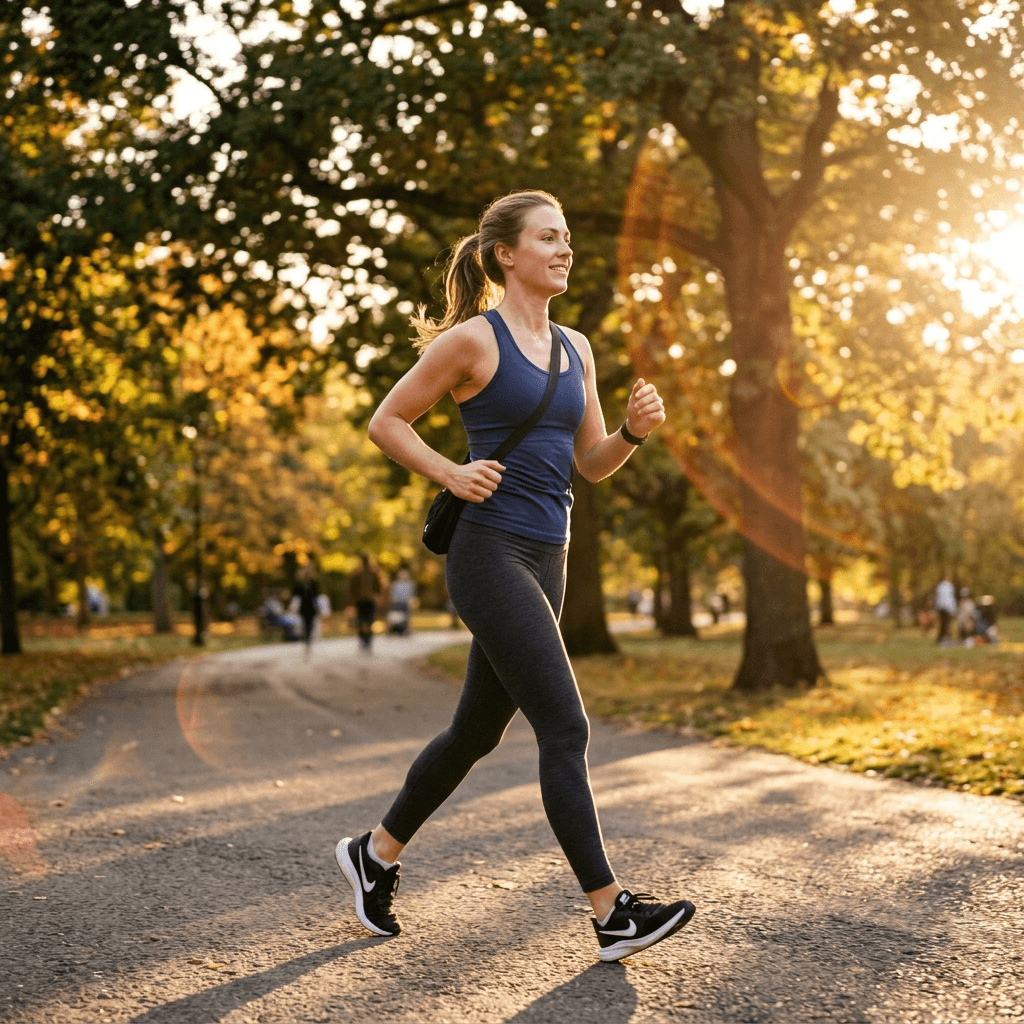
"Nature's most potent glucose disposal agent doesn't come in a prescription bottle. It's encoded in the contractile machinery of your skeletal muscles. A simple 10-minute walk after a meal creates a 'glucose sink' in your quadriceps and glutes that outperforms metformin at blunting postprandial spikes, without a single side effect."
Post-Prandial Movement: 2026 Core Pillars
-
1.
Contraction-Mediated Glucose Uptake (CMGU): Muscle contraction directly stimulates the translocation of GLUT4 transporters to the cell surface, completely bypassing the need for insulin. This is an insulin-independent glucose disposal pathway.
-
2.
The 10-Minute Sweet Spot: Research consistently shows that initiating low-intensity movement (walking) within 30 minutes of finishing a meal and sustaining it for just 10-15 minutes reduces postprandial glucose excursions by 30-50%.
-
3.
AMPK Activation: Muscle contraction activates AMP-activated protein kinase (AMPK), the same metabolic master switch targeted by metformin and berberine, enhancing mitochondrial fatty acid oxidation and insulin sensitivity.
-
4.
Superior to Sitting: Prolonged sitting after a meal keeps GLUT4 sequestered intracellularly and promotes hepatic fat synthesis. A brief walk completely reverses this deleterious metabolic state.
-
5.
No Side Effects, Only Benefits: Unlike metformin, which can cause gastrointestinal distress and, in rare cases, lactic acidosis, postprandial walking has zero adverse effects and confers additional benefits for mood, cognition, and cardiovascular health.
For decades, the standard medical advice for managing blood sugar and preventing type 2 diabetes has centered on pharmaceutical interventions, most notably Metformin, a biguanide that suppresses hepatic gluconeogenesis and modestly improves peripheral insulin sensitivity. While metformin is a valuable and well-established drug, it's not without its drawbacks, including significant gastrointestinal distress (nausea, diarrhea, bloating) in a substantial subset of patients, and the rare but serious risk of lactic acidosis. In 2026, the convergence of Continuous Glucose Monitor (CGM) data and rigorous exercise physiology research has illuminated a shockingly simple, side-effect-free, and remarkably potent alternative (or adjunct) to metformin: a brief, low-intensity walk initiated shortly after finishing a meal.
This is not merely a "healthy habit." it's a targeted, molecularly precise intervention that leverages the body's own insulin-independent glucose transport machinery. Known as Contraction-Mediated Glucose Uptake (CMGU), this pathway is activated exclusively by muscle fiber recruitment and completely bypasses the complex, and often dysfunctional, insulin signaling cascade. This full 2026 treatise will deconstruct the cellular mechanisms that make postprandial movement so effective, compare its efficacy head-to-head with metformin based on the latest CGM data, and provide a practical, evidence-based protocol for integrating this powerful metabolic tool into daily life.
THE BIOLOGY OF GLUCOSE DISPOSAL: INSULIN-DEPENDENT VS. CONTRACTION-MEDIATED PATHWAYS
To appreciate the profound metabolic impact of a simple post-meal walk, one must first understand the two distinct and complementary pathways by which glucose enters skeletal muscle cells. The first, and most widely recognized, is the Insulin-Dependent Pathway. When blood glucose rises after a carbohydrate-containing meal, the pancreas secretes insulin. Insulin binds to its receptor on the surface of muscle and fat cells, initiating a complex intracellular phosphorylation cascade involving IRS-1, PI3K, PDK1, and Akt2. This signaling cascade culminates in the translocation of intracellular vesicles laden with GLUT4 (Glucose Transporter Type 4) proteins to the plasma membrane, where they fuse and create portals for glucose to enter the cell.
However, in states of insulin resistance (prediabetes, type 2 diabetes, obesity, or even acute sleep deprivation), this signaling cascade becomes impaired. Key proteins like IRS-1 become phosphorylated on inhibitory serine residues, disrupting the signal and preventing efficient GLUT4 translocation. The result is that glucose remains trapped in the bloodstream, causing damaging hyperglycemia, while the muscle cell experiences a relative energy deficit. This is the fundamental defect that metformin partially addresses.
The second, and therapeutically crucial, pathway is the Contraction-Mediated Glucose Uptake (CMGU) pathway. This pathway is completely independent of insulin and its signaling cascade. When a muscle fiber contracts, whether during a heavy squat or a gentle walk, several local factors are generated, including increased intracellular calcium (Ca²⁺) and a rise in the AMP/ATP ratio (activating AMPK). These signals converge on a distinct set of intracellular messengers, including Calmodulin-dependent Protein Kinase (CaMK) and AMPK itself, which directly and potently stimulate the translocation of GLUT4 vesicles to the cell membrane. Critically, this pathway remains fully functional even in the most insulin-resistant individuals. The muscle cell retains its ability to take up glucose in response to contraction, even when it has become "deaf" to the signal of insulin. This is the elegant physiological loophole exploited by postprandial walking.
Biohacker Pro-Tip: The "Glucose Sink" Concept
Your skeletal muscles, particularly the large muscles of the legs (quadriceps, hamstrings, glutes), constitute the body's largest "glucose sink." When these muscles are actively contracting, they become voracious consumers of circulating glucose. A 10-minute walk recruits millions of muscle fibers, effectively opening millions of GLUT4 portals and pulling glucose out of the bloodstream without any reliance on a potentially sluggish insulin system. The larger the muscle mass engaged, the greater the glucose sink.
HEAD-TO-HEAD: POSTPRANDIAL WALKING VS. METFORMIN
How does the glucose-lowering effect of a brief postprandial walk compare quantitatively to that of a standard dose of metformin? While metformin (typically 500-850mg taken with meals) is effective at reducing fasting glucose and HbA1c over the long term, its acute effect on blunting the postprandial glucose spike from a single meal is often modest. A meta-analysis of CGM studies in individuals with prediabetes and early type 2 diabetes found that metformin reduces the peak postprandial glucose excursion by approximately 15-25 mg/dL on average, and delays the time to peak glucose.
In contrast, controlled studies specifically examining the effect of a 10-15 minute bout of light walking (2-3 mph, approximately 40-50% of VO2 max) initiated within 30 minutes of completing a mixed meal have consistently demonstrated reductions in the postprandial glucose area under the curve (AUC) of 30-50%. The peak glucose spike is often blunted by 25-40 mg/dL, a magnitude of effect that rivals or exceeds the acute effect of metformin, without any of the gastrointestinal side effects. Plus, the walking intervention provides immediate cardiovascular benefits, improves mood, and enhances lymphatic flow, benefits that metformin can't confer.
| Intervention | Mechanism | Acute Glucose Reduction | Side Effects / Cost |
|---|---|---|---|
| Metformin (500-850mg) | Hepatic gluconeogenesis suppression; mild AMPK activation; improved insulin sensitivity | ~15-25 mg/dL reduction in peak glucose | GI distress (20-30%); rare lactic acidosis; monthly prescription cost |
| Postprandial Walk (10-15 min) | Contraction-mediated GLUT4 translocation; AMPK activation; increased muscle glucose uptake | ~25-40 mg/dL reduction in peak glucose; 30-50% AUC reduction | Zero side effects; improves cardiovascular fitness; free |
THE AMPK CONNECTION: WHY WALKING MIMICS METFORMIN
A key reason why postprandial walking is so effective, and why it's often described as "nature's metformin," lies in its activation of AMP-Activated Protein Kinase (AMPK). AMPK is a highly conserved cellular energy sensor that functions as a master metabolic switch. When cellular energy levels are low (high AMP/ATP ratio), AMPK is activated. Once activated, AMPK phosphorylates a multitude of downstream targets to restore energy homeostasis: it promotes glucose uptake in muscle (via GLUT4 translocation), enhances fatty acid oxidation in mitochondria, suppresses hepatic glucose production (gluconeogenesis), and stimulates mitochondrial biogenesis.
Metformin exerts its primary glucose-lowering effects, in part, by mildly inhibiting Complex I of the mitochondrial electron transport chain. This subtle energetic stress increases the cellular AMP/ATP ratio, leading to the activation of AMPK. This AMPK activation is responsible for metformin's beneficial effects on hepatic glucose output and peripheral insulin sensitivity. However, muscle contraction, even the low-intensity contraction of a leisurely walk, is a far more potent and direct activator of AMPK in skeletal muscle than metformin. The mechanical and energetic demands of movement create a robust, localized AMPK signal that powerfully drives GLUT4 translocation and glucose uptake, effectively "mimicking" and amplifying the very pathway that metformin weakly stimulates.
Molecular Cascade of Contraction-Mediated Glucose Uptake
1. Muscle Contraction
Increases intracellular Ca²⁺ and depletes ATP, raising AMP/ATP ratio.
2. AMPK & CaMK Activation
AMPK and CaMK are phosphorylated and activated.
3. GLUT4 Vesicle Translocation
Intracellular vesicles containing GLUT4 move to and fuse with the sarcolemma.
4. Glucose Influx
Circulating glucose enters the muscle cell via GLUT4, lowering blood glucose.
OPTIMIZING THE PROTOCOL: TIMING, DURATION, AND INTENSITY
To maximize the glucose-lowering benefits of postprandial movement, the variables of timing, duration, and intensity must be optimized based on the available evidence.
- Timing is Critical: The "golden window" for postprandial movement is within the first 30-60 minutes after finishing a meal. This is when the ingested carbohydrates are being absorbed and blood glucose is beginning its upward trajectory. Initiating movement during this window intercepts the glucose before it reaches a high peak. Waiting 2-3 hours is significantly less effective.
- Duration: The 10-15 Minute Minimum Effective Dose: Studies consistently show that even a short, 10-minute bout of walking significantly reduces postprandial glycemia. Extending the walk to 20-30 minutes provides additional, but diminishing, returns. For most individuals, a sustainable 10-15 minute walk after each main meal is the optimal balance of efficacy and adherence.
- Intensity: Low and Steady Wins the Race: The goal is to activate a large volume of muscle mass and sustain that activation, not to achieve a high heart rate or breathlessness. Light-intensity walking (2-3 mph, a pace at which you can comfortably hold a conversation) is ideal. Higher intensity exercise (e.g., running, cycling hard) can actually cause a transient increase in blood glucose due to hepatic glucose release driven by adrenaline. Save high-intensity work for fasted or pre-meal periods.
- Frequency: After Every Meal, Especially the Largest: The greatest benefit is derived from walking after the largest meal of the day (often dinner) and after meals that are higher in carbohydrates. Aim for a short walk after breakfast, lunch, and dinner.
7-DAY POSTPRANDIAL WALKING PROTOCOL
- Day 1-2 (Baseline): If you wear a CGM, observe your typical glucose response to meals without walking. Note the peak and duration.
- Day 3-4 (Implementation): After finishing breakfast, lunch, and dinner, set a timer for 10 minutes and take a gentle walk. Observe the change in your CGM trace.
- Day 5-7 (Optimization): Experiment with timing. Try walking immediately after the last bite vs. waiting 20-30 minutes. Note which timing yields the flattest glucose curve for you personally.
- Long-Term Maintenance: Make postprandial walking a non-negotiable habit, just like brushing your teeth. It requires no special equipment, no gym membership, and takes only 10 minutes.
BEYOND GLUCOSE: ADDITIONAL METABOLIC AND CARDIOVASCULAR BENEFITS
The benefits of postprandial walking extend far beyond the acute blunting of glucose spikes. This simple habit triggers a cascade of positive physiological adaptations that contribute to long-term metabolic and cardiovascular health.
Improved Lipid Profile
Postprandial walking enhances the clearance of triglyceride-rich lipoproteins (chylomicrons) from the circulation, reducing post-meal lipemia, a major risk factor for atherosclerosis.
Enhanced Endothelial Function
A high-glucose meal transiently impairs the ability of blood vessels to dilate (flow-mediated dilation). A post-meal walk completely prevents this acute vascular dysfunction.
Reduced Inflammation
Chronic postprandial hyperglycemia drives systemic inflammation via NF-kB activation. Consistently blunting these spikes with walking lowers hs-CRP and other inflammatory markers over time.
Improved Mood and Cognition
The combination of light exercise, fresh air, and sunlight exposure (if walking outdoors) boosts BDNF, serotonin, and dopamine, improving afternoon mood and cognitive focus.
SYNERGY WITH OTHER METABOLIC INTERVENTIONS
Postprandial walking is not an "either/or" proposition with respect to metformin or other glucose-lowering strategies. it's profoundly synergistic and can be seamlessly integrated into a full metabolic health protocol.
- With Metformin: For individuals already taking metformin, adding postprandial walking provides an additional, complementary glucose-lowering effect via a completely distinct mechanism (CMGU vs. hepatic gluconeogenesis suppression). The combination often allows for better glycemic control at a lower metformin dose, potentially reducing GI side effects.
- With Berberine: Berberine, like metformin, activates AMPK. Postprandial walking also activates AMPK, and the two stimuli can be additive or synergistic, leading to greater GLUT4 translocation and glucose disposal.
- With Apple Cider Vinegar (ACV): ACV slows gastric emptying and reduces the rate of glucose absorption. Postprandial walking enhances glucose uptake by muscle. The combination (ACV before the meal, walking after) is a powerful one-two punch for flattening the glucose curve.
- With a Low-Carb or Ketogenic Diet: Even on a low-carb diet, protein can stimulate an insulin response and modest gluconeogenesis. Postprandial walking after a protein-rich meal helps shuttle amino acids into muscle and manage any subtle glucose rise.
OVERCOMING BARRIERS: PRACTICAL TIPS FOR REAL-WORLD IMPLEMENTATION
The most common objection to postprandial walking is practical: "I don't have time," or "I'm at work." However, with a small amount of planning and creativity, these barriers can be easily overcome.
Office Worker
Instead of eating at your desk, take your lunch to a nearby park or courtyard. Eat, then walk for 10 minutes before returning to your desk. Alternatively, walk the stairs or hallways of your building.
At Home
Make it a family ritual. After dinner, everyone puts on their shoes and walks around the block together. It's a powerful way to model healthy behavior for children and connect as a family.
Bad Weather
Walk indoors. March in place while watching TV, walk up and down your hallway, or use a walking pad/treadmill if available. The key is sustained, low-intensity movement, regardless of location.
Biohacker Pro-Tip: The CGM Feedback Loop
The single most powerful motivator for adopting postprandial walking is the immediate, visual feedback provided by a Continuous Glucose Monitor (CGM). When you can watch your glucose curve flatten in real-time as you take a gentle walk after a meal, the abstract concept of "glucose disposal" becomes a tangible, rewarding experience. This positive biofeedback loop powerfully reinforces the habit, making it self-sustaining.
Conclusion: Reclaiming Metabolic Sovereignty, One Step at a Time
In the sophisticated landscape of 2026 Biohacking, it's easy to become enamored with complex supplement stacks, exotic peptides, and expensive wearable technology. Yet, one of the most potent, evidence-based, and accessible metabolic interventions available is stunningly simple: a brief, gentle walk after each meal. This practice leverages the ancient, hardwired machinery of Contraction-Mediated Glucose Uptake to powerfully and directly lower postprandial blood sugar, independent of insulin and without a single adverse side effect.
The data from thousands of CGM users is unequivocal: a 10-15 minute postprandial walk rivals or exceeds the acute glucose-lowering effects of metformin, while simultaneously improving cardiovascular health, enhancing mood, and reducing systemic inflammation. it's a true "polypill" intervention disguised as a simple daily habit.
You don't need a prescription, a gym membership, or any special equipment. You only need a pair of comfortable shoes and the willingness to invest 10 minutes in your metabolic future after each meal. Reclaim your glucose, reclaim your energy, and reclaim your metabolic sovereignty, one step at a time.
Peer-Reviewed Clinical Validations & Extended Foundational Reading:
- Postprandial Walking and Glucose Control (Meta-Analysis): Buffey, A. J., Herring, M. P., Langley, C. K., et al. (2022). "The Acute Effects of Interrupting Prolonged Sitting Time in Adults on Postprandial Glucose, Insulin, and Triacylglycerol: A Systematic Review and Meta-Analysis." Sports Medicine, 52(4), 849-870. Read Meta-Analysis
- Contraction-Mediated Glucose Uptake Mechanisms: Richter, E. A., & Hargreaves, M. (2013). "Exercise, GLUT4, and skeletal muscle glucose uptake." Physiological Reviews, 93(3), 993-1017. Read Review
- AMPK Activation by Exercise: Hardie, D. G. (2011). "AMP-activated protein kinase: an energy sensor that regulates all aspects of cell function." Genes & Development, 25(18), 1895-1908. Read Review
- Walking vs. Metformin on Postprandial Glucose: DiPietro, L., Gribok, A., Stevens, M. S., et al. (2013). "Three 15-min bouts of moderate postmeal walking significantly improves 24-h glycemic control in older people at risk for impaired glucose tolerance." Diabetes Care, 36(10), 3262-3268. Read Study
- Postprandial Lipemia and Walking: Peddie, M. C., Bone, J. L., Rehrer, N. J., et al. (2013). "Breaking prolonged sitting reduces postprandial glycemia in healthy, normal-weight adults: a randomized crossover trial." The American Journal of Clinical nutrition, 98(2), 358-366. Read Study