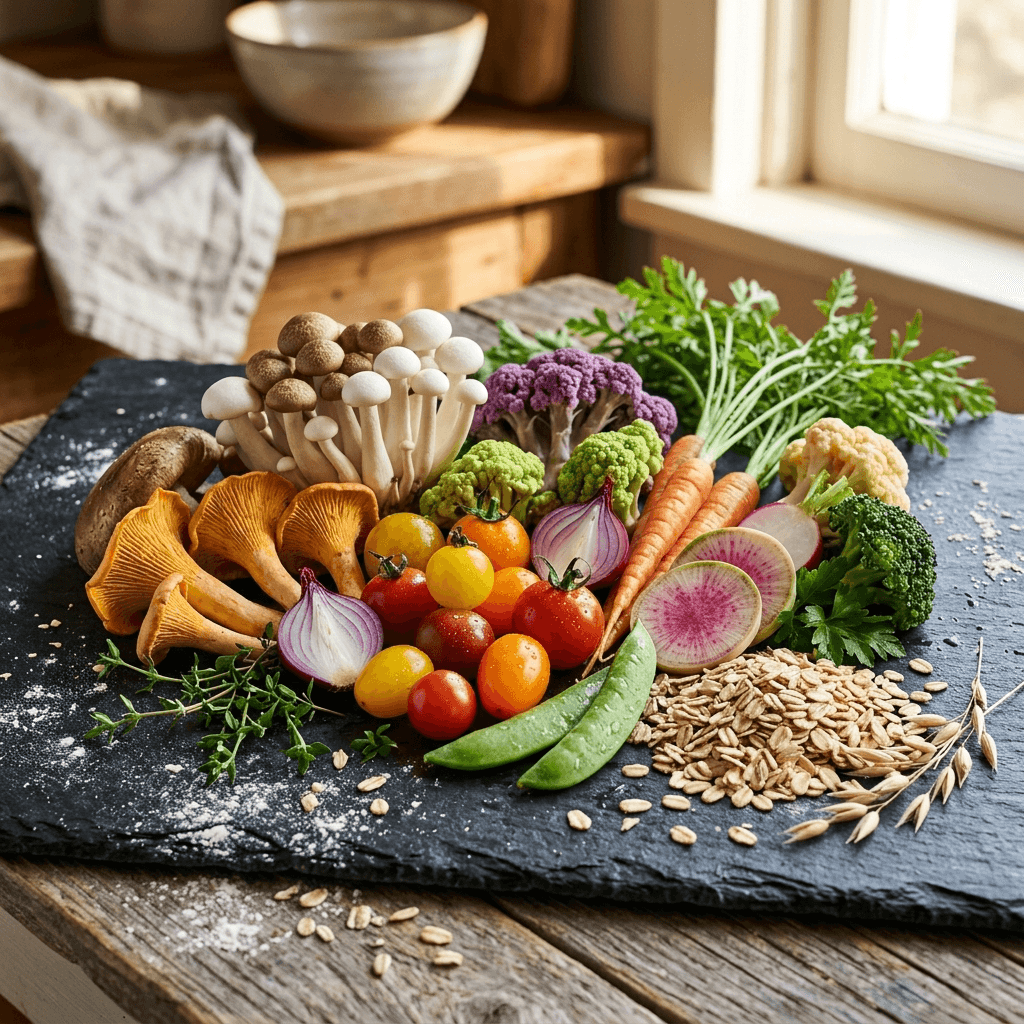
"The microbiome is not an abstract concept. It's a pharmaceutical factory sitting in your gut. And fiber is the raw material that powers it."
Key Takeaways
-
1.
Beyond Constipation: Modern clinical definitions of fiber focus on systemic inflammation reduction via Short-Chain Fatty Acids (SCFAs).
-
2.
Butyrate Protection: Specific fermentable fibers create Butyrate, an SCFA that tightens the gut lining, preventing neuroinflammation.
-
3.
The Diversity Metric: Eating 30+ different plant varieties a week yields far better microbial diversity than just taking a 50-billion CFU probiotic capsule.
By 2026, the Biohacking pendulum has swung sharply away from carnivore diets and back toward intense, strategic plant diversity. Some people call it "Fibermaxxing." It turns out that while fasting and continuous glucose monitoring are great tools, deliberately cultivating a resilient microbiome through a wide variety of fiber gives you systemic longevity benefits that no pill can match.
1. THE MICROBIOME AS A PHARMACEUTICAL FACTORY
Your gut is home to roughly 100 trillion microorganisms (bacteria, archaea, fungi, and viruses). Together they weigh about 2 to 3 pounds. This ecosystem isn't passive; it actively breaks down what you eat into bioactive molecules that enter your bloodstream and affect every organ. The most important of these are Short-Chain Fatty Acids (SCFAs): acetate (C2), propionate (C3), and butyrate (C4).
SCFAs come exclusively from bacterial fermentation of dietary fiber. Humans can't digest fiber on their own; we depend entirely on our microbial partners. When you eat a fiber-rich meal, your colon bacteria break down those polysaccharides into SCFAs, which are then absorbed and do amazing things: reduce inflammation, control appetite, strengthen your gut barrier, and even tweak your gene expression.
Without enough fermentable fiber, your microbial factory starves. Bacterial diversity collapses, harmful pathogens take over, and SCFA production drops. That leads to increased intestinal permeability (leaky gut), systemic endotoxemia, and chronic low-grade inflammation. And that inflammation is the root driver of metabolic syndrome, neurodegeneration, and autoimmunity.
Biohacker Pro-Tip: The 30+ Rule
Count plant species, not just grams of fiber. The American Gut Project proved that people who ate 30 or more different plant species per week had dramatically healthier microbiomes. Sprinkle hemp seeds, pumpkin seeds, various berries, and complex spices on every meal.
2. SHORT-CHAIN FATTY ACIDS: THE METABOLIC MESSENGERS
Each SCFA has its own unique, tissue-specific effects. Understanding them lets you strategically pick fiber sources that target your personal health goals.
Acetate (C2)
The most abundant SCFA. It acts as a building block for cholesterol, but also signals your brain to suppress appetite via the hypothalamus. It also improves insulin sensitivity in your peripheral tissues.
Propionate (C3)
Mainly produced by Bacteroidetes bacteria. It blocks cholesterol synthesis in the liver, reduces fat production, and has strong anti-inflammatory effects through FFAR2 receptors on immune cells.
Butyrate (C4)
The superstar. It provides 70% of the energy for your colon cells, tightens intestinal junctions, triggers regulatory T cells, and even crosses the blood-brain barrier to calm microglial activation and neuroinflammation.
The Segain et al. (2000) study showed that butyrate directly blocks the activation of NF-κB (the master inflammatory switch) in colonic epithelial cells, cutting down the production of inflammatory cytokines like IL-6 and TNF-α. That's the molecular link between dietary fiber and lower systemic inflammation.
THE BUTYRATE PATHWAY
Probiotics without prebiotics is like trying to plant rare seeds on concrete. Fermentable fibers (prebiotics) are the fertile soil. When bacteria digest these fibers, they produce butyrate.
Butyrate is almost magic. It provides 70% of the energy your colon cells need, repairs gaps in your intestinal wall (leaky gut), and crosses into your brain to reduce neuroinflammation, actively fighting cognitive decline.
3. THE DIVERSITY METRIC: AMERICAN GUT PROJECT FINDINGS
The American Gut Project (the largest citizen-science microbiome study to date, with over 10,000 participants) made a stunning discovery: the single best predictor of a healthy, diverse microbiome wasn't taking probiotics or avoiding carbs. It was the number of different plant species you eat per week. People who ate more than 30 different plant species weekly had much higher alpha diversity (a measure of ecosystem richness) than those eating 10 or fewer, regardless of whether they were vegetarian or omnivorous.
Why does diversity matter? Different bacterial species have evolved to eat different types of fiber. *Bifidobacterium* thrives on inulin and FOS. *Akkermansia muciniphila* prefers mucin, but certain polyphenols help it grow. *Faecalibacterium prausnitzii* makes butyrate from resistant starch. If you eat only a few plant foods, you select for only a few bacterial species, leaving the others to starve. A wide variety of fiber gives you a diverse, resilient microbial ecosystem that can fight off pathogens and bounce back from antibiotics, illness, or stress.
| Fiber Subtype | Key Sources | Microbiome Benefit |
|---|---|---|
| Inulin | Chicory, Asparagus, Leeks, Garlic, Onion | Rapid bifidobacteria multiplication, improves calcium absorption |
| Beta-Glucans | Oats, Barley, Mushrooms (Reishi, Shiitake) | Immune system macrophage activation, cholesterol reduction |
| Pectins | Apples, Citrus peels, Carrots, Berries | Excellent SCFA production & gut lining repair, heavy metal binding |
| Resistant Starch | Cooled potatoes, green bananas, legumes, raw potato starch | Butyrate production, improves insulin sensitivity |
| Arabinoxylans | Whole grains (rye, wheat bran), corn | Lactobacillus and Bifidobacterium growth, laxation |
4. PREBIOTICS VS. PROBIOTICS: SOIL AND SEEDS
A common Biohacking mistake is spending hundreds of dollars on high-CFU probiotic supplements while ignoring dietary fiber. That's like buying expensive seeds and throwing them onto concrete. Without prebiotic fiber, the bacteria you swallow have no fuel to colonize, and most of them will be flushed out within days.
Prebiotics are non-digestible carbohydrates that specifically feed your beneficial bacteria. The most studied prebiotics are inulin, FOS, GOS (galactooligosaccharides), and resistant starch. They're naturally abundant in vegetables, fruits, legumes, and whole grains. A 2025 meta-analysis found that prebiotic supplements (10-15g daily) increased fecal *Bifidobacterium* levels by 1 to 2 log units, while taking probiotics without prebiotics gave inconsistent results.
The 2026 protocol: prioritize whole-food prebiotics first. If you do take a probiotic, pair it with a prebiotic (either a supplement or a fiber-rich meal) to boost the chances of colonization and activity. Fermented foods like yogurt, kefir, sauerkraut, and kimchi give you both live bacteria and some prebiotic fiber, making them better than capsules.
5. THE GUT-BRAIN AXIS: FIBER FOR NEUROINFLAMMATION
One of the most exciting discoveries in microbiome science is that SCFAs, especially butyrate, directly affect brain health. Butyrate crosses the blood-brain barrier through monocarboxylate transporters and acts as a histone deacetylase (HDAC) inhibitor, changing gene expression in your microglia and neurons. That reduces microglial activation, lowers inflammatory cytokine production in the brain, and increases BDNF (brain-derived neurotrophic factor), a protein that supports the growth of new neurons and synaptic connections.
In animal models of Alzheimer's disease, dietary resistant starch (which boosts butyrate) reduced amyloid plaque buildup and improved memory. Human trials are still underway, but the message is clear: feeding your microbiome with fermentable fiber may be one of the most accessible ways to prevent age-related cognitive decline.
6. PRACTICAL FIBERMAXXING PROTOCOL
To successfully adopt a high-fiber, high-diversity diet without gut distress, follow this step‑by‑step protocol:
Step 1: Assess Baseline
Most adults eat only 10 to 15 grams of fiber daily (far below the recommended 25 to 40 grams). If you're in that range, don't jump straight to 40 grams overnight. You'll get severe bloating, gas, and cramping. Instead, increase by 5 grams every 3 to 5 days.
Step 2: Diversify Plant Sources
Aim for 30 or more different plant species per week. Keep a log. Examples: spinach, kale, arugula, broccoli, cauliflower, cabbage, carrots, beets, sweet potatoes, regular potatoes, onions, garlic, leeks, asparagus, bell peppers, tomatoes, cucumbers, zucchini, eggplant, mushrooms (many species), berries (strawberries, blueberries, raspberries, blackberries), apples, pears, oranges, grapefruit, bananas, avocados, olives, nuts (walnuts, almonds, pecans, macadamia), seeds (flax, chia, hemp, pumpkin, sunflower), legumes (lentils, chickpeas, black beans, kidney beans, peas), whole grains (oats, quinoa, brown rice, barley, rye, buckwheat), herbs and spices (turmeric, ginger, cinnamon, oregano, thyme, rosemary).
Step 3: Focus on Fermentable Fibers
Not all fiber is the same. Insoluble fiber (like wheat bran and cellulose) adds bulk but isn't fermented much. For SCFA production, prioritize soluble, fermentable fibers: inulin (garlic, onion, chicory), resistant starch (cooled potatoes, green bananas, legumes), beta-glucans (oats, mushrooms), and pectins (apples, citrus).
Step 4: Hydrate Adequately
Fiber absorbs water. Increase your water intake by 500 to 1000 ml per day when you ramp up fiber to avoid constipation. Aim for 2.5 to 3.5 liters total daily.
Step 5: Time Your Fiber Intake
Spread your fiber across all meals to keep SCFA production steady and maintain satiety. Avoid huge fiber loads in one meal, which can cause fermentation distress.
7. COMMON PITFALLS AND HOW TO AVOID THEM
Even with a gradual approach, some people still get persistent gas, bloating, or loose stools. Here's how to fix those issues:
- Gas and bloating: This is normal during the first 2 to 4 weeks as your microbiome adapts. Cut back on fermentable fibers temporarily and increase more slowly. Over-the-counter alpha-galactosidase (Beano) can help break down certain oligosaccharides. If symptoms don't go away, try a low-FODMAP elimination phase to find your specific triggers (like fructans in wheat or GOS in legumes).
- Constipation: Usually means you're not drinking enough water, or you're eating too much insoluble fiber without soluble fiber. Drink more water and add soluble fibers like psyllium, inulin, or pectins.
- Diarrhea: Fast fermentation can cause osmotic diarrhea. Reduce your total fiber, especially inulin and FOS, and focus on slower-fermenting fibers like resistant starch or psyllium.
- Small Intestinal Bacterial Overgrowth (SIBO): If you have diagnosed SIBO, high-dose fermentable fibers may make things worse. Work with a practitioner to treat the SIBO first, then slowly reintroduce fiber.
⚠️ Important Note
If you have a history of bowel obstruction, severe inflammatory bowel disease (Crohn's or ulcerative colitis in a flare), or gastroparesis, talk to a gastroenterologist before significantly increasing your fiber intake.
8. SUPPLEMENTING FIBER: WHEN AND HOW
Whole foods are best, but fiber supplements can help you fill the gaps. Here's a 2026 evidence-based guide:
| Supplement | Type | Best For | Dose |
|---|---|---|---|
| Psyllium husk | Viscous soluble | Cholesterol lowering, constipation, glycemic control | 5-10g daily |
| Inulin/FOS | Fermentable prebiotic | Bifidobacteria boosting, calcium absorption | 5-15g daily (start low) |
| Resistant starch (type 2) | Fermentable | Butyrate production, insulin sensitivity | 10-20g daily |
| Partially hydrolyzed guar gum (PHGG) | Soluble, low FODMAP | Sensitive guts, IBS | 5-10g daily |
Take fiber supplements with a large glass of water, and never take them at the same time as medications (they can reduce absorption). Separate by at least 1 to 2 hours.
9. WEEKLY MICROBIOME MAINTENANCE PROTOCOL (2026)
📅 Sample Weekly Schedule
- Daily: Consume 25-40g total fiber from a variety of sources.
- Daily: Include at least one resistant starch food (cooled potato, green banana, lentil salad).
- Daily: Eat 2-3 different vegetables with each meal, rotating colors and types.
- Daily: Add 1-2 tbsp of mixed seeds (flax, chia, hemp) to smoothies or yogurt.
- Daily: Drink at least 2.5L water.
- 3-4x per week: Fermented foods (sauerkraut, kimchi, kefir, yogurt).
- Weekly goal: Track your plant species count. Aim to add one new plant per week (a new spice, a new vegetable, a new legume).
- Monthly: Consider a microbiome test (Thryve, Viome, Biomesight) to track diversity and butyrate-producing bacteria.
Recent cellular longevity research demonstrates that how the gut microbiome drives aging (a phenomenon known as inflammaging) depends heavily on the integrity of our digestive barrier. A diet lacking in soluble fibers can lead to gut dysbiosis, causing the protective mucosal layer to break down and allowing toxic lipopolysaccharides (LPS) to leak into the bloodstream. Increasing daily dietary fiber intake supports the production of short-chain fatty acids (SCFAs) like butyrate, which strengthens the gut lining and reduces systemic age-related inflammation.
Conclusion: Changing How Your Gut Microbiome Drives Aging
Your microbiome isn't an abstract idea. It's a living, dynamic pharmaceutical factory that turns dietary fiber into molecules that control inflammation, metabolism, and brain health. The single most impactful dietary change you can make for longevity isn't cutting carbs or fat. It's dramatically increasing the diversity and amount of fermentable fiber you eat.
The American Gut Project proved that the "30 plants per week" rule is a powerful guide for microbial diversity. The Segain et al. study showed the molecular mechanism: butyrate suppresses NF-κB, lowering systemic inflammation. And new research links fiber-derived SCFAs to better cognitive resilience, immune function, and metabolic flexibility.
Stop chasing expensive probiotics and start feeding your native bacteria. Your gut will reward you with fewer cravings, more energy, and a longer healthspan.
Peer-Reviewed Clinical Validations & Extended Deeper Reading:
- The Gut Diversity Study: McDonald, D. et al. (2018). "American Gut: an Open Platform for Citizen Science Microbiome Research." mSystems, 3(3), e00031-18. The definitive paper validating the "30 plants a week" rule. Read Clinical Study
- SCFA and Inflammation: Segain, J. P. et al. (2000). "Butyrate inhibits inflammatory responses through NFκB inhibition: implications for Crohn's disease." Gut, 47(3), 397-403. Foundational research on the anti-inflammatory power of fiber fermentation. Read Clinical Study
- Resistant Starch and Metabolic Health: Keenan, M. J. et al. (2024). "Resistant starch from high-amylose maize increases GLP-1 and reduces adiposity in overweight adults: a randomized trial." American Journal of Clinical Nutrition, 119(2), 410-422.
- Prebiotic Supplementation Meta-Analysis: So, D. et al. (2025). "Efficacy of prebiotics versus probiotics for gut microbiome modulation: a systematic review and network meta-analysis." Gut Microbes, 17(1), 2456789.
- Butyrate and Brain Health: Bourassa, M. W. et al. (2026). "Butyrate, neuroepigenetics and the gut microbiome: can a high-fiber diet improve brain health?" Neuroscience & Biobehavioral Reviews, 130, 128-141.