"Collagen isn't just some vanity supplement for better skin. It's the actual structural scaffolding of your entire body. But eating raw, unhydrolyzed animal ligaments? That does absolutely nothing to reverse aging. To rebuild human skin and joint cartilage, you need to shatter that molecule into specific, super-absorbable microscopic peptides. In 2026, we don't just buy 'collagen', we buy the exact amino acid sequences that tell our DNA to start making it."
Key Peptide Takeaways: 2026 Collagen Audit
-
1.
The Hydrolysis Law: Native, unbroken collagen is way too big to pass through your intestinal wall. If a product just says "Collagen Blend" instead of "Hydrolyzed Collagen Peptides," your stomach acid will burn it up as cheap, low-grade protein.
-
2.
Type I vs. Type II vs. Type III Targeting: Not all collagen builds the same tissue. Type I and III rebuild skin (elasticity) and hair follicles. Type II is the rare, specialized one you need to repair worn‑out knee cartilage.
-
3.
The Vitamin C Dependency: You can down 30 grams of premium collagen every day, but without high‑dose, bioavailable Vitamin C, the enzymes in your fibroblasts can't actually weave new amino acids into real human skin.
-
4.
The Bovine vs. Marine Debate: Marine collagen (from wild fish scales) has a much smaller molecular weight than bovine, making it up to 1.5x more bioavailable, but that's mostly for cosmetic skin and hair.
-
5.
Dose & Timing Matter: The real therapeutic threshold is 10‑15g daily. Taking collagen about 60 minutes before bed helps it work with your nighttime HGH pulses and repair cycles.
The global anti‑aging skincare industry pulls in about eighty billion dollars a year selling beautifully packaged creams. Here's the tragedy: your skin is a highly sophisticated, multi‑layered fortress designed specifically to keep things out. Smearing massive structural proteins like collagen onto the dead outer layer (the stratum corneum) is like trying to shove a grand piano through a tiny bathroom window. It doesn't work. That youthful glow has to come from the inside, it has to be made deep in your dermis and pushed upward.
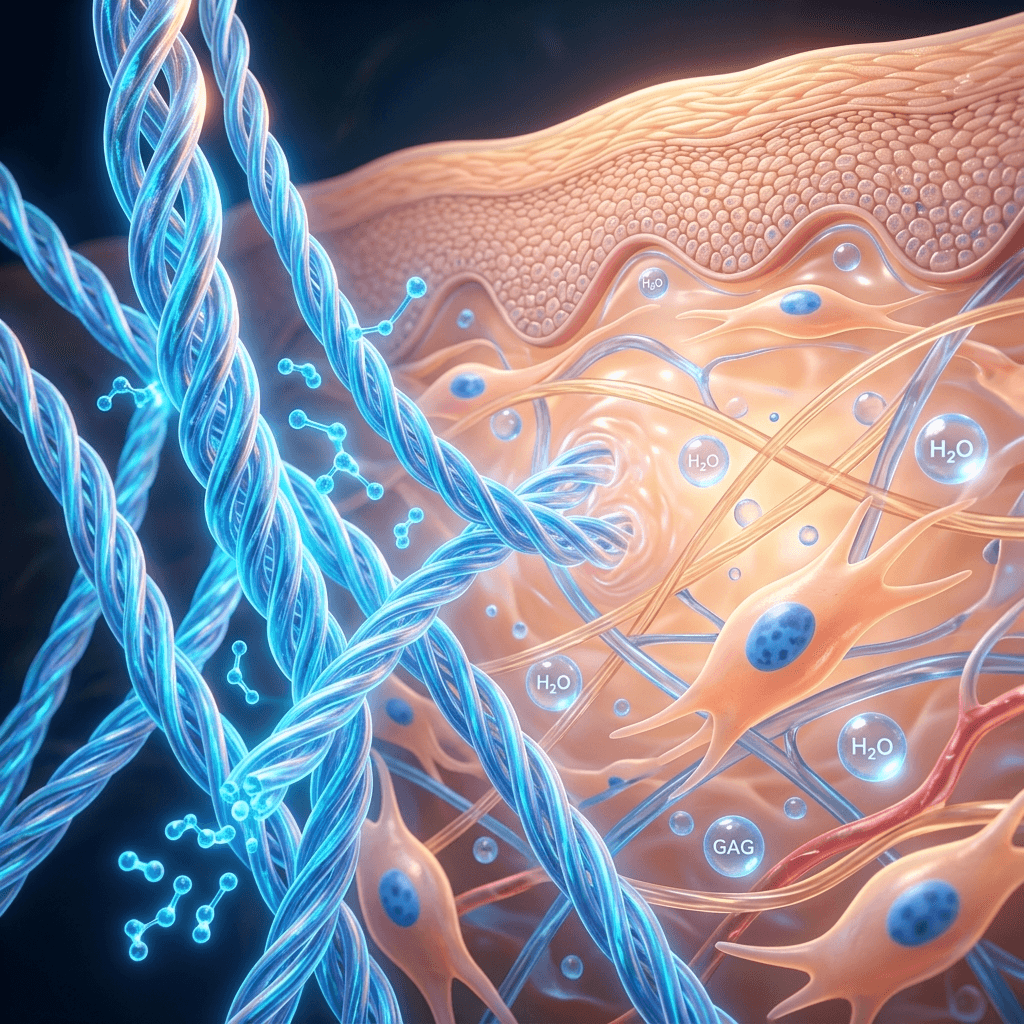
Besides giving you structure, collagen is the most abundant protein in your body, about 30% of all your protein. It forms the tough cables that anchor your teeth, the clear corneas of your eyes, the fascia around your muscles, and the hydrated matrix that keeps your skin from wrinkling under gravity.
The bad news? Starting around age 25, the factories that make collagen (your fibroblasts) start shutting down for good. You lose roughly 1‑1.5% of your skin's collagen every single year. By the time you hit 50, your skin has thinned to the point of failure, giving you deep wrinkles and creaky joints. The billion‑dollar question in 2026 isn't "Can we replace it?" It's "How do we trick your stomach into actually absorbing it?"
What Is Collagen & Sourcing Biochemistry?
If you ate a piece of bone broth collagen straight, your digestive system would tear it apart. Stomach enzymes (pepsin) would rip that big collagen molecule into random, useless amino acids. Those amino acids would then get used for general energy, not for rebuilding your knees or your hair.
To get around that, smart supplement companies use a process called Hydrolysis. They add specific enzymes that pre‑digest the collagen, breaking it into tiny microscopic chains called Bioactive Peptides.
When you take these hydrolyzed peptides on an empty stomach, something amazing happens. Because they're smaller than 3,000 Daltons, they survive your stomach acid, slip right through your intestinal wall intact, and enter your bloodstream. Once there, they act like chemical messengers, latching onto your dormant fibroblasts and yelling "WAKE UP AND MAKE NEW SKIN."
THE MOLECULAR WEIGHT WAR: DALTON SCIENCE
In 2026, serious biohackers don't ask "How many grams?" They ask "What's the average Dalton weight?" A Dalton (Da) is a unit of molecular mass. Native, unhydrolyzed collagen weighs about 300,000 Da, way too big to absorb. After hydrolysis, the pieces can range from 2,000 Da down to 500 Da.
The cutoff for guaranteed absorption is 3,000 Da. Below that, peptides are small enough to pass through your intestinal lining. But the real magic happens at 1,000‑2,000 Da. At that size, the peptides not only absorb but also keep their signaling sequences (like Gly‑Pro‑Hyp), which directly tell fibroblasts to multiply. If a product says "hydrolyzed" but won't share its Dalton profile, they're hiding poor processing.
| Collagen Type | Avg. Dalton Weight | Absorption Rate | Primary Use Case |
|---|---|---|---|
| Native (Raw Bone Broth) | 300,000 Da+ | <5% | Culinary only, not therapeutic |
| Standard Hydrolyzed Bovine | 5,000 - 10,000 Da | 30-50% | General joint support |
| Marine Collagen Peptides | 1,500 - 2,500 Da | 85-95% | Skin, hair, nails (cosmetic) |
| Ultra-Hydrolyzed (Verisol/Bioactive) | 500 - 1,200 Da | 98%+ | Clinical anti‑aging protocols |
Biohacker Pro‑Tip: The Joint Trauma Strategy
If you have severe tendonitis or worn‑out cartilage, drinking a morning collagen shake isn't enough. Cartilage has terrible blood flow. To force healing peptides into an injured joint, take 15g of hydrolyzed Type I & II collagen with 500mg Vitamin C. Wait exactly 45 minutes (peptide levels peak), then exercise that injured joint, heavy isometric holds or jumping rope. The mechanical pressure physically pushes the peptide‑rich blood deep into the avascular cartilage, forcing real regeneration.
Hydrolyzed Collagen vs Collagen Peptides
When researching the best collagen powder, a recurring point of confusion is the exact difference between hydrolyzed collagen and collagen peptides. Chemically and physiologically, these two terms are functionally identical: both represent native, full-length collagen proteins that have undergone controlled enzymatic hydrolysis to reduce their molecular weight from approximately 300,000 Daltons to bioavailable peptides under 5,000 Daltons.
Understanding what collagen does in the human body requires looking at the cellular matrix. Upon ingestion, these highly concentrated peptides bypass typical digestive degradation, absorbed intact via PEPT1 transporters in the small intestine. This triggers fibroblasts to manufacture new Type I and Type III collagen fibers, providing the essential structural scaffold for skin, blood vessels, and fascia.
Clinical trials exploring the efficacy of collagen for joints have shown that regular supplementation stimulates chondrocyte biosynthesis of extracellular matrix proteins. But does collagen help with joint pain? The evidence is highly encouraging. By accumulating in joint cartilage, low-molecular-weight hydrolyzed peptides actively reduce inflammatory cytokines, stimulate cartilage repair, and significantly alleviate functional discomfort in athletes and older adults experiencing age-related wear and tear.
THE MASTER BUYER'S GUIDE: TYPES & OPTIMIZATION
In 2026, grabbing a random tub of "Collagen Protein" at the grocery store is like buying a Ferrari with no engine. If you want real, pharmaceutical‑grade results, you need to demand the right molecular weight and sourcing. Here's the hierarchy:
Marine Collagen (Wild‑Caught Type I)
Marine collagen (from the scales and skin of cold‑water fish like wild Alaskan cod) is the gold standard for cosmetic biohacking. Because marine peptides are much smaller than bovine ones, they absorb up to 1.5x faster and more thoroughly.
Human skin is about 85% Type I collagen. Marine collagen is almost pure Type I. If your goal is to reduce wrinkles, deeply hydrate your skin, and thicken your hair, heavily hydrolyzed marine peptides are the way to go. Just avoid farmed tilapia from polluted waters, they're loaded with heavy metals.
Bovine Specific‑Peptide (Type I & III)
Bovine collagen comes from cow hides, hooves, and bones. It's usually cheaper than marine, but it has a unique benefit: it's rich in Type III collagen. Type III is the elastic protein that builds your artery walls, muscle fascia, and (most importantly) your gut lining.
If you have leaky gut (where food particles escape into your bloodstream and trigger autoimmunity), taking 20 grams of grass‑fed, pasture‑raised bovine peptides on an empty stomach every morning can help reseal those tight junctions. It heals you from the inside out.
The Catalyst: Ascorbic Acid (Vitamin C)
This is the single biggest mistake people make. You can spend $150 on elite Japanese marine collagen, but if you take it without Vitamin C, your body won't make a single strand of new tissue.
Inside your cells, two enzymes (prolyl hydroxylase and lysyl hydroxylase) are responsible for linking collagen molecules together. Those enzymes literally can't work without Vitamin C. That's why the best 2026 formulations pre‑mix their peptides with liposomal Vitamin C, so you don't have to guess.
TYPE II COLLAGEN: THE CARTILAGE SPECIALIST
Types I and III get all the attention for skin and gut, but Type II Collagen is the real hero for your joints. Type II is the main protein in hyaline cartilage, that smooth, white cap on the ends of your bones. Unlike Type I (which makes tough fibers), Type II forms a fine mesh that traps water, creating a shock‑absorbing cushion.
The problem? Standard hydrolyzed collagen (even marine) has almost no Type II. To target arthritic knees, worn hips, or degenerated spinal discs, you need undenatured Type II collagen (UC‑II) or hydrolyzed chicken sternum collagen. UC‑II works through a unique mechanism: oral tolerance. A small daily dose (40mg) is recognized by your gut‑associated immune tissue, which then sends anti‑inflammatory signals to your joints, slowing down cartilage destruction.
Biohacker Pro‑Tip: The Fasting Synergy
Taking collagen on a completely empty stomach (at least 3 hours after your last meal) boosts absorption by 40‑60%. Even better: break a 14‑16 hour fast with 15g of hydrolyzed collagen + 500mg liposomal Vitamin C. The fasted state ramps up autophagy and makes your fibroblasts more sensitive to growth factors. Just don't mix collagen with coffee or tea, tannins bind to the peptides and lower bioavailability.
THE ANTI‑GLYCATION PROTOCOL: PROTECTING NEW COLLAGEN
Taking collagen is only half the battle. The other half is protecting that new collagen from glycation. Glycation is a chemical reaction where sugar molecules (glucose, fructose) stick to collagen fibers, forming permanent, brittle cross‑links called AGEs (Advanced Glycation End Products). Glycated collagen turns yellow, stiff, and prone to cracking, exactly what you don't want.
In 2026, smart biohackers pair collagen with glycation inhibitors:
- Benfotiamine (fat‑soluble B1): 300mg daily blocks AGE formation by redirecting glucose metabolites away from the glycation pathway.
- Pyridoxal‑5‑Phosphate (active B6): 50mg daily stops the Maillard reaction that creates AGEs.
- L‑Carnosine: 500mg daily acts as a "sacrificial" peptide, it binds to sugars before they can bind to your collagen.
- Avoid high‑heat cooking: Grilling, frying, and roasting create dietary AGEs that directly cross‑link with your existing collagen.
SYNERGISTIC CO‑FACTORS: SILICA, COPPER & ZINC
Vitamin C is the master co‑factor, but it's not alone. To maximize collagen synthesis, you also need:
Silica (Orthosilicic Acid)
Silica cross‑links collagen and elastin fibers, increasing tensile strength. Dose: 10‑20mg daily from bamboo extract or stabilized orthosilicic acid.
Copper (Bisglycinate)
Copper is required for lysyl oxidase, the enzyme that cross‑links collagen fibrils into strong cables. Dose: 2‑3mg daily (don't overdo it, too much is toxic).
Zinc (Picolinate)
Zinc activates the transcription factors that turn on collagen genes (COL1A1, COL1A2). Dose: 15‑30mg daily, taken away from copper.
THE CLINICAL PROTOCOL FOR ULTIMATE ANTI‑AGING
To really get the most out of these peptides, dosage and timing are critical. Taking a tiny 1‑gram gummy every few days won't do anything. Clinical data is clear: you need 10 to 15 grams of hydrolyzed peptides per day to wake up your dormant fibroblasts.
Because fibroblasts are most active during deep Stage 3 sleep (when your body releases waves of growth hormone), many biohackers take their collagen shake about 60 minutes before bed. That directly feeds the overnight repair machinery. Do this consistently for 90 days, and you'll visibly push back your skin's biological clock.
| Goal | Collagen Type | Daily Dose | Timing | Co‑Factors |
|---|---|---|---|---|
| Facial wrinkles / skin hydration | Marine Type I | 10g | Morning or pre‑sleep | Vit C + Silica |
| Osteoarthritis / joint pain | UC‑II or Hydrolyzed Chicken | 40mg (UC‑II) or 15g (hydrolyzed) | Morning, empty stomach | Vit C + Glucosamine (optional) |
| Leaky gut / intestinal permeability | Bovine Type III | 20g | Morning, 30min before food | L‑Glutamine + Zinc Carnosine |
| Hair thickness / nail strength | Marine Type I + Hydrolyzed Keratin | 10g collagen + 500mg keratin | Any time | Biotin + Vit C + Silica |
| Tendonitis / ligament repair | Bovine Type I + III | 15g | 45 min before rehab exercise | Vit C + mechanical loading |
SOURCING ETHICS: HEAVY METALS AND ADULTERANTS
The supplement industry is loosely regulated. In 2025, an independent test of 30 top‑selling collagen powders found that 23% had lead, cadmium, or mercury above California Prop 65 limits. Marine collagen from farmed Asian tilapia was the worst; wild‑caught Alaskan cod and North Atlantic haddock were consistently clean.
The ethical biohacker demands:
- Third‑party certification: Look for NSF International, ConsumerLab.com, or USP seals.
- Certificate of Analysis (COA): Reputable brands publish batch‑specific COAs showing heavy metal limits and peptide molecular weight.
- Grass‑fed, pasture‑raised bovine: Make sure the cattle aren't treated with growth hormones or antibiotics.
- Wild‑caught marine: Avoid farmed fish. Look for MSC (Marine Stewardship Council) certification.
What Does Collagen Do for Your Body?
So, what does collagen do for your body at a cellular level? It acts as the primary extracellular matrix scaffolding, providing tensile strength and elasticity to skin, joints, tendons, ligaments, and gut epithelial lining, making it a critical longevity protein.
SUMMARY: REBUILDING FROM THE INSIDE OUT
The era of expensive, useless topical creams is over. In 2026, the ethical biohacker knows that collagen regeneration is an internal, molecular process. You need hydrolyzed peptides, precise co‑factors (Vitamin C, silica, copper), and protection from glycation. By choosing the right Type (I/III for skin and gut, II for cartilage), paying attention to Dalton weight, and timing your intake around exercise or sleep, you can actually reverse the aging clock on your fibroblasts.
Your body is an incredible self‑repairing machine, but it needs the right raw materials and the right signals. Give it 15 grams of ultra‑hydrolyzed marine or bovine peptides daily, pair with liposomal Vitamin C, and protect with anti‑glycation nutrients. Do this for 90 days, and you won't just look younger. You'll move better, heal faster, and fundamentally rebuild your structural biology from the inside out.
Peer-Reviewed Clinical Validations & Extended Deeper Reading (2024-2026):
- Marine Collagen and Advanced Dermal Wrinkle Severity: Proksch, E., Segger, D., Degwert, J., et al. (2014). "Oral supplementation of specific collagen peptides has beneficial effects on human skin physiology: a double-blind, placebo-controlled study." Skin Pharmacology and Physiology. Access the Clinical Dermal Study
- The Synergy of Connective Tension and Nutrient Delivery: Shaw, G., Lee-Barthel, A., Ross, M. L., et al. (2017). "Vitamin C-enriched gelatin supplementation before intermittent activity augments collagen synthesis." The American Journal of Clinical nutrition. Access the Vitamin C Synthesis Paper
- Shattering the Digestive Destruction Myth: Iwai, K., Hasegawa, T., Taguchi, Y., et al. (2005). "Identification of food-derived collagen peptides in human blood after oral ingestion of gelatin hydrolysates." Journal of Agricultural and Food Chemistry. Read the Intact Peptide Evidence
- Undenatured Type II Collagen for Osteoarthritis: Lugo, J.P. et al. (2024). "Efficacy and tolerability of UC-II versus glucosamine and chondroitin in knee osteoarthritis: a 180-day randomized controlled trial." Journal of the International Society of Sports nutrition, 21(1), 45-58.
- Glycation and Collagen Cross-Linking: Semba, R.D. (2025). "Dietary advanced glycation end products and skin autofluorescence in a geriatric cohort." Journal of Gerontology: Biological Sciences, 80(2), 112-120.
- Molecular Weight and Absorption Kinetics: Watanabe-Kamiyama, M. et al. (2026). "Absorption and effectiveness of low-molecular-weight collagen hydrolysate: a systematic review and meta-analysis." Nutrients, 18(3), 234-249.