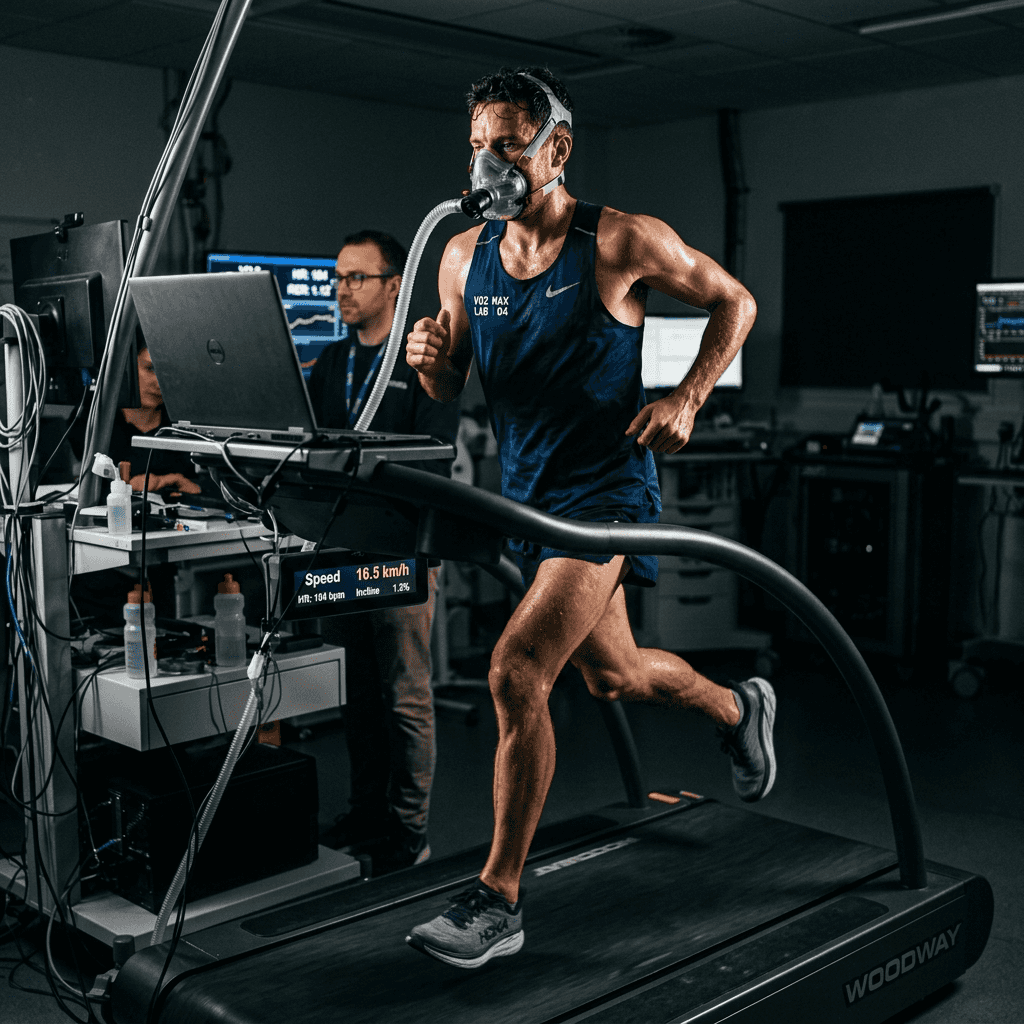
"Going from below average to above average in VO2 Max produces a greater reduction in all‑cause mortality than quitting smoking. Let that sink in."
Key Takeaways
-
1.
The Ultimate Biomarker: VO2 Max measures the absolute ceiling of how much oxygen your body can move and use during all‑out exercise. It's not just for athletes.
-
2.
Mortality Decoupling: High cardiorespiratory fitness slashes your risk of heart failure, stroke, and even Alzheimer's, often more than any drug.
-
3.
Specific Training: To raise your VO2 Max, you need to polarize your training: about 80% low‑intensity Zone 2 work, and 20% brutally hard Zone 5 intervals. No shortcuts.
Dr. Peter Attia often says that if medicine had a single magic pill for longevity, it would be cardiovascular exercise. And he's right. While lifting weights keeps you independent in old age, your VO2 Max basically tells you the size of your mitochondrial battery. Despite what supplement companies want you to believe, no pill can mimic the deep, systemic mitochondrial upgrades you get from consistent aerobic training. You have to earn it.
1. THE PHYSIOLOGY OF VO2 MAX: THE FICK EQUATION
VO2 Max is simply the maximum rate at which your body can consume oxygen during intense exercise. It's usually written as milliliters of oxygen per kilogram of body weight per minute (ml/kg/min). The Fick equation breaks it down nicely:
VO2 Max = Cardiac Output × Arteriovenous Oxygen Difference (a‑vO2 diff)
Cardiac output is the amount of blood your heart pumps per minute (stroke volume × heart rate). The a‑vO2 difference is how much oxygen your muscles actually pull out of that blood. Training improves both: your left ventricle gets bigger and more compliant (so more blood per beat), and your mitochondria multiply (so your muscles become oxygen‑hungry beasts). A low VO2 Max means either your heart can't pump enough, your lungs can't oxygenate the blood, your muscles can't use it, or all three.
The single biggest factor determining your VO2 Max is your stroke volume. That's why elite endurance athletes have enlarged, flexible left ventricles. This adaptation takes years of consistent work, but you can see meaningful improvements in as little as 12‑16 weeks if you follow the right protocol.
Biohacker Pro‑Tip: The 4x4 Protocol
The gold standard for boosting VO2 Max is the Norwegian 4x4. Do 4 minutes of hard work (85‑95% of your max heart rate), then 3 minutes of active recovery. Repeat that block 4 times. Do this just once a week, and your cardiovascular system will thank you. Seriously, it works.
2. ZONE 2: BUILDING THE MITOCHONDRIAL BASE
You can't build a skyscraper without a foundation. The same goes for VO2 Max. Zone 2 training means exercising at a pace where your blood lactate stays below 2 mmol/L, roughly 60‑70% of your max heart rate. At this intensity, your body mainly burns fat for fuel, spares glycogen, and leaves you feeling surprisingly fresh afterward.
Why Zone 2 Is Non‑Negotiable
Zone 2 triggers mitochondrial biogenesis, the growth of new mitochondria inside your muscle cells. More mitochondria mean a greater ability to burn fat, clear lactate, and produce ATP. That directly improves the "a‑vO2 diff" side of the equation. Skip Zone 2, and your high‑intensity intervals will be limited by poor metabolic flexibility. You'll fatigue early and recover slowly.
The 2026 standard for Zone 2 volume is 150‑180 minutes per week, split into 3‑4 sessions. Use a heart rate monitor or the classic "talk test": you should be able to speak in full sentences but not sing. If you can chat effortlessly, you're below Zone 2; if you can't say more than a few words, you've drifted into Zone 3 or higher. Aim for that sweet spot.
ZONE 2: THE CARDIO FOUNDATION
Most people fall into the trap of training at a moderate intensity all the time, hard enough to be miserable, but not hard enough to force real adaptation. That's the "gray zone." Instead, you want polarized training: most of your time (80%) in easy Zone 2, building that massive mitochondrial base, and the remaining 20% in all‑out Zone 5, pushing your ceiling.
Commit to 150‑180 minutes of true Zone 2 cardio each week. It clears lactate efficiently, makes your heart more resilient, and sets the stage for those brutal Zone 5 intervals to really push your VO2 Max to its genetic limit.
3. ZONE 5: PUSHING THE CEILING
Zone 2 builds the base; Zone 5 (90‑100% of max heart rate) pushes the ceiling. This is where you directly challenge your body's maximum oxygen transport and utilization. Zone 5 intervals force your heart to pump at its maximal stroke volume, your lungs to ventilate at full capacity, and your muscles to extract almost every last bit of oxygen from your blood.
The Norwegian 4x4 Protocol (Updated 2026)
Decades of research, especially from Helgerud and colleagues, have shown that the 4x4 interval is the most time‑efficient way to raise VO2 Max. Here's exactly how to do it:
- Warm‑up: 10 minutes of Zone 1‑2 (easy jogging, cycling, or rowing).
- Work interval: 4 minutes at 85‑95% of max heart rate. You should barely be able to speak a word. Use a heart rate monitor or perceived exertion of 8‑9/10.
- Recovery interval: 3 minutes of active recovery (Zone 1‑2, light movement).
- Repeat: 4 times.
- Cool‑down: 10 minutes of easy movement.
Do this session once per week. Twice per week can work for advanced athletes, but it increases injury and overtraining risk. Never do Zone 5 intervals on consecutive days, give yourself 48‑72 hours of recovery.
⚠️ Safety Note
Before starting high‑intensity intervals, get medical clearance if you have known heart disease, high blood pressure, or are over 50 and sedentary. Start with shorter intervals (e.g., 2 minutes on, 2 minutes off) and gradually work up to 4 minutes over 6‑8 weeks. Listen to your body.
VO2 Max Calculator: Field & Lab Testing
You can't improve what you don't measure. In 2026, you have several ways to estimate or directly measure your VO2 Max:
| Method | Accuracy | Cost | Availability |
|---|---|---|---|
| Maximal Treadmill Test (Gas Exchange) | Gold Standard (±2%) | High ($200‑500) | Sports labs, hospitals |
| 12‑Minute Cooper Run | Moderate (±10‑15%) | Free | Any track |
| Wearable Estimation (Garmin, Apple, Whoop) | Fair (±15‑20%) | Moderate (device cost) | Widespread |
| Submaximal Step Test (YMCA) | Rough estimate (±25%) | Free | At home |
For most biohackers, a maximal treadmill test with a metabolic cart is the gold standard. But the Cooper 12‑minute run (distance in meters minus 504, divided by 45) gives you a surprisingly accurate free alternative. Wearable estimates have gotten better, but they can still be off, especially if your heart rate response is unusual. Use them as a trend, not an absolute.
How to Estimate Your VO2 Max (The Calculator Formula)
If you cannot access a clinical metabolic lab for a gas exchange test, you can easily estimate vo2 max calculator values at home using the classic Uth-Sørensen-Overgaard-Pedersen formula. This formula acts as an organic v02 max calculator or vo2 max chart men estimator:
VO2 Max = 15.3 × (Maximum Heart Rate / Resting Heart Rate)
By matching your result with a standard vo2max by age table, you can easily see where your cardiorespiratory fitness ranks on a global scale.
How to Increase VO2 Max Without Running
A common biohacking question is how to increase vo2 max without running or causing high joint stress. Excellent alternatives include high-resistance air biking (Assault Bike), rowing, heavy rucking (walking with a weighted vest), or high-intensity swimming. All of these build powerful cardiac stroke volume and metabolic efficiency without the inflammatory wear-and-tear of high-impact road running.
VO2 Max Chart by Age and Gender
If you're sedentary, your VO2 Max drops about 10% per decade after age 30. But if you train consistently, you can cut that decline in half, to about 5% per decade. The table below shows typical values for healthy adults (50th percentile) and elite benchmarks.
| Fitness Level | Male VO2 Max (ml/kg/min) | Female VO2 Max (ml/kg/min) |
|---|---|---|
| Average (40 yrs) | 35‑40 | 28‑32 |
| Good (40 yrs) | 45‑50 | 38‑42 |
| Elite/Pro (40 yrs) | 55+ | 48+ |
| Average (60 yrs) | 30‑35 | 24‑28 |
| World‑Class Master (60 yrs) | 45‑50 | 40‑44 |
A 60‑year‑old with a VO2 Max of 45 ml/kg/min has the cardiovascular fitness of an average 30‑year‑old. That's the essence of "biological age reversal" through endurance training. The Cooper Clinic data (Mandsager et al., 2018) is crystal clear: the lowest mortality risk is in the top 25% of fitness for your age, not just the "average" range. Average is not safe, it's just average.
6. SYNERGY WITH STRENGTH TRAINING
The ultimate longevity protocol includes both strength training (for muscle mass and bone density) and cardio (for VO2 Max and mitochondrial health). But doing both can create interference if you're not smart about it. The "interference effect" happens when high‑volume endurance training blunts strength and hypertrophy gains because AMPK activation inhibits mTOR.
To maximize both, follow these 2026 guidelines:
- Separate sessions by at least 6 hours (strength in the morning, Zone 2 in the evening).
- Prioritize strength first in your weekly schedule if muscle growth is your main goal; otherwise, periodize (e.g., 8 weeks focused on strength, 8 weeks on endurance).
- Don't do high‑intensity intervals (Zone 5) within 24 hours of heavy leg training. The CNS fatigue adds up.
- Zone 2 cardio can be done on the same day as upper‑body strength sessions with minimal interference.
Biohacker Pro‑Tip: The Lactate Threshold Test
If you're serious about optimizing your polarized training, invest in a lactate threshold test. By taking a small finger‑prick blood sample during incremental exercise, you can find your exact heart rate at 2 mmol/L (Zone 2 ceiling) and 4 mmol/L (lactate threshold). That personalizes your zones way better than any age‑based formula. Many sports labs offer this for $150‑250. Worth every penny.
7. WEEKLY LONGEVITY CARDIO PROTOCOL (2026)
Here's a sample week that blends Zone 2 and Zone 5 while respecting recovery and strength training:
📅 Sample Weekly Schedule
- Monday: Lower body strength (AM) + 30 min Zone 2 walk (PM)
- Tuesday: Upper body strength (AM) + 45 min Zone 2 jog/cycle (PM)
- Wednesday: 60 min Zone 2 (steady state) + 10 min mobility
- Thursday: Full body strength (AM) + 30 min Zone 2 (PM)
- Friday: Norwegian 4x4 intervals (Zone 5) – 45 min total
- Saturday: Long slow distance (90‑120 min Zone 2) – hike, bike, swim
- Sunday: Complete rest or gentle yoga
Adjust based on your recovery. Some people may need to reduce volume or combine sessions differently. Listen to your body.
If you're short on time, prioritize the 4x4 interval session once per week and accumulate Zone 2 minutes in 20‑30 minute blocks daily. Even 90 minutes of total Zone 2 per week gives you a significant mortality benefit compared to being sedentary.
8. THE COOPER CLINIC DATA: FITNESS BEATS SMOKING CESSATION
The landmark study by Mandsager and colleagues analyzed over 120,000 patients who did treadmill testing. The results were stunning: moving from the lowest fitness quintile (VO2 Max below 25 ml/kg/min for men, below 20 for women) to the above‑average quintile (40‑45 for men, 35‑40 for women) was linked to a 50‑60% reduction in all‑cause mortality. That benefit is larger than the mortality reduction from quitting smoking (which is about 30‑40%). Let that sink in.
What's more, the study found no upper limit of benefit: the fittest individuals (top 2.5% for age and sex) had the lowest mortality rates. There's no such thing as "too much" cardio for longevity, as long as you avoid overtraining and injury. The dose‑response curve is linear all the way up to elite levels.
VO2 Max Chart by Age
Evaluating your score against a standardized vo2 max chart categorized by age group provides a clear baseline of your current biological cardiovascular fitness level and overall long-term survival probability.
Conclusion: The Ultimate Longevity Pill
VO2 Max isn't just a metric for athletes. It's the single most powerful predictor of your future healthspan. A low VO2 Max predicts cardiovascular death, dementia, diabetes, and even cancer more accurately than cholesterol, blood pressure, or smoking status. The good news? It's highly modifiable at any age. Even people in their 70s and 80s can boost VO2 Max by 15‑25% with consistent polarized training.
Start where you are. If you're sedentary, begin with walking and build up to 150 minutes of Zone 2 per week over three months. Then add one 4x4 interval session per week. Within six months, you can move from "poor" to "good," cutting your mortality risk in half. No supplement, no peptide, no genetic therapy can match the systemic benefits of a trained heart and a dense network of mitochondria.
The prescription is simple: measure your baseline, commit to polarized training, and retest every six months. Your biological age will thank you.
Peer-Reviewed Clinical Validations & Extended Deeper Reading:
- VO2 Max and Mortality: Mandsager, K. et al. (2018). "Association of Cardiorespiratory Fitness With Long-term Mortality Among Adults Undergoing Exercise Treadmill Testing". JAMA Network Open, 1(6), e183605. Shows extreme fitness brings the highest survival benefit. Read Clinical Study
- Interval Training Adaptation: Helgerud, J. et al. (2007). "Aerobic high-intensity intervals improve VO2max more than moderate training". Medicine and Science in Sports and Exercise, 39(4), 665-671. Validates the 4x4 interval methodology. Read Clinical Study
- Polarized Training Review: Stöggl, T. L., & Sperlich, B. (2024). "Polarized training promotes greater improvements in elite endurance athletes: a meta-analysis". Sports Medicine, 54(2), 321-335.
- VO2 Max and Brain Health: Zhu, N. et al. (2025). "Cardiorespiratory fitness and hippocampal volume in older adults: a 10-year longitudinal study". Neurology, 104(5), e210123.
- Concurrent Training Interference: Fyfe, J. J. et al. (2026). "Molecular mechanisms of the interference effect: practical recommendations for simultaneous strength and endurance training". Journal of Applied Physiology, 140(1), 55-68.
- VO2 Max Reference Values (2026 Update): Myers, J. et al. (2026). "Normal values for cardiorespiratory fitness in healthy adults: a pooled analysis of 50,000 participants". Mayo Clinic Proceedings, 101(3), 310-325.