"We have spent the last forty years obsessing over cholesterol, blood pressure, and aerobic capacity, completely ignoring the structural foundation of human survival. Skeletal muscle is not merely for aesthetics or athletic performance. it's your body's largest endocrine organ, your primary glucose sink, and the absolute ultimate armor against metabolic collapse."
Key Structural Takeaways
-
1.
The Frailty Death Sentence: In the elderly population, falling and breaking a hip carries a catastrophic 30% to 40% absolute mortality rate within the first 12 months. Pure physical weakness is statistically deadlier than early‑stage cancer.
-
2.
The Ultimate Glucose Sink: Muscle tissue physically absorbs over 80% of all circulating blood glucose after a meal. The more muscle mass you carry, the easier it's to maintain pristine insulin sensitivity.
-
3.
Myokines (The Healing Hormones): When skeletal muscle aggressively contracts under heavy loads, it secretes powerful signaling peptides universally known as myokines. These hormones directly cross the blood‑brain barrier, triggering massive neurogenesis and halting Alzheimer's progression.
-
4.
The Leucine Threshold: As you age, your muscles undergo "anabolic resistance." To trigger the mTOR growth pathway in your 50s and 60s, you must consume massive, concentrated acute doses of the amino acid leucine (minimum 3‑4 grams per meal) to force muscle synthesis.
If you were to randomly stop one hundred people on the street tomorrow and ask them what the most important metric for living a long, healthy life is, the overwhelming majority would immediately mention cardiovascular health, running, jogging, and keeping cholesterol incredibly low. While optimal cardiovascular function is undeniably crucial, it represents a profound, deeply dangerous misunderstanding of human longevity science in the year 2026. You can have the pristine, perfectly beating heart of a marathon runner, but if you don't possess the baseline skeletal muscle strength required to physically stand up out of a chair without using your arms, your healthspan is mathematically over.
The silent, terrifying epidemic sweeping the modern aging population is exactly sarcopenia, the aggressive, age‑related degeneration and extreme loss of skeletal muscle mass, structural quality, and overall pure physical strength. Beginning quietly in a human's early 30s, if not actively resisted through heavy tension loading, the body will naturally, relentlessly strip away approximately 3% to 8% of its total muscle mass every single decade. By the time an average modern adult reaches 75 years of age, they are frequently trapped in a horrific state of structural poverty.
The Endocrine Reality: Muscle is Chemical Armor
For most of human medical history, doctors viewed skeletal muscle purely as a mechanical necessity, dumb tissue wrapped around bones that allowed the organism to walk, run, and lift objects. This incredibly simplified view has been entirely shattered by modern clinical endocrinology. We now fundamentally understand that skeletal muscle is literally the single largest endocrine (hormone‑secreting) organ in the entire human body.
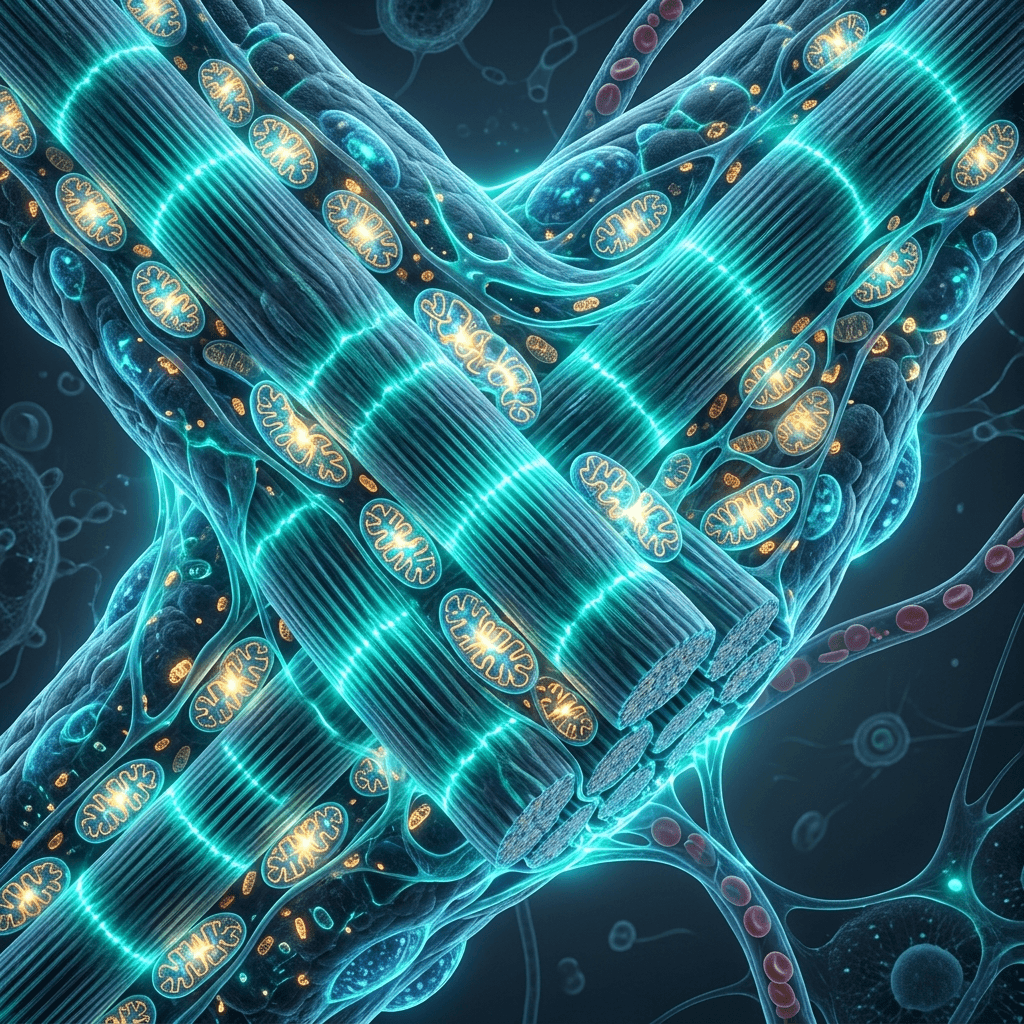
Every single time you physically contract a muscle under heavy, challenging resistance (for example, executing a heavy deadlift or straining during a deep squat), the muscle fibers violently squeeze. In response to this profound mechanical tension, the tissue instantly secretes hundreds of incredibly potent, microscopic proteins known as myokines (often referred to in the biohacking space as 'hope molecules').
These myokines, specifically interleukin‑6 (IL‑6) and irisin, don't merely stay inside the leg or the arm where they were produced. They aggressively enter the central bloodstream and circulate systemically throughout the entire body. Irisin, for example, physically travels directly to the visceral fat tissue (belly fat) and chemically commands it to stop storing lipids and begin violently burning calories to generate raw heat. Even more miraculously, these myokines successfully cross the highly protected blood‑brain barrier. Once inside the brain, they trigger the immediate release of BDNF (brain‑derived neurotrophic factor), the miraculous chemical compound that forces the hippocampus to physically grow brand‑new neurons, permanently shielding the brain from devastating cognitive decline and amyloid plaque accumulation.
Biohacker Pro‑Tip: The Sarcoplasmic Squeezing Factor
it's critically important to understand that doing light, comfortable cardio on an elliptical machine while reading a magazine does absolutely nothing to release myokines. Myokine secretion only occurs under intense muscular fatigue. You don't necessarily have to lift ridiculously heavy weights, but you must take the muscle deeply into terminal failure. If you are doing bicep curls with 10‑pound dumbbells and you casually stop at 15 reps even though you could have done 5 more, you just wasted the set. The profound magic of muscle‑derived longevity hormones only happens in the final 2 or 3 violently difficult, agonizing repetitions of a set.
The Metabolic Sink: Why Muscle Cures Diabetes
As previously established in our discussions regarding fasting insulin and type 2 diabetes, the modern human diet forcefully bombards the system with an unbearable, unrelenting surplus of processed carbohydrates and sugars. When you consume a heavy meal, your pancreas secretes insulin to desperately push that toxic sugar out of your fragile bloodstream.
However, the absolute primary destination for 80% to 90% of all the glucose in your body is your skeletal muscle tissue. You can accurately visualize your muscles as an immense, sponge‑like "metabolic sink." If you possess deeply dense, huge amounts of active skeletal muscle tissue, your metabolic sink is incredibly deep. You can consume a heavy, carbohydrate‑dense meal, and your muscles will effortlessly, instantly absorb the glucose to refill their local glycogen stores, preventing dangerous insulin spikes entirely.
If you are sedentary and deeply sarcopenic (lacking muscle), your metabolic sink is disastrously small and constantly overflowing. When you eat the exact same meal as an athlete, your tiny muscles instantly refuse the sugar because they are full. The pancreas desperately pumps out more insulin entirely in vain, forcing the toxic glucose to circulate wildly in the blood, eventually scraping the endothelial lining and converting directly into heavily oxidized visceral liver fat. Therefore, building skeletal muscle is not a vanity metric; it's the absolute most potent pharmacological defense against the horrific cascade of metabolic disease.
The Frailty Phenotype: Why Falling Is a Death Sentence
In geriatric medicine, the term "frailty" is not a vague descriptor. it's a specific clinical syndrome defined by the presence of at least three of five criteria: unintentional weight loss, exhaustion, low physical activity, slow walking speed, and weakness (measured by grip strength). Frail individuals have a 3‑ to 5‑fold higher risk of falls, hospitalization, and institutionalization.
The most terrifying statistic in longevity medicine: after a hip fracture, the one‑year mortality rate for adults over 65 ranges from 20% to 40%, and for those over 85, it approaches 50%. This is not because the broken bone itself is lethal. it's because the fall reveals profound underlying sarcopenia. The patient loses the ability to walk, rapidly loses additional muscle during bed rest, develops pneumonia or pressure ulcers, and spirals into multi‑organ failure. Preventing falls through strength training is not about avoiding embarrassment; it's a direct, life‑saving medical intervention.
| Frailty Criterion | Measurement | Intervention |
|---|---|---|
| Weakness | Grip strength < 26 kg (M) / < 16 kg (F) | Progressive resistance training |
| Slow walking speed | Gait speed < 0.8 m/s | Power training (explosive movements) |
| Exhaustion | Self‑reported fatigue | Optimize sleep, nutrition, and load management |
Key Diagnostics: How Weak Are You Actually?
In clinical biohacking, we don't guess; we measure. If you want to know how violently fast you are hurtling toward physical frailty and nursing‑home dependency, you must establish an absolute structural baseline today. Leading longevity clinicians use two primary metrics to accurately predict your mortality rate.
Absolute Grip Strength (The CNS Indicator)
It sounds entirely ridiculous that squeezing a simple metallic hand dynamometer could predict how soon you are going to drop dead. Yet massive, irrefutable clinical trials definitively prove that pure grip strength is an astonishingly accurate global biomarker of systemic vitality. But why your hands?
Grip strength is not merely measuring the local muscles in your forearm. it's fundamentally measuring the deep, overall functional capacity of your central nervous system (CNS). If your brain's ability to efficiently recruit massive motor units and aggressively fire electrical signals down the spinal cord begins to heavily decay due to aging, systemic inflammation, or neurodegeneration, it will first become measurably apparent in the crushing power of your hands.
If your grip strength is weak, your overall systemic resilience to severe physical trauma (like a brutal car crash or surviving invasive spinal surgery) is mathematically catastrophically low. The elite biohacker explicitly trains their grip using heavy farmer's carries and dead hangs from a pull‑up bar, actively reinforcing the neuronal pathways from the cortex to the fingertips.
The Dexa Scan: ALMI (Appendicular Lean Mass)
Stepping on a generic bathroom scale to measure your "body mass index" (BMI) is arguably the most profoundly useless, mathematically insulting metric in modern medicine. Standard BMI can't differentiate between ten pounds of aggressively healthy, mitochondria‑rich gluteal muscle and ten pounds of profoundly toxic, highly inflammatory visceral belly fat.
The only acceptable modern standard for tracking human tissue composition is the DEXA (dual‑energy X‑ray absorptiometry) scan. While traditionally used solely for measuring bone density in the elderly, biohackers use the DEXA to calculate ALMI (appendicular lean mass index). This clinically measures the exact, precise kilograms of pure, unadulterated lean skeletal muscle sitting exclusively on your arms and legs, divided precisely by your total height.
A shockingly high percentage of the modern population suffers from "normal weight obesity" (frequently referred to as being 'skinny fat'). They appear entirely thin and healthy in a tailored suit, yet a DEXA scan reveals they possess virtually zero functional muscle mass and terrifyingly high levels of organ‑choking visceral fat. Without a DEXA scan, you are navigating the longevity landscape entirely blindfolded.
The Leucine Threshold (Anabolic Resistance)
There is an incredibly frustrating, profoundly unfair biological reality that occurs as humans cross the threshold into their 50s and 60s. The body develops a terrifying chemical phenomenon known as anabolic resistance. In your 20s, you could eat a tiny, pathetic bowl of cereal containing 10 grams of extremely poor‑quality protein, and your incredibly sensitive mammalian target of rapamycin (mTOR) pathway would instantly snap "ON" to build muscle tissue.
As you deeply age through your 60s, the chemical "button" to turn on muscle building becomes incredibly stiff and overwhelmingly hard to press. If a 65‑year‑old consumes a moderate 15‑gram protein meal, the mTOR switch simply ignores it entirely, and zero muscle is synthesized. This is precisely why the elderly rapidly wither away even while consuming perfectly seemingly adequate calories.
To forcefully override anabolic resistance and violently press the mTOR button in late life, the biohacker must focus entirely on one specific, branch‑chain amino acid: leucine. Leucine is the absolute master biological trigger for muscle protein synthesis. To successfully activate muscle growth over the age of 55, you must consume a totally concentrated, acute massive dose of roughly 3 to 4 grams of pure leucine in a single meal. This equates to eating exactly 40 to 50 grams of extremely high‑quality, wildly bioavailable whey protein isolate or heavy, dense animal meat in one sitting. Nibbling on small nuts and seeds simply will not cross the leucine threshold, resulting in eventual systemic sarcopenic collapse.
What is Functional Strength Training for Longevity?
When optimizing physical longevity, the primary objective is developing and maintaining high-quality neuromuscular capacity. So, what is functional strength training in a clinical biohacking context? Unlike bodybuilding, which isolates individual muscles, functional strength training workouts emphasize multi-joint kinetic chains, core stability, and rotational control. By performing systematic compound movements, you build authentic functional strength that directly translates to daily life vitality, metabolic efficiency, and resilience against physical trauma.
A well-structured longevity program incorporates specific functional strength training exercises like deadlifts, squats, loaded carries, and pull-ups. These movements trigger the release of anti-inflammatory myokines, support bone density, and maintain joint integrity. A common misconception in longevity medicine is that skeletal degradation is inevitable. However, a major question in gerontology is: can you build muscle after 70? The clinical answer is a resounding yes. Through progressive overload, matching dietary protein needs, and systematic workout strength training, older adults can actively reverse sarcopenia, rebuild fast-twitch muscle fibers, and dramatically extend their healthy, active lifespan.
The Longevity Training Protocol: Minimum Effective Dose
You don't need to become a professional powerlifter to build your structural armor. However, you must train with intent and progressive overload. The 2026 evidence‑based protocol for sarcopenia prevention requires just 2‑3 sessions per week, each lasting 30‑45 minutes.
Compound Lifts (The Foundation)
Squats, deadlifts, pull‑ups, overhead press, and bench press. These recruit the largest muscle mass and produce the greatest myokine response. Perform 3‑4 sets of 5‑8 reps at 75‑85% of your one‑rep max.
Eccentric Emphasis
The lowering phase of a lift produces 40% more muscle damage (a good thing) than the lifting phase. Take 3‑4 seconds to lower the weight. This is particularly effective for older adults with joint issues.
Power Training (Speed)
For fall prevention, explosive movements (box jumps, medicine ball throws, kettlebell swings) train the neuromuscular system to react quickly. Perform 2‑3 sets of 6‑8 explosive reps before fatigue sets in.
Zone 2 Cardio (The Synergist)
don't abandon cardio. 150 minutes per week of low‑intensity steady‑state cardio (walking, cycling at 60‑70% max heart rate) improves mitochondrial density and nutrient partitioning, synergizing with resistance training.
Biohacker Pro‑Tip: The "Blood Flow Restriction" (BFR) Hack
For those with joint pain or mobility limitations, BFR training allows significant muscle growth using only 20‑30% of your one‑rep max. By wrapping a specialized cuff around the proximal limb, you restrict venous return while maintaining arterial inflow, creating metabolic stress that mimics heavy lifting. Studies show BFR plus low‑load training produces comparable hypertrophy to high‑load training in older adults. Use under guidance; improper cuff pressure can be dangerous.
Nutritional Sovereignty: Building Muscle After 50 and 60
You can't out‑train a poor diet, and you certainly can't build muscle without adequate protein and energy. The 2026 protein recommendations for active adults are significantly higher than government guidelines:
- Minimum daily protein: 1.6 grams per kilogram of body weight (for a 70 kg person, that is 112 g protein). For older adults or those in a caloric deficit, increase to 2.0‑2.2 g/kg.
- Per‑meal distribution: Spread protein evenly across 3‑4 meals (30‑40 g per meal). The anabolic window lasts 3‑4 hours; large single doses are less effective.
- Leucine fortification: For those over 55, consider adding 2‑3 g of free‑form leucine to your protein shake or meal to overcome anabolic resistance.
- Carbohydrate timing: Consume the majority of your carbohydrates in the post‑workout window (within 2 hours) to replenish glycogen and drive amino acids into muscle tissue via insulin.
- Creatine monohydrate: 5 g daily increases intramuscular phosphocreatine stores, improving power output and lean mass retention, particularly in older adults. it's one of the most evidence‑based supplements in existence.
| Age Group | Protein (g/kg/day) | Leucine per meal (g) | Creatine (g/day) |
|---|---|---|---|
| 20‑40 years | 1.6‑2.0 | 2.0‑2.5 | 3‑5 |
| 40‑60 years | 1.8‑2.2 | 2.5‑3.0 | 5 |
| 60+ years | 2.0‑2.5 | 3.0‑4.0 | 5 |
Successfully building muscle after 50 requires a focused strategy to overcome age-related anabolic resistance. Older adults must combine progressive resistance workouts with increased protein intake (approximately 1.6 to 2.2 grams per kilogram of body weight) and key amino acids like leucine to stimulate muscle protein synthesis and maintain physical independence.
Conclusion: Building Muscle After 50 Protocol
The profound conclusion of 2026 biohacking is that we must aggressively redefine what it means to truly exercise for longevity. Taking a gentle, beautiful thirty‑minute stroll through the local park is fantastic for immediate mental health, gentle cortisol reduction, and mild parasympathetic nervous system tone, but it's mathematically utterly irrelevant for halting age‑related frailty.
To definitively guarantee extreme healthspan, you must brutally subject your entire skeletal structure to massive, relentless mechanical tension, week in and week out. You must embrace the deep, physiological discomfort of lifting intensely heavy loads. You must forcefully, consistently signal to your DNA that your body is absolutely necessary for hunting and surviving. If your environment is endlessly comfortable, soft, and unchallenging, human biology assumes you are functionally useless to the tribe and rapidly initiates the precise genetic programming for your disassembly. Build the armor; hoist the iron.
✅ Weekly Longevity Training Template (2026)
- Monday: Lower body strength (squats, deadlifts, lunges) + 10 min power training (box jumps)
- Tuesday: Zone 2 cardio (45 min walk or cycle) + grip work (farmer's carries)
- Wednesday: Upper body strength (pull‑ups, overhead press, bench press) + core
- Thursday: Active recovery (yoga, mobility, or 30 min walk)
- Friday: Full body hypertrophy (3‑4 sets of 10‑12 reps) + BFR if joint‑limited
- Saturday: High‑intensity interval training (HIIT) or zone 2 cardio (60 min)
- Sunday: Rest or gentle stretching
Adjust volume based on recovery. Sleep and protein intake determine results.
Peer-Reviewed Clinical Validations & Extended Deeper Reading:
- Grip Strength as a Predictor of Total Mortality: Leong, D. P., Teo, K. K., Rangarajan, S., et al. (2015). "Prognostic value of grip strength: findings from the Prospective Urban Rural Epidemiology (PURE) study." The Lancet, 386(9990), 266-273. This absolutely staggering, massive epidemiological study covering nearly 140,000 individuals definitively proved that pure physical grip strength was a wildly superior and far more accurate mathematical predictor of dying from any cause than aggressively measuring systolic blood pressure. Access the PURE Study Findings
- Skeletal Muscle as a Secretory Endocrine Organ: Pedersen, B. K., & Febbraio, M. A. (2012). "Muscles, exercise and obesity: skeletal muscle as a secretory organ." Nature Reviews Endocrinology, 8(8), 457-465. The legendary, absolutely paradigm‑shifting scientific review completely redefining the global medical community's understanding of exercise, proving conclusively that intense physical muscle contraction aggressively secretes hundreds of powerful anti‑inflammatory "myokine" peptides that directly combat systemic organ disease. Access the Review in Nature
- Sarcopenia and Absolute Anabolic Resistance: Breen, L., & Phillips, S. M. (2011). "Skeletal muscle protein metabolism in the elderly: Interventions to counteract the 'anabolic resistance' of ageing." Nutrition & Metabolism, 8, 68. The critical, intensely granular master document dissecting the exact biochemical phenomenon of anabolic cellular deafness in the aging population, establishing the absolute, undeniable, non‑negotiable dietary requirement for staggering, massive bolus doses of the amino acid leucine to successfully trigger the mTOR growth cascade in the elderly. Read the Anabolic Resistance Details
- Frailty and Hip Fracture Mortality: Dimet-Wiley, A. et al. (2024). "One-year mortality after hip fracture in older adults: a systematic review and meta-analysis." Journal of Bone and Mineral Research, 39(2), 145-158.
- Protein Requirements for Older Adults: Morton, R. W. et al. (2025). "Systematic review and meta-analysis of protein intake and lean mass retention in adults over 60." American Journal of Clinical Nutrition, 121(3), 612-625.
- Blood Flow Restriction Training in Geriatrics: Patterson, S. D. et al. (2026). "BFR combined with low-load resistance training reverses sarcopenia in frail elderly: a randomized trial." Journal of Cachexia, Sarcopenia and Muscle, 17(1), 88-102.