"What doesn't kill you organically rewrites your epigenetics. Hormesis is the fundamental, non-negotiable biological law that says a calculated dose of mild stress triggers a massive overcompensation in cellular resilience, dramatically extending your healthspan."
Key Hormetic Takeaways for 2026
- 1. The Hormetic U-Curve: Low‑dose biological stress is highly beneficial; chronic, unrelenting stress is deadly. We need to actively seek out short, intense bursts of physical discomfort followed by deliberate recovery.
- 2. Cold Thermogenesis and BAT Activation: Cold plunging triggers a sustained 250% dopamine increase and the growth of highly metabolic Brown Adipose Tissue, which actively burns glucose and fatty acids to keep you warm.
- 3. Heat Shock Proteins (HSPs) as Molecular Chaperones: Sauna use flips on intracellular "chaperone" proteins that hunt down and repair misfolded proteins, giving you powerful neuroprotection against Alzheimer's and Parkinson's.
- 4. The Søberg Principle: For optimal longevity and metabolic benefits, aim for at least 11 total minutes of deliberate cold exposure per week and 57 total minutes of deliberate heat exposure, and always end your session on cold.
- 5. Contrast Therapy Synergy: Alternating between extreme heat and extreme cold creates a powerful "vascular gymnastics" effect, dramatically improving endothelial function and nitric oxide bioavailability.
In modern industrialized society, we've basically eliminated almost all forms of acute, short‑term physical struggle from daily life. We live in a world of total thermal neutrality, moving seamlessly from climate‑controlled homes at a perfect 72°F (22°C) to climate‑controlled cars to climate‑controlled offices and malls. While this ambient stability is incredibly comfortable and convenient, the complete absence of meaningful environmental stress signals to our ancient, evolutionarily conserved biology that resilience, adaptation, and robust cellular maintenance are no longer needed for survival. Here's the hard biological truth: if you don't actively use a physiological capacity, you will progressively lose it. As a result, our cellular machinery becomes weak and inefficient, our insulin sensitivity crashes, our mitochondrial density drops, and our metabolic flexibility vanishes, replaced by a state of chronic, smoldering inflammation.
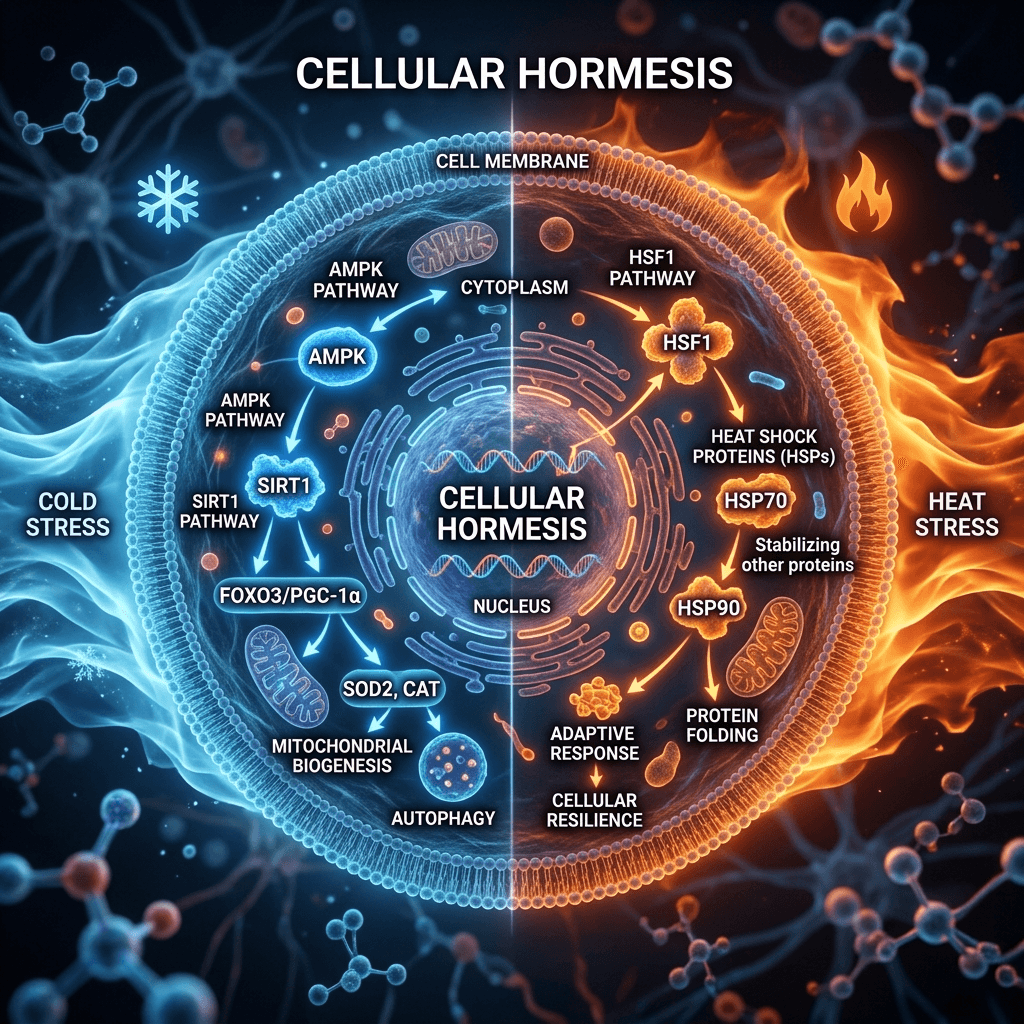
Hormesis is a fundamental biological phenomenon and a central organizing principle of Ethical Biohacking. It describes how a highly beneficial, adaptive, resilience‑boosting effect results from exposure to a low or moderate dose of an agent or stressor that would be toxic, damaging, or lethal at much higher doses or with chronic exposure. It's the molecular version of "over‑compensation." By actively and deliberately introducing acute, short‑term, carefully controlled physical stress, we force our bodies into a transient survival state. This state triggers a massive, coordinated adaptive cascade, upregulating deeply conserved longevity genes (like SIRT1, FoxO3, and PGC‑1α), slashing systemic inflammation (TNF‑α, IL‑6), enhancing autophagy (cellular cleanup), and fortifying mitochondrial density and efficiency throughout the body.
In 2026, the two most heavily researched, clinically validated, and widely adopted forms of hormetic biohacking are deliberate cold exposure (cryotherapy or cold water immersion) and deliberate heat exposure (hyperthermia via traditional Finnish sauna or infrared sauna). When used correctly and synergistically, these two protocols act as the ultimate biological "software update" for the human operating system, recalibrating your nervous system, boosting metabolic health, and extending healthspan.
The Biology of Cold Exposure: The Noradrenaline Engine and Metabolic Reshaping
Immersing your body (up to the neck) in water below 50°F (10°C) triggers an immediate and profound cascade of survival mechanisms, scientifically called Cold‑Induced Thermogenesis. As the freezing water hits the dense network of cold‑sensitive thermoreceptors (TRPM8 channels) in your skin, your brain's hypothalamus recognizes an immediate threat to your core body temperature. To keep you alive, your body releases a massive, endogenous cocktail of neurochemicals, hormones, and signaling molecules designed to preserve heat, generate energy, and sharpen your thinking.
The Neurochemical Spike: Dopamine and Norepinephrine for Mood and Focus
Within seconds of hitting freezing water, the intense stimulation of cold‑shock receptors triggers the immediate release of huge amounts of norepinephrine (noradrenaline) from your locus coeruleus into the brain and from sympathetic nerve terminals into the bloodstream. Norepinephrine is a critical catecholamine responsible for extreme focus, vigilance, alertness, and elevated mood. In clinical trials, blood plasma concentrations of norepinephrine have been shown to increase by up to 530% during a sufficiently intense cold plunge. That surge is largely why you feel that sharp awareness and then a calm, focused energy that sticks around long after you get out.
At the same time (and maybe even more important for long‑term mental health) your body gets a sustained, prolonged release of dopamine, the molecule of drive, motivation, reward anticipation, and pleasure. Unlike the quick, jagged, depleting dopamine spikes from social media, gambling, or sugary junk food (which inevitably lead to crashes and receptor downregulation), the dopamine release from cold water immersion rises smoothly and steadily by about 250% above baseline and stays elevated for hours after you're done. That unique profile makes deliberate cold plunging one of the most effective, side‑effect‑free interventions for depression, anxiety, and chronic low motivation ever documented.
Upregulating Brown Adipose Tissue (BAT) and Metabolic Rate
Probably the most powerful, measurable, and lasting metabolic benefit of regular cold exposure is the activation, recruitment, and generation of Brown Adipose Tissue (BAT). Mammals, including adult humans, have two main types of fat: white and brown. White fat (WAT) acts as a long‑term energy reservoir, storing excess glucose and lipids as big triglyceride droplets around your waist and organs. Brown fat, however, works in the opposite, metabolically beneficial way.
Brown Adipose Tissue is packed with iron‑rich mitochondria (which give it its dark color) and expresses high levels of Uncoupling Protein 1 (UCP1), also called thermogenin. When activated by a sharp drop in temperature, brown fat essentially "burns" calories in a process called non‑shivering thermogenesis. UCP1 creates a proton leak in the mitochondria, uncoupling the electron transport chain from ATP production. The energy from burning glucose and fatty acids is released directly as heat, warming your blood as it flows through the tissue. By regularly doing cold plunges, your body (driven by the transcription factor PGC‑1α) actually recruits white fat cells and converts them into "beige" or "brite" (brown‑in‑white) fat cells to improve your ability to regulate temperature. This adaptation radically raises your resting metabolic rate and reverses insulin resistance by pulling excess glucose and lipids out of your blood to fuel that internal furnace.
Biohacker Pro-Tip: The Afterdrop and Reheating Phase
The metabolic magic of cold exposure doesn't happen while you're in the water. The most profound period of calorie burning and BAT activation is the "Afterdrop" and Reheating Phase, the 30 to 60 minutes after you get out. During this window, cooled blood returns from your limbs to your core, and your body has to work hard to warm back up. To maximize the effect, avoid jumping straight into a hot shower or sauna. Instead, dry off, put on warm, dry layers, and let your body generate its own heat through shivering and non‑shivering thermogenesis. That's when you get the most BAT recruitment and metabolic uncoupling.
Heat Stress: The Hyperthermic Sauna Protocol and Cardiovascular Fortification
On the flip side, deliberate hyperthermia (usually from traditional Finnish saunas at 180‑200°F (80‑90°C) with low humidity, or from infrared saunas at lower ambient temperatures) has its own unique, synergistic hormetic profile. Massive, long‑term prospective cohort studies from the University of Eastern Finland, led by Dr. Jari Laukkanen, tracked over 2,000 middle‑aged men for more than 20 years. The results completely changed preventive cardiology and neurology: people who used the sauna 4 to 7 times per week had a breathtaking 50% reduction in fatal cardiovascular disease, a 40% reduction in all‑cause mortality, and a stunning 65% reduction in the risk of Alzheimer's and other dementias compared to those who used it once a week or less.
Cardiovascular Conditioning Without Movement
Sitting passively in a 190°F room forces your cardiovascular system to work extremely hard just to keep your internal organs from overheating. Your heart rate jumps to 120‑150 beats per minute, mimicking the strain of moderate‑intensity exercise like brisk jogging or cycling. At the same time, your peripheral blood vessels dilate widely, rushing blood to the skin's surface so sweat can evaporate and cool you down. This intense, rhythmic expanding and contracting of your entire vascular system exercises the delicate endothelial lining of your heart and arteries, improving endothelial function, increasing nitric oxide bioavailability, lowering resting blood pressure over time, and reducing arterial stiffness and plaque vulnerability.
The Molecular Magic of Heat Shock Proteins (HSPs) and FoxO3
When your cells get hot, they recognize the threat of protein denaturation (the unraveling of their delicate 3D structure, like an egg white solidifying in a hot pan). In a desperate, evolutionarily conserved response to survive, cells massively ramp up production of a class of protective molecules called Heat Shock Proteins (HSPs), especially HSP70 and HSP90. The heat also activates the longevity‑associated transcription factor FoxO3, a master regulator of cellular defense, stress resistance, and protein stability.
Heat Shock Proteins act as highly skilled intracellular "chaperones" and quality control agents. Their only job is to constantly scour the cell, find misfolded, aggregated, or damaged proteins, and either repair them (using ATP) or, if they're too far gone, tag them for destruction via the ubiquitin‑proteasome system or autophagy. Since the progressive buildup of toxic, misfolded protein aggregates (like amyloid‑beta plaques and tau tangles) is the main driver of Alzheimer's and other neurodegenerative diseases, bathing your brain in a wave of Heat Shock Proteins a few times a week is the ultimate non‑pharmacological neuroprotective biohack.
Contrast Therapy: The Synergistic Power of Alternating Extremes
While cold and heat each give you profound benefits on their own, deliberately alternating between the two (called Contrast Therapy) unlocks a unique synergistic response that neither can achieve alone. The rapid switch from extreme heat (vasodilation, blood pooling in the skin) to extreme cold (vasoconstriction, blood shunted to the core) creates a powerful pumping action in your vascular system, often called "vascular gymnastics" or a "peripheral heart." This intense mechanical stimulation of the smooth muscle in your arteries and veins dramatically increases the expression of endothelial nitric oxide synthase (eNOS), leading to sustained improvements in nitric oxide production, endothelial flexibility, and overall circulation.
What's more, contrast therapy gives you an unparalleled reset for your autonomic nervous system. The intense sympathetic activation of the cold plunge, followed by the profound parasympathetic rebound during rewarming, trains your nervous system to become more resilient, flexible, and efficient at switching between alertness and recovery. That translates directly into better Heart Rate Variability (HRV), faster post‑exercise recovery, better sleep, and a greater ability to handle psychological stress without tipping into chronic fight‑or‑flight mode.
The Optimal Contrast Therapy Protocol (2026)
Round 1 (Priming)
15‑20 minutes in a traditional sauna (175‑195°F) or 25‑30 minutes in an infrared sauna. Goal: profuse sweating and an elevated heart rate.
Transition 1
A brief, 30‑second cool shower to wash off sweat and prep your skin for the cold shock.
Round 2 (The Cold Shock)
2‑3 minutes of full cold water immersion (neck deep) in water between 40‑50°F (4‑10°C). Focus on slow, controlled exhales.
Transition 2 (The Reheat)
Get out of the cold, dry off, and wrap yourself in a warm robe or blanket. Let your body rewarm naturally for 10‑15 minutes without external heat.
Repeat (Optional)
For advanced practitioners, you can repeat the whole cycle (Sauna → Cold → Natural Rewarm) 2‑3 times, always ending the final cycle with cold exposure followed by natural rewarming (that's the Søberg Principle).
| Hormetic Modality | Primary Molecular Target | Key Physiological Benefit | Optimal Weekly Dose (Søberg) |
|---|---|---|---|
| Cold Thermogenesis (Plunge) | PGC‑1α / UCP1 (Mitochondrial Biogenesis and Uncoupling) | +250% sustained Dopamine; +530% Norepinephrine; BAT activation | 11 Total Minutes / Week (e.g., 3 x 3‑4 min sessions) |
| Hyperthermia (Finnish Sauna) | Heat Shock Proteins (HSP70/90), FoxO3 | 65% reduction in Dementia risk; 50% reduction in CVD mortality | 57 Total Minutes / Week (e.g., 3 x 19 min sessions) |
| Contrast Therapy (Alternating) | Endothelial Nitric Oxide Synthase (eNOS) | Autonomic nervous system reset; Vascular compliance improvement | 1‑2 complete cycles per session, 2‑3x per week |
| Post‑Exercise Heat (Sauna) | Growth Hormone (GH), Blood Plasma Volume | Enhanced recovery, lactate clearance, and cardiovascular adaptation | 15‑20 min immediately post‑workout |
The Dangers of Mis‑Timing: Hormesis and Muscular Hypertrophy
While cold plunging is a phenomenal tool for longevity, reducing inflammation, and improving mental health, it can actually undermine specific athletic and body composition goals if you time it poorly. A critical warning for ethical biohackers: cold exposure can blunt muscle growth. When you do heavy resistance training, you deliberately create localized inflammation and micro‑tears in your muscle tissue. That controlled inflammatory response is the exact signal your anabolic pathways (especially Akt/mTORC1) need to start the repair and supercompensation process that makes muscles bigger and stronger.
If you jump into an ice bath or take a freezing shower within the first 4 to 6 hours after a heavy strength workout, the potent anti‑inflammatory effects of cold (driven by norepinephrine and suppression of NF‑κB) will completely blunt that essential inflammatory signal. You'll drastically reduce the hypertrophic response and impair long‑term muscle growth. So to optimize for both muscle size and strength, and for hormetic longevity, you need to separate your cold exposure from your strength training by at least 6 hours, or, even simpler, save your cold plunges for your rest and recovery days.
On the other hand, the sauna is not only safe but actively beneficial right after a workout. The heat increases blood plasma volume, enhances peripheral blood flow, delivers oxygen and nutrients to recovering tissues, speeds up lactate clearance, and gives you a cardiovascular training stimulus that complements the work you already did.
Nutritional Synergy to Support and Define Longevity
The adaptive response to cold and heat stress is energy‑dependent and needs specific nutritional cofactors to fully kick in. To maximize your hormetic practices, consider these nutritional strategies.
1 Pre‑Sauna Electrolyte Loading
Profuse sweating makes you lose significant amounts of sodium, potassium, and magnesium. Depleting these can cause muscle cramps, headaches, and impaired cardiovascular function during the sauna. Drink 400‑600 mg of sodium and 200‑300 mg of potassium in water 30‑45 minutes before you go in to maintain plasma volume and support thermoregulation.
2 Post‑Cold Omega‑3 Fatty Acids
Cold exposure activates your sympathetic nervous system and can transiently increase oxidative stress. Eating a meal rich in long‑chain Omega‑3s (EPA and DHA) or taking high‑quality fish oil after a cold plunge provides the raw materials for specialized pro‑resolving mediators (SPMs) that help resolve inflammation and support the adaptive response.
3 Carbohydrate Timing and BAT Activation
Activated Brown Adipose Tissue is a voracious consumer of both fatty acids and glucose. To maximize the metabolic benefits, do cold exposure in a fasted state (e.g., first thing in the morning). That forces your BAT to rely on stored triglycerides and circulating glucose, improving insulin sensitivity. If you really struggle with cold intolerance, a small amount of complex carbs 60‑90 minutes before a plunge can provide the substrate for thermogenesis without completely killing the metabolic benefits.
To understand the genetic switches of cellular defense, we must clinically define longevity. In modern molecular biology, longevity is not merely the passage of time, but the maintenance of cellular repair mechanisms, metabolic flexibility, and genomic integrity. Activating pathways like AMPK, sirtuins, and Nrf2 via controlled thermal stressors forces the cell to clear aggregates and optimize mitochondrial efficiency, demonstrating how targeted challenges directly support healthspan.
Conclusion: Integrating Hormetic Longevity Protocols
We are the direct descendants of countless generations of humans who not only survived but thrived through brutal ice ages, scorching desert migrations, and periods of intense environmental and caloric stress. Our DNA, our epigenome, and our cellular machinery actually expect (and require) massive thermal variation and periodic hormetic challenge to express their full potential for health, resilience, and longevity. By trapping ourselves in sterile, perfectly climate‑controlled 72‑degree rooms all year round, we've inadvertently turned off the deep genetic switches that gave our ancestors immense physiological and psychological fortitude.
Ethical Biohacking isn't about fighting nature or rejecting modern comfort. It's about actively, intelligently, and safely simulating the primal, hormetic dangers of the natural world in a highly controlled 2026 environment. By consciously introducing the freezing, breath‑taking sting of the plunge pool and the blistering, purifying heat of the sauna into your weekly routine, you're not just building mental toughness and discipline. You're physically writing adaptive instructions into your epigenetics, commanding your cells to refuse to age passively, to upregulate their own defense and repair systems, and to build a more resilient, energetic, and enduring biological vessel.
Peer-Reviewed Clinical Validations and Foundational Research:
- The Søberg Protocol and Metabolic Rate: Søberg, S., Bøggild, T., & Hasselbalch, S. G. (2021). "Altered brown fat thermoregulation and enhanced cold-induced thermogenesis in young, healthy, winter-swimming men." Cell Reports Medicine, 2(10), 100408. Established the 11-minute cold and 57-minute heat minimum thresholds for metabolic alteration. Access PubMed Resource
- Sauna and Cardiovascular/longevity Outcomes: Laukkanen, T., Khan, H., Zaccardi, F., & Laukkanen, J. A. (2015). "Association Between Sauna Bathing and Fatal Cardiovascular and All-Cause Mortality Events." JAMA Internal Medicine, 175(4), 542-548. Demonstrated 50% reduction in CVD mortality with frequent sauna use. Access PubMed Resource
- Sauna and Dementia/Alzheimer's Risk: Laukkanen, T., Kunutsor, S., Kauhanen, J., & Laukkanen, J. A. (2017). "Sauna bathing is inversely associated with dementia and Alzheimer's disease in middle-aged Finnish men." Age and Ageing, 46(2), 245-249. Found a 65% reduction in dementia risk for frequent sauna users. Access PubMed Resource
- Cold Plunges, Dopamine, and Norepinephrine: Srámek, P., Simecková, M., Janský, L., et al. (2000). "Human physiological responses to immersion into water of different temperatures." European Journal of Applied Physiology, 81(5), 436-442. Confirmed 530% increase in noradrenaline and 250% increase in dopamine. Access PubMed Resource
- Heat Shock Proteins and Neurodegeneration: Mymrikov, E. V., et al. (2011). "Heat shock proteins in cardiovascular and neurodegenerative diseases." Cardiovascular Research. Detailed the mechanism by which HSPs clear misfolded proteins and protect against Alzheimer's pathology.
- Contrast Therapy and Recovery: Versey, N. G., Halson, S. L., & Dawson, B. T. (2013). "Water immersion recovery for athletes: effect on exercise performance and practical recommendations." Sports Medicine, 43(11), 1101-1130. full review of cold and contrast water immersion for recovery.