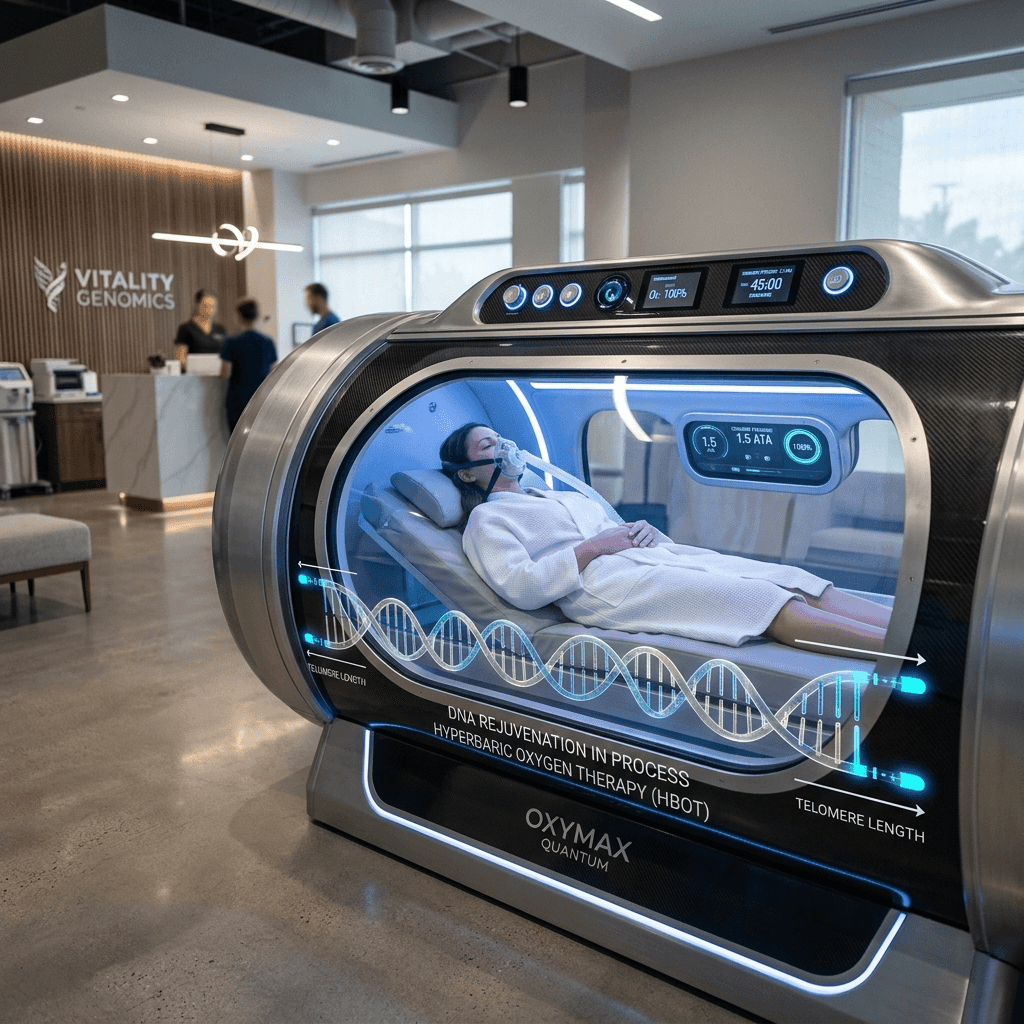
Oxygen is a edged sword. If we do not get oxygen we suffocate. If we get much oxygen our bodies start to break down.. When oxygen is given under pressure in short bursts it can be very helpful. It can even help our bodies to repair themselves and stay healthy.
Longevity: 2026 Core Pillars
-
1.
Telomere Lengthening: A study done in 2020 at the Shamir Medical Center showed that using HBOT can make our telomeres longer. Telomeres are the caps on the ends of our chromosomes. When they get shorter it can be a sign that our bodies are getting older. The study found that HBOT can make telomeres longer by 20-38% in adults who are getting older.
-
2.
Senescent Cell Clearance: The same study found that HBOT can help get rid of cells. These are cells that are not working properly and can even be harmful to our bodies. The study showed that HBOT can reduce the number of these cells by up to 37%.
-
3.
The Hyperoxic-Hypoxic Paradox: HBOT works by giving our bodies a lot of oxygen and then taking it away. This back-and-forth between low oxygen levels can help our bodies to repair themselves. It can even help to wake up cells that are not working properly.
-
4.
Optimal Protocol for Longevity: The best way to use HBOT for longevity is to have 60 sessions, each lasting 90 minutes. The sessions should be done every day with a five-minute break in between to breathe air.
-
5.
Cost, Access and Safety: HBOT can be expensive with each session costing between $150-300. It also takes a lot of time with 60 sessions needed over 12 weeks. There are also some risks to consider such as oxygen toxicity and ear damage.
For a time Hyperbaric Oxygen Therapy or HBOT has been used to help people who are sick or hurt. It is used to help people who have diving accidents, carbon monoxide poisoning and other serious health problems. HBOT works by putting a person in a chamber and giving them pure oxygen to breathe. This helps to get oxygen into the persons blood and can help to heal damaged tissues.
In 2020 a study was done that showed HBOT could be used for something else. It could be used to help people live healthier lives. The study found that HBOT could help to lengthen telomeres and get rid of cells. This was a discovery and it has led to a lot of interest in using HBOT for longevity.
The way HBOT works is by giving the body a lot of oxygen and then taking it away. This back-and-forth between low oxygen levels can help the body to repair itself. It can even help to wake up cells that are not working properly. This is called the Hyperoxic-Hypoxic Paradox.
THE HYPEROXIC-HYPOXIC PARADOX
There are key molecular pathways that are activated by intermittent HBOT. These include HIF-1α Activation, Nrf2 Activation, SIRT1 Upregulation, Stem Cell Mobilization, Mitochondrial Biogenesis and Telomerase Activation.
THE SHAMIR STUDY: TELOMERE ELONGATION AND SENESCENT CELL CLEARANCE
The Shamir study was a deal because it showed that HBOT could be used to lengthen telomeres and get rid of senescent cells. The study found that HBOT could increase telomere length by over 20% and reduce the number of cells by up to 37%. This was a discovery and it has led to a lot of interest in using HBOT for longevity.
The study also found that HBOT did not increase telomerase activity. This suggests that the way HBOT lengthens telomeres is not by activating telomerase but by selectively clearing out older cells with shorter telomeres.
- The results of the study are summarized in the following table:
| Biomarker | Cell Type / Measurement | Change After 60 HBOT Sessions | Significance |
|---|---|---|---|
| Telomere Length | Peripheral Blood Mononuclear Cells | Increased by than 20% | |
| Telomere Length | B Cells | Increased by about 38% | |
| Telomere Length | T Helper Cells | Increased by about 25% | |
| Senescent Cells | Senescent T Helper Cells | Decreased by 37% | |
| Telomerase Activity | Peripheral Blood Mononuclear Cells | No significant change |
It is worth noting that the study had some limitations. The sample size was small. There was no control group. More research is needed to understand the effects of HBOT on longevity.
What is HBOT Used For: Oxygen Therapy & Telomere Lengthening
To understand the cellular potential of this modality, we must ask: what is hbot and how does it differ from breathing ambient oxygen? Hyperbaric Oxygen Therapy, or oxygen therapy hbot, is a specialized medical treatment where an individual breathes 100% pure oxygen inside a pressurized chamber set between 1.5 and 2.4 atmospheres absolute (ATA). This pressure physically dissolves high concentrations of oxygen directly into the blood plasma, bypassing the saturation limits of hemoglobin and delivering rich oxygenation to deep tissues.
Historically, standard clinical hbot treatment has been reserved for non-healing wounds, carbon monoxide poisoning, and decompression sickness. However, modern biohacking has unlocked hbot therapy for systemic longevity and cellular rejuvenation. The seminal hbot telomere length study 2020 led by Dr. Shai Efrati demonstrated that a specific 60-session hyperbaric protocol could increase peripheral blood mononuclear cell telomere length by up to 20% while reducing senescent immune cells by up to 37%. By shifting cells between hyperoxia and sudden normal levels, the protocol triggers an adaptive cascade that stimulates mitochondrial health, stem cell mobilization, and tissue healing.
PROTOCOL DECONSTRUCTION: THE "longevity PROTOCOL" VS. STANDARD MEDICAL HBOT
The "longevity protocol" is different from the medical HBOT protocol. The longevity protocol involves 60 sessions of HBOT each lasting 90 minutes. The standard medical HBOT protocol is used to treat medical conditions, such, as diving accidents and carbon monoxide poisoning. It typically involves sessions and lower oxygen levels.
Hyperbaric Oxygen Therapy or HBOT is really important for people who want to live an healthy life.. It is very important to use the right HBOT protocol, like the one used in the Shamir study. This study used a kind of HBOT that is different from the kind used for regular medical problems like wounds or carbon monoxide poisoning.
The Shamir study used a grade hard chamber that can go up to 2.4 ATA and the people in the study breathed 100% medical-grade oxygen. They did this for 90 minutes with 5-minute breaks, five days a week for 12 weeks. This is very different from the "home hyperbaric chambers that only go up to 1.3 ATA and use regular air or an oxygen concentrator.
| Protocol Parameter | Standard Medical HBOT (e.g., Wound Care) | Shamir "longevity Protocol" (2020) | Mild Hyperbaric / Soft Chamber (Wellness) |
|---|
Biohacker Pro-Tip: The Critical Importance of Air Breaks
The 5-minute "air breaks" taken every 20 minutes during the 90-minute HBOT session are not merely for comfort; they are a critical safety and efficacy component. Continuous exposure to 100% oxygen at pressure can lead to central nervous system (CNS) oxygen toxicity, manifesting as seizures (Paul Bert effect). The brief air breaks, by transiently lowering the partial pressure of oxygen in the brain, dramatically reduce this risk. Plus, these intermittent normoxic periods contribute to the "oxygen swing" and the hormetic signaling that drives the beneficial adaptations. Never skip the air breaks.
BEYOND TELOMERES: ADDITIONAL longevity-RELEVANT EFFECTS OF HBOT
HBOT is not about telomeres it also does a lot of other good things for the body. Here are some of the things HBOT can do:
Angiogenesis
Help grow blood vessels, which is called angiogenesis
Neurogenesis
Help the brain grow cells, which is called neurogenesis
Neuroinflammation
Reduce inflammation in the brain, which is called neuroinflammation
Wound Healing
Help wounds heal faster
Mitochondrial Function
Make the energy factories in our cells called mitochondria work better
Anti-Inflammatory
Reduce inflammation in the body, which is called anti-inflammatory effects
SAFETY, SIDE EFFECTS, AND CONTRAINDICATIONS
Hbot is not without risks. Some people may get ear or sinus problems. Even have a seizure if they breathe too much oxygen. That is why the 5-minute breaks are so important. They help reduce the risk of these problems.
- There are also some things that can make it hard for people to use HBOT. For example some people may have a problem with their lungs. They may be taking certain medicines that do not mix well with HBOT. Women who are pregnant should also be careful when using HBOT.
Absolute Contraindications for Elective HBOT
- Untreated Pneumothorax (collapsed lung).
- Current or recent use of Bleomycin, Cisplatin, Doxorubicin, or Disulfiram.
- Severe, uncontrolled COPD with CO₂ retention.
- History of spontaneous pneumothorax.
- Active, untreated upper respiratory infection or severe sinus congestion (increases barotrauma risk).
- Pregnancy (relative contraindication; risk-benefit must be assessed).
- Uncontrolled high fever.
THE COST-BENEFIT AND LOGISTICS OF A 60-SESSION HBOT PROTOCOL
The cost of HBOT can be very high. A single session can cost between $150 and $350 and a full course of 60 sessions can cost up to $21,000. This is a lot of money. It is not usually covered by health insurance.
So who is HBOT best for? It is best for people who're older usually over 50 and who are in good health but have some signs of aging, like short telomeres. These people should also have a lot of money to spend on HBOT. They should already be taking care of their bodies through good nutrition exercise and stress management.
Hyperbaric Oxygen Therapy: Personalized Longevity Protocols
The future of HBOT is very exciting. Scientists are working on making HBOT more personalized so that each person can get the treatment for their body. They are also looking at combining HBOT with treatments, like special diets or medicines to make it even more effective.
- How often people should have HBOT sessions
- Who will benefit the most from HBOT
- How HBOT can be combined with treatments to make it more effective
- How to make HBOT more affordable and accessible to everyone.
Clinical Protocol: Hyperbaric Therapy Settings
When seeking authentic hyperbaric therapy, clinical outcomes depend on chamber specification. Mild hyperbaric therapy (mHBOT) using soft chambers is limited to 1.3 ATA and ambient air, which is insufficient to trigger the hyperoxic-hypoxic paradox. True cellular remodeling, including telomere lengthening and senescent cell clearance, requires medical-grade hard chambers operating at 1.5 to 2.0 ATA breathing 100% pure oxygen.
Conclusion: Integrating Hyperbaric Therapy
HBOT is a powerful tool, for people who want to live a long and healthy life. It can do a lot of things for the body and it can help people stay healthy and strong as they get older.. It is very important to use HBOT correctly and to be aware of the potential risks and problems.
HBOT for Brain Health and Cognitive Longevity: HBOT is being looked at closely as a way to help with age related problems with the brain, mild cognitive impairment and even early Alzheimers disease. This is because HBOT has an impact on the growth of new brain cells the formation of new blood vessels and inflammation in the brain. People are really looking forward to seeing the results of the studies.
Hyperbaric Oxygen Therapy is a very strong tool for making cells young again when it is used in a specific and intense way. This was shown to be true by the Shamir study. HBOT is one of the well documented ways to reverse some of the main signs of aging without using medicine. The proof that HBOT can make telomeres longer and get rid of cells in healthy older people is very convincing. This has changed the way people think about living a life. HBOT is not a relaxing treatment it is a very strong treatment that requires a lot of time, money and self discipline.
Someone who wants to use HBOT to improve their health in 2026 needs to understand what it can really do. They need to know the difference between the medical grade HBOT that is used for longevity and the mild hyperbaric treatments that are not proven to work. They need to think about how much it costs and how work it is and compare that to how much it could help them. For people who're a good fit for HBOT and can commit to the full treatment it could be a way to really make their body younger and healthier. As more research is done HBOT will likely remain a part of the tools that people who want to live a long and healthy life use to take care of themselves. HBOT is a powerful tool, for people who want to live a long time and be healthy. HBOT can help people live an healthier life and it is a key part of the tools that people use to take care of themselves.
Peer-Reviewed Clinical Validations & Extended Foundational Reading:
- The Landmark Shamir HBOT longevity Study (Telomeres and Senescence): Hachmo, Y., Hadanny, A., Abu Hamed, R., et al. (2020). "Hyperbaric oxygen therapy increases telomere length and decreases immunosenescence in isolated blood cells: a prospective trial." Aging, 12(22), 22445-22456. Read Landmark Study
- HBOT and Cognitive Enhancement in Healthy Aging: Hadanny, A., Golan, H., Fishlev, G., et al. (2020). "Hyperbaric oxygen therapy improves neurocognitive functions and symptoms of post-concussion syndrome: a randomized controlled trial." Scientific Reports, 10(1), 1-11. (Note: Also relevant data in aging populations from the same group). Read Study
- HBOT and Angiogenesis/Stem Cell Mobilization: Thom, S. R., Bhopale, V. M., Velazquez, O. C., et al. (2006). "Stem cell mobilization by hyperbaric oxygen." American Journal of Physiology-Heart and Circulatory Physiology, 290(4), H1378-H1386. Read Study
- HBOT and Neurogenesis: Efrati, S., & Ben-Jacob, E. (2014). "Reflections on the neurotherapeutic effects of hyperbaric oxygen." Expert Review of Neurotherapeutics, 14(3), 233-236. Read Review
- Safety and Side Effects of HBOT (Review): Heyboer, M., Sharma, D., Santiago, W., & McCulloch, N. (2017). "Hyperbaric Oxygen Therapy: Side Effects Defined and Quantified." Advances in Wound Care, 6(6), 210-224. Read Safety Review
- The Hyperoxic-Hypoxic Paradox: Hadanny, A., & Efrati, S. (2020). "The Hyperoxic-Hypoxic Paradox." Biomolecules, 10(6), 958. Read Review