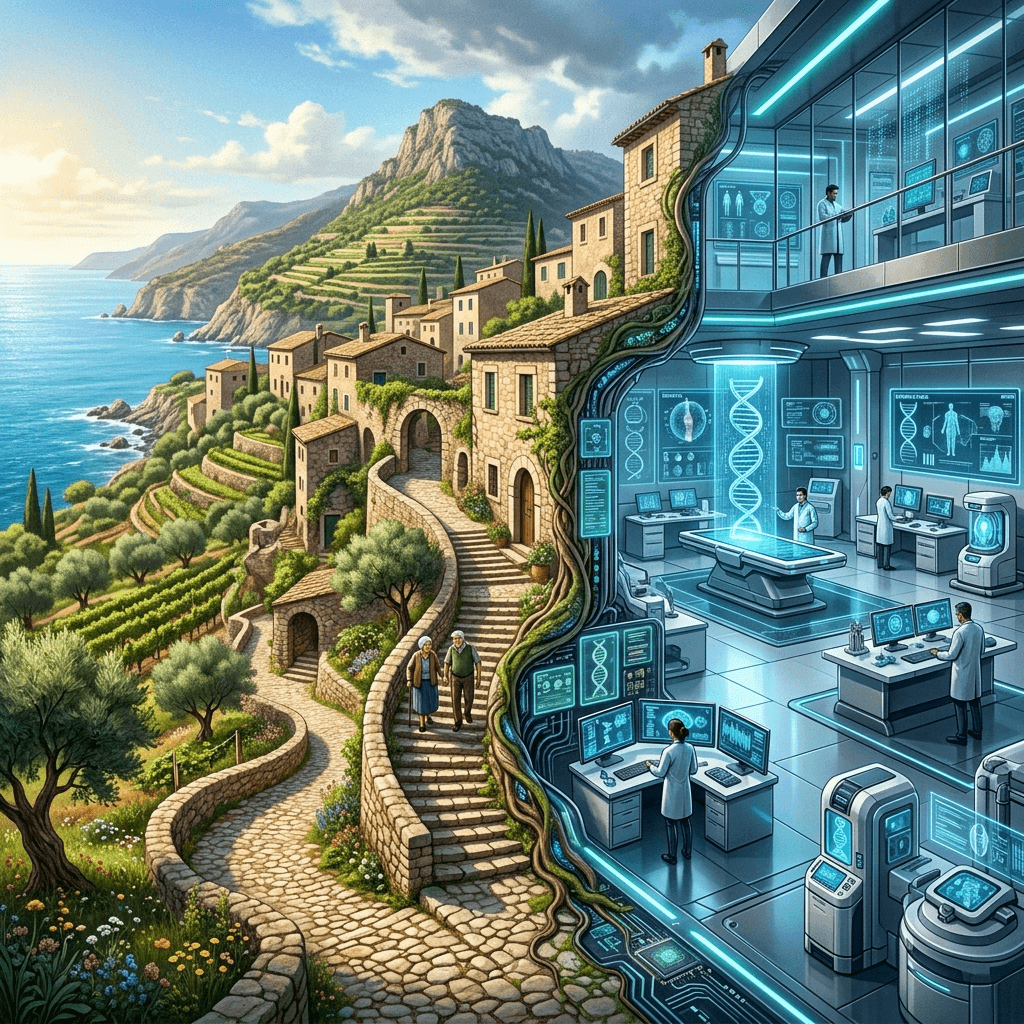
"The centenarians of Sardinia and Okinawa didn't become the longest‑living humans because they had superior genetics or optimized biomarkers. They got there purely by geographic accident. Their environment forced them to walk steep hills, eat unprocessed polyphenol‑rich foods, and live completely free of industrial circadian disruption. In 2026, we don't have the luxury of that accident, we have to mathematically engineer their biology."
Key Architectural Takeaways
-
1.
The Environmental Accident: True Blue Zones (Okinawa, Sardinia, Loma Linda, Nicoya, Ikaria) are disappearing fast, thanks to global fast‑food culture and hyper‑connectivity. The ancestral model of effortless aging is dying.
-
2.
Hara Hachi Bu vs. Modern CGMs: The Okinawan habit of stopping at 80% full is the ancestral version of calorie restriction. Today, we replace subjective feelings with precise, real‑time data using Continuous Glucose Monitors to flatten the insulin curve.
-
3.
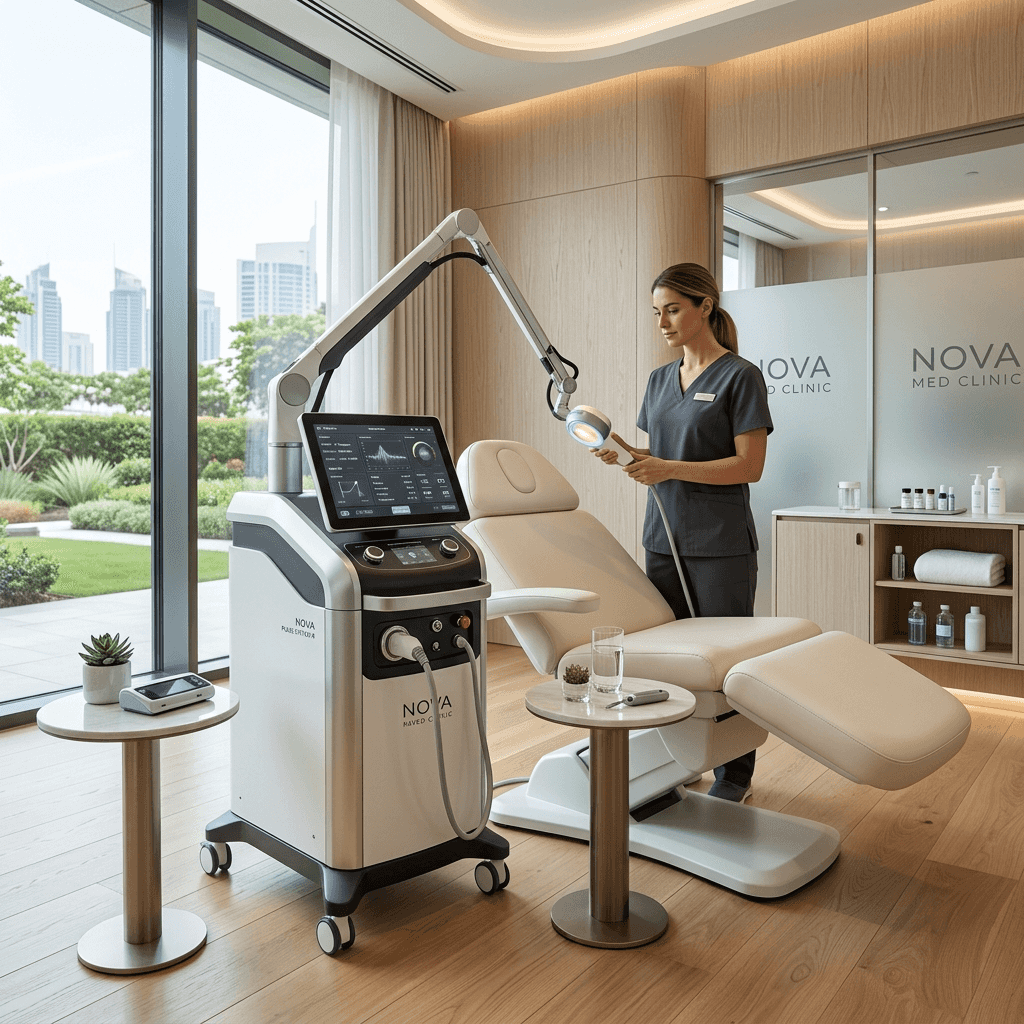
Natural Light vs. Circadian Engineering: Sardinian shepherds get heavy doses of natural UVB and massive infrared exposure, locking in a flawless circadian rhythm. The modern biohacker stuck in an office has to aggressively replicate that with high‑lux SAD lamps and targeted red light therapy panels.
-
4.
Community vs. Neurochemical Isolation: The most overlooked pillar of Blue Zones is the tight‑knit "Moai" (lifetime social circle). Chronic loneliness drives systemic inflammation equivalent to smoking 15 cigarettes a day, a biological reality that no peptide can fix.
For decades, the global health industry has been obsessed with the Blue Zones, five isolated regions where people live past 100 at rates far higher than anywhere else. Those regions: the steep mountains of Sardinia (Italy), the sunny islands of Okinawa (Japan), the remote Nicoya Peninsula (Costa Rica), the resilient community of Ikaria (Greece), and the religious, health‑conscious enclave of Loma Linda (California).
When National Geographic fellow Dan Buettner first identified these zones, the world went wild trying to copy their diets. Millions rushed to buy "The Mediterranean Diet" cookbooks, thinking that eating more olive oil, drinking red wine, and eating purple sweet potatoes would somehow magically bypass the inflammatory diseases wrecking the modern West. But there's a fatal flaw in that logic.
You can't just take a Sardinian shepherd's diet and drop it into the body of an exhausted, sleep‑deprived, fluorescent‑lit, stressed‑out corporate executive in New York or London and expect the same result. The modern digital city is chemically hostile to human DNA. In 2026, the harsh truth is that the real Blue Zones are vanishing as processed foods and sedentary habits invade their borders. We can no longer rely on nature. If we want to live to 110, we have to build a synthetic Blue Zone around ourselves. We have to use cold, hard clinical biohacking to artificially recreate the cellular signals their environment gave them for free.
What Are Blue Zones & Ancestral Health?
To understand the huge gap between ancestral living and modern biohacking, you first need to see how a real Blue Zone actually worked. A centenarian in the Sardinian mountains in 1995 didn't have a gym membership. They didn't own an Apple Watch or a Garmin to track HRV. They had no clue what the mTOR pathway was, what a lysosome did, or what their ApoB particle count was.
They got pristine metabolic health purely by environmental default. Their village was built on steep hills, so every time they left home to visit a neighbor or herd animals, they were forced into rigorous, low‑level Zone 2 cardio and heavy glute/quad work. That constant daily movement effortlessly cleared glucose from their blood, keeping insulin resistance away. They drank lots of dark red wine (Cannonau), not because they read a paper on resveratrol, but because it was the cheap, local drink available to them.
Modern humans live in the opposite environment. Our societal default is lethal laziness. If a city dweller just "goes with the flow" and eats whatever is in front of them at the supermarket, their default endpoint is obesity, early Alzheimer's, and plaque‑filled arteries. The environment is actively trying to kill you. That's why ethical biohacking is the necessary, aggressive pushback against the modern world.
Biohacker Pro-Tip: The Red Wine Paradox
It's a huge mistake to think that drinking modern commercial red wine daily will make you live longer. Sardinian "Cannonau" wine has up to 3 times the polyphenols (especially procyanidins) of a standard Cabernet, and virtually no chemical pesticides or added sulfites. Plus, modern data shows that any amount of ethanol (alcohol) is a neurotoxin that brutally suppresses REM and deep sleep. In 2026, the elite biohacker skips the alcohol entirely and just supplements with pure, concentrated trans‑resveratrol, fisetin, or extracts the procyanidins directly.
Blue Zone Diet: Replicating Longevity Biochemistry
Since we can't all move to a remote Mediterranean island, we have to look at the exact hormonal and cellular outcomes of the Blue Zone lifestyle and use modern tech to force our bodies into those same states. Here's the direct translation from ancestral wisdom to hyper‑modern biohacking.
1 Caloric Restriction: 'Hara Hachi Bu' vs. Modern CGMs
The Ancestral Method: In Okinawa, elders practice Hara Hachi Bu, "eat until you're 80% full, then stop." Because they ate fiber‑rich, filling foods like purple sweet potatoes and local seaweed, their bodies naturally signaled leptin (the satiety hormone) quickly, keeping them in a mild, protective calorie deficit their whole lives without obsessing over macros.
The Biohacking Replication: If you try to "eat until 80% full" on a hyper‑palatable, processed Western diet (engineered with the perfect ratio of salt, industrial fat, and refined sugar), your brain's leptin signaling will fail, and you'll hopelessly overeat. The biohacker's solution is to ditch subjective feelings and replace them with cold, hard data.
In 2026, the elite biohacker wears a Continuous Glucose Monitor (CGM) on their tricep. Instead of guessing, they look at their smartphone to make sure their post‑meal blood sugar never spikes above 120 mg/dL. They use strict, timed intermittent fasting (16:8 or OMAD) to actively force their bodies into the same AMPK‑driven cellular cleanup (autophagy) that the Okinawans got naturally. No guessing, just tracing hormone curves.
2 Movement: Mountain Shepherding vs. Zone 2 Ergometers
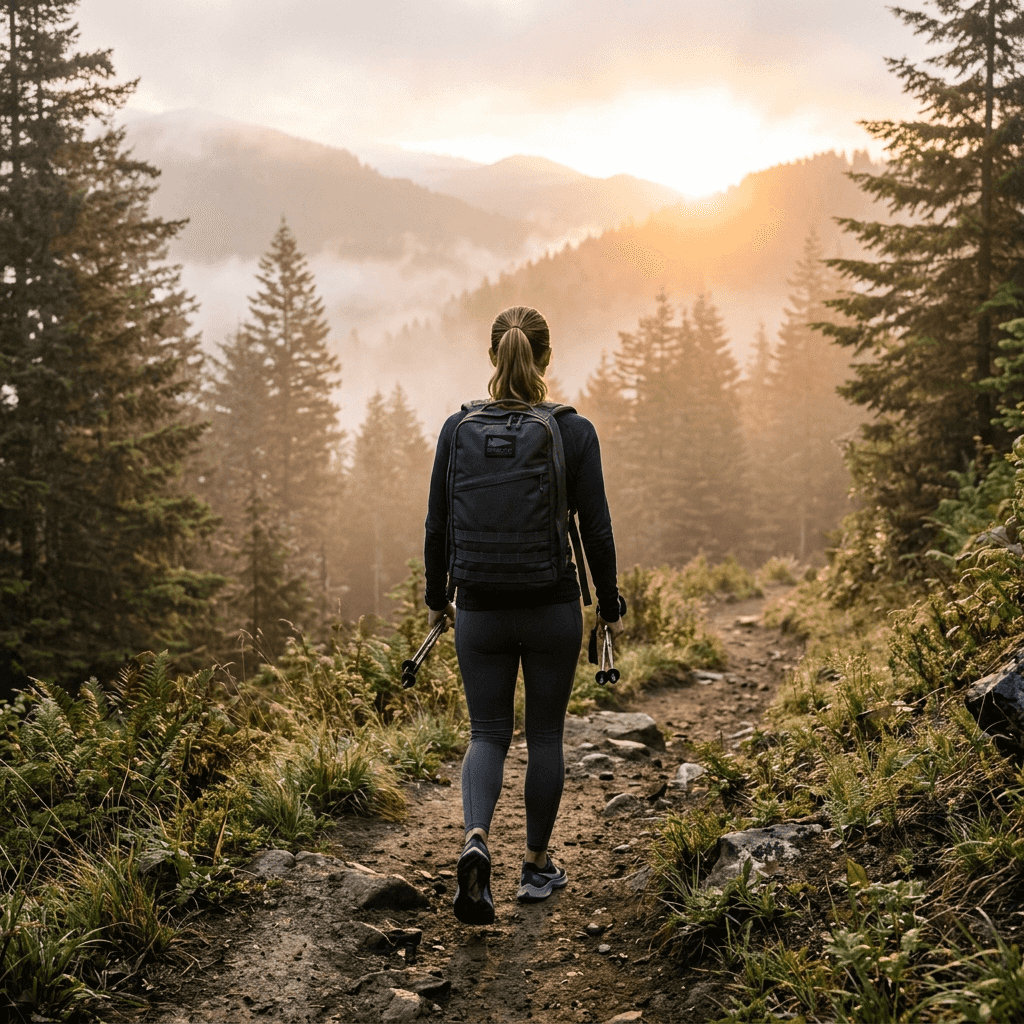
The Ancestral Method: People in Sardinia's Barbagia region are famous for their robust cardiovascular health into their 90s. That's because their whole society is built on steep hills. A shepherd walking 6–10 miles a day, carrying cheese or guiding animals up a mountain, is unknowingly doing the perfect amount of what exercise physiologists now call "Zone 2 cardio", keeping the heart rate in that fat‑burning, mitochondrial‑building sweet spot.
The Biohacking Replication: The modern human sits slumped in an office chair for 9–11 hours a day, destroying their hip flexors, deactivating their glutes, and failing to circulate lymph. That sedentary life rots mitochondria and guarantees metabolic dysfunction.
To compensate for the lack of natural movement, the smart biohacker condenses the Sardinian day into concentrated, potent clinical doses. They use heavy leg press machines and Bulgarian split squats to load bones with mechanical tension, preventing the osteoporosis that plagues modern elders. Plus, they strap on a chest‑strap heart rate monitor and spend exactly 45 minutes, four times a week, locked at 70% of max heart rate on a rowing ergometer or assault bike. It's not "natural," but it meticulously builds the same mitochondrial density as the Sardinian mountain climber.
3 Circadian Biology: Mediterranean Sun vs. Optic Light Therapy
The Ancestral Method: An elder in the sunny Nicoya peninsula lives totally synchronized with the Earth's rotation. At dawn, deep red and infrared sunlight hits their retinal cells, shutting down melatonin and spiking morning cortisol to energize them. At sunset, the lack of artificial blue light lets their pineal gland pump out massive amounts of restorative melatonin, driving profound, neuroprotective deep sleep.
The Biohacking Replication: The modern city dweller exists in what neuroscientists call "circadian darkness." The dim, gray 500‑lux lighting of an office is just bright enough to wreck your sleep cycle but too weak to trigger the morning cortisol spike you need for daytime focus. Then you stare at a bright, 6000‑Kelvin blue light screen until midnight, destroying your brain's ability to make melatonin, leaving you with fragmented, shallow sleep that invites Alzheimer's plaque.
The biohacker has to aggressively engineer their light environment to survive. In the morning, if you live in a dark, cloudy climate like London or Seattle, don't wait for the sun. Stare into a bright 10,000‑lux SAD therapy lamp to trick your nervous system into thinking you just stepped onto a Mediterranean beach. At exactly 8:00 PM, put on aggressively tinted red blue‑blocking glasses, filtering out 100% of the artificial spectrum, so your brain can seamlessly start the massive melatonin cascade needed for deep, lymphatic brain washing.
Blue Zones in the World: Locations & Mapping
The five officially recognized blue zones in the world—including Okinawa (Japan), Sardinia (Italy), Nicoya (Costa Rica), Ikaria (Greece), and Loma Linda (California)—provide an invaluable roadmap for metabolic longevity and healthspan extension.
The Unhackable Pillar: The Biochemistry of Community
While we can use wearable Oura rings to track cardiovascular strain and high‑dose fisetin to clear out senescent "zombie" cells, there's one pillar of the Blue Zone phenomenon that stubbornly resists every modern tech intervention: deep, unconditional community.
The Okinawans have a powerful cultural mechanism called the "Moai." It's a tight, fiercely loyal group of five friends you're placed into at birth, and you stay committed to them for life. If you face financial ruin, the Moai pools resources to save you. If you lose a spouse, the Moai shows up at your door every day to make sure you eat and stay grounded.
In stark contrast, the year 2026 is the most socially isolated, fragmented period in human history. The epidemic of clinical loneliness isn't just psychological sadness, it's a studied, biological disaster. Extensive trials have proven that chronic isolation shifts your nervous system into permanent "sympathetic overdrive" (fight or flight).
That persistent loneliness makes your amygdala release cortisol constantly, raising your blood pressure, suppressing new immune cells, and spiking your hs‑CRP inflammation markers to dangerous levels. The biological impact of chronic loneliness on mortality is mathematically equivalent to smoking 15 cigarettes every single day.
You can't hack loneliness with a pill. You can't crush your cortisol with a better red light panel if your nervous system feels profoundly unsafe and isolated from the tribe. The ultimate evolution of the ethical biohacker, the final boss of human optimization, is recognizing that true longevity requires social vulnerability. You have to aggressively curate your "modern Moai." You have to put the data down, turn off the podcast, look another human in the eye, and share the profound biological medicine of deep connection.
Peer-Reviewed Clinical Validations & Extended Deeper Reading:
- The Origin of the Blue Zones Research: Buettner, D., & Skemp, S. (2016). "Blue Zones: Lessons From the World's Longest Lived." American Journal of Lifestyle Medicine. The foundational geographical data definitively mapping the dietary nuances, massive daily physical exertion, and strictly enforced physiological de-stressing mechanisms of the world's most robust centenarian populations. Access the Official Buettner Framework
- The Catastrophic Biological Impact of Loneliness: Holt-Lunstad, J., Smith, T. B., Baker, M., Harris, T., & Stephenson, D. (2015). "Loneliness and Social Isolation as Risk Factors for Mortality: A Meta-Analytic Review." Perspectives on Psychological Science. This devastatingly crucial mega-analysis absolutely verified that a lack of profound social connection actively increases the exact risk of early human mortality by a staggering 29%, rivaling the physiological destruction caused by severe clinical obesity. Read the Social Mortality Meta-Analysis
- Engineering Circadian Optics in the Modern World: Wright, K. P. Jr., McHill, A. W., Birks, B. R., et al. (2013). "Entrainment of the Human Circadian Clock to the Natural Light-Dark Cycle." Current Biology. A brilliant biological study proving that modern artificial, fluorescent indoor lighting aggressively delays our chronobiological clocks by hours, and that forcefully exposing the eyes to intense, natural early-morning sunlight directly corrects the genetic timing mechanisms underlying the human sleep cycle. Access the Circadian Entrainment Study