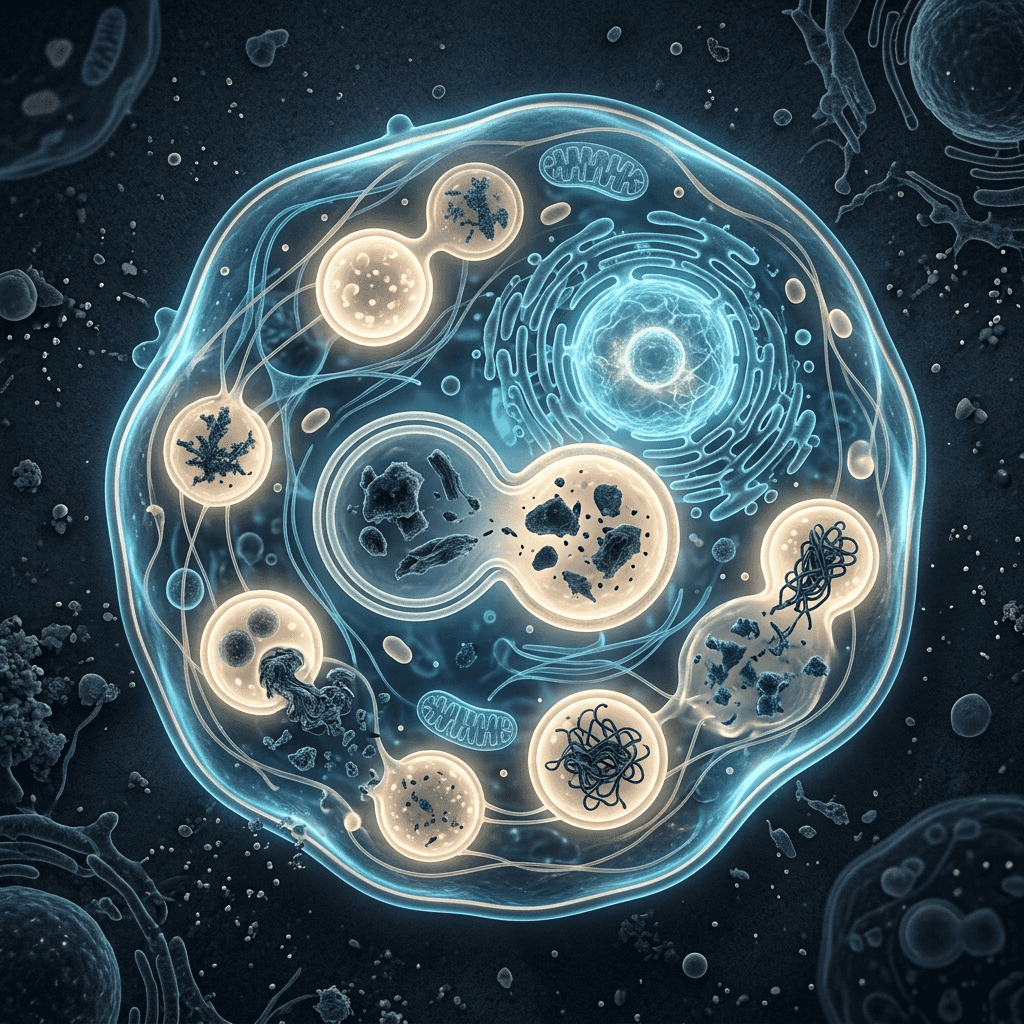
"The human body possesses a ruthless, hyper‑efficient internal demolition crew. Autophagy is the biological law that dictates longevity: if you don't periodically starve the cell of external nutrients, it will never have a reason to sweep the floor and recycle the trash that is dragging down your metabolic rate."
Key Autophagy Takeaways
- 1. The Biological Switch: You can't grow and repair at the exact same time. The mTOR pathway (growth) and AMPK pathway (cleaning) operate like a seesaw.
- 2. Yoshinori Ohsumi's Discovery: The 2016 Nobel Prize proved that restricting amino acids and glucose forces cells to create "autophagosomes" to devour their own damaged organelles.
- 3. Neuroprotection: Macroautophagy is the single most effective, clinically proven method for clearing the amyloid‑beta plaques and tau tangles responsible for Alzheimer's disease.
- 4. The Goldilocks Timing: In healthy humans, basal autophagy begins ramping up around hour 16 of a water fast, reaching its absolute peak enzymatic efficiency between 36 and 48 hours.
- 5. Not a Permanent State: Chronic autophagy without refeeding leads to sarcopenia and muscle wasting. The goal is strategic, periodic activation, not perpetual starvation.
Every single second of your existence, your cells are working frantically. They are transcribing DNA, synthesizing new muscle tissue, generating ATP for energy, and fighting off pathogens. However, this massive, nonstop biological factory naturally produces an extraordinary amount of waste. Specifically, it produces misfolded proteins, highly oxidized lipids, and senescent mitochondria (power plants that are leaking toxic free radicals into your surrounding tissue). If left unchecked, this cellular debris accumulates and acts as a slow poison, driving inflammation, accelerating epigenetic aging, and laying the groundwork for virtually every chronic disease of modernity.
If you were to run a massive industrial factory 24 hours a day, 365 days a year without ever shutting down the assembly lines to clean and sweep the floors, the factory would eventually choke on its own physical trash and collapse under the weight of its own inefficiency. The human body is governed by the exact same unforgiving principle. The process of shutting down the assembly line to ruthlessly clean the factory is called autophagy (derived from the Greek words "auto" meaning self, and "phagy" meaning to eat). it's the literal, highly regulated process of your body eating its own damaged, sick, and aging cellular components in order to survive periods of nutrient scarcity and to maintain long‑term functional integrity.
| Fasting Protocol | Typical Duration | Autophagy Level | Primary Benefit |
|---|---|---|---|
| Time‑Restricted Feeding (TRF) | 12‑16 hours daily | Mild (Basal Upregulation) | Insulin sensitivity, weight management |
| Intermittent Fasting (16:8, 18:6) | 16‑20 hours daily | Moderate | Initiation of cellular cleanup, ketosis |
| 24‑Hour Fast (OMAD Extended) | 24 hours (1‑2 times/week) | Significant | Deep autophagic flux, immune reset |
| Prolonged Water Fast | 36‑72 hours | Maximal (Peak) | Senescent cell clearance, stem cell regeneration |
| Fasting Mimicking Diet (FMD) | 5 days (monthly/quarterly) | High (with some calories) | Clinical longevity benefits, improved compliance |
What is Autophagy & How Does Cellular Cleanup Work?
In 2016, a brilliant Japanese cell biologist named Yoshinori Ohsumi won the Nobel Prize in Physiology or Medicine for mapping the precise, undeniable genetic mechanisms underlying autophagy. His work, conducted primarily in yeast models, identified the core set of AuTophaGy‑related genes (ATG genes) that orchestrate the entire process. This discovery fundamentally altered the trajectory of proactive longevity research and provided the mechanistic blueprint that biohackers rely on today.
The process begins when cellular nutrient sensors, primarily the mTORC1 complex and AMPK, detect a state of energy deficit (low glucose, low amino acids, high AMP/ATP ratio). Under nutrient‑rich conditions, mTORC1 actively phosphorylates and inhibits a key initiation complex composed of ULK1, ATG13, and FIP200. When mTORC1 is suppressed during fasting, this inhibition is lifted, and the ULK1 complex becomes activated. ULK1 then phosphorylates downstream targets, including a critical protein called Beclin‑1 (ATG6), which is part of the VPS34 lipid kinase complex. This complex generates phosphatidylinositol 3‑phosphate (PI3P) on specific membrane structures, recruiting additional ATG proteins to the site of autophagosome formation.
The elongating isolation membrane, termed the phagophore, requires two ubiquitin‑like conjugation systems to expand and curve into a closed double‑membraned vesicle. The first system conjugates ATG12 to ATG5, which then forms a complex with ATG16L1. The second system conjugates the protein LC3 (ATG8) to the lipid phosphatidylethanolamine (PE). Lipidated LC3, known as LC3‑II, is the gold‑standard biomarker for autophagy; it's physically embedded into the growing autophagosomal membrane. This membrane sweeps through the cytoplasm, hunting down specific cargo tagged for degradation. The cargo can be selectively recognized by adaptor proteins like p62/SQSTM1, which bind to ubiquitinated protein aggregates and simultaneously to LC3‑II, ensuring that the garbage is specifically loaded into the truck.
Once the autophagosome is fully formed and sealed, it traffics along microtubules to fuse with a lysosome, the cellular incinerator filled with powerful acid hydrolases (proteases, lipases, nucleases). The fusion creates an autolysosome, where the inner autophagosomal membrane and its engulfed contents are completely degraded. The resulting breakdown products (amino acids, fatty acids, nucleotides) are transported back into the cytosol via lysosomal efflux transporters and reused for new synthesis or energy production. it's the ultimate cellular recycling program, hardcoded into our DNA and conserved across eukaryotic evolution for over a billion years.
Biohacker Pro‑Tip: The "Fat Fast" Myth
A critical warning for ethical biohackers in 2026: Many individuals try to trigger autophagy while consuming coffee blended with heavy butter, MCT oil, or exogenous ketones (a so‑called "fat fast"). While dietary fat doesn't significantly spike insulin or directly activate mTORC1 via amino acids, consuming hundreds of calories of pure fat still provides an external energy source that the cell can use. This partially relieves the energetic crisis that drives maximal AMPK activation and ULK1 initiation. True, deep, uncompromising autophagy requires absolute caloric deprivation. Stick to just black coffee, plain unsweetened tea, electrolytes (sodium, potassium, magnesium), and filtered water during your dedicated fasting windows.
The Biological Seesaw: mTOR vs. AMPK and the Molecular Switch
To truly master human optimization, you must master the delicate, antagonistic balance between two ancient, deeply embedded metabolic pathways: mTOR (mechanistic target of rapamycin) and AMPK (AMP‑activated protein kinase). These two master kinases act as the primary rheostats controlling the cellular decision to grow or to repair.
The mTOR Pathway is your biological "gas pedal." mTOR exists in two distinct complexes: mTORC1 and mTORC2. mTORC1 is exquisitely sensitive to the availability of amino acids (particularly leucine, arginine, and glutamine), growth factors like insulin and IGF‑1, and cellular energy status. When you eat a heavy, protein‑rich meal, insulin spikes, and mTORC1 is aggressively activated at the lysosomal surface. This activation phosphorylates downstream targets including S6K1 and 4E‑BP1, driving ribosome biogenesis, cap‑dependent mRNA translation, and overall cell growth and proliferation. This anabolic signaling is absolutely essential for athletic hypertrophy (building muscle), wound healing, and childhood development. However, chronic, unrelenting mTORC1 activation (eating six meals a day, every single day, for decades) is a primary driver of cancer proliferation (as it suppresses apoptosis and promotes uncontrolled cell division) and accelerates the aging process by inhibiting autophagy.
The AMPK Pathway is the biological "brake pedal" and the master activator of catabolism and repair. AMPK is a heterotrimeric serine/threonine kinase that functions as the master fuel gauge of the cell. When the cellular AMP/ATP ratio rises (indicating low energy charge), AMPK is allosterically activated and phosphorylated by upstream kinases like LKB1. Activated AMPK phosphorylates and inhibits mTORC1 at multiple levels, most notably by activating the TSC1/TSC2 complex, which acts as a GTPase‑activating protein (GAP) for the small G‑protein Rheb, a direct activator of mTORC1. Simultaneously, AMPK directly phosphorylates and activates ULK1, the initiating kinase for autophagosome formation, and promotes the expression of PGC‑1α, driving mitochondrial biogenesis. You can't simultaneously activate mTORC1‑driven anabolism and AMPK‑driven catabolism at high levels. it's a fundamental, hardwired biological impossibility. If you never stop eating, you never allow the cleaning crew to enter the facility.
The Timeline of Deep Autophagy: From Initiation to Senolytic Purge
A common and perfectly reasonable question in ethical biohacking circles is: "Exactly how many hours do I need to fast to experience meaningful cellular recycling?" Autophagy is not a binary "on/off" switch; it's a continuously variable volume dial that slowly ramps up in intensity as hepatic glycogen is depleted, circulating insulin drops, and the AMP/ATP ratio rises. While every human's metabolic flexibility and baseline insulin sensitivity are highly unique, clinical data from 2026 (derived from studies measuring LC3‑II flux and p62 degradation) presents a clear and reliable baseline timeline.
Hrs
The Glycogen Depletion and Initiation Phase
Between 12 and 16 hours of absolute fasting (water, black coffee, plain tea only), the liver exhausts the majority of its stored glycogen reserves (approximately 100‑120 grams). This metabolic shift forces the body to upregulate lipolysis and hepatic ketogenesis, producing beta‑hydroxybutyrate (BHB) as an alternative fuel for the brain. During this window, basal autophagy begins to measurably increase from its low, fed‑state baseline. This is the foundation of the popular 16:8 intermittent fasting protocol. While brilliant for improving insulin sensitivity and initiating metabolic flexibility, 16 hours is rarely sufficient time to engage the deeper, more aggressive forms of macroautophagy required for significant clearance of long‑lived protein aggregates or dysfunctional mitochondria.
Hrs
The Autophagic Acceleration and Ketone Synergy
As you successfully cross the 24‑hour threshold and push into the second day of fasting, blood glucose levels decline to a stable, low baseline maintained entirely by hepatic gluconeogenesis. Simultaneously, circulating BHB levels rise to the 1.5 to 3.0 mmol/L range. At this precise stage, AMPK is maximally activated in most tissues, and mTORC1 is profoundly suppressed. Autophagosomes are now being assembled at a significantly accelerated rate. During the 24‑ to 36‑hour window, LC3‑II flux studies indicate robust autophagic degradation of ubiquitinated protein aggregates and targeted mitophagy (the selective degradation of damaged, ROS‑leaking mitochondria). Many biohackers consider a quarterly 36‑hour fast the sweet spot for balancing deep cellular cleanup with practical lifestyle sustainability.
Hrs
The Senolytic Purge and Hematopoietic Stem Cell Reset
This is the pinnacle of extreme ethical biohacking and should only be undertaken by metabolically healthy individuals under appropriate supervision. Past 48 hours, autophagy reaches its absolute biological peak, and the body begins engaging in what researchers term 'chaperone‑mediated autophagy' and aggressive 'macroautophagy' that actively targets 'senescent cells' (zombie cells that have permanently exited the cell cycle but secrete a toxic, pro‑inflammatory cocktail known as the SASP). These cells act as cancerous, inflammatory sinks, driving tissue dysfunction. Plus, the landmark 2014 study by Cheng and colleagues in Cell Stem Cell demonstrated that 72‑hour prolonged fasting dramatically reduces circulating IGF‑1 and PKA activity. Upon careful, gradual refeeding, this signal triggers a massive wave of hematopoietic stem cell proliferation, effectively regenerating a significant portion of the aging immune system from the bone marrow outward.
Measuring Autophagy: Practical Biomarkers for the Biohacker
One of the persistent challenges in the field of autophagy research is the difficulty of measuring it non‑invasively in living humans. The gold‑standard assays (LC3‑II Western blotting of tissue biopsies, electron microscopy to visualize autophagosomes) are invasive and impractical for routine home use. However, several validated proxy biomarkers can provide indirect but highly useful feedback on the depth of your fasted state.
- Blood Glucose: A steady‑state glucose reading between 65 and 80 mg/dL (3.6‑4.4 mmol/L) during a fast indicates that hepatic glycogen is depleted and gluconeogenesis is maintaining euglycemia. This is a strong proxy for low insulin and high AMPK activity.
- Blood Ketones (BHB): Measured via a finger‑stick meter (e.g., Keto‑Mojo, Abbott Precision Xtra). BHB levels above 0.5 mmol/L indicate nutritional ketosis. Levels between 2.0 and 4.0 mmol/L (typical of prolonged fasting) correlate temporally with peak autophagic flux. BHB itself is a signaling molecule that inhibits histone deacetylases (HDACs) and can independently upregulate autophagy genes.
- Subjective Markers: The profound mental clarity, elevated mood, and reduced hunger that often accompany the 24‑48 hour fasting window are thought to be mediated, in part, by the increase in BDNF and the clearance of neuroinflammatory debris.
Accelerating the Process: Synergistic Interventions Beyond Fasting
While absolute water fasting remains the most potent, uncompromising, and scientifically validated method for inducing maximal autophagy, there are several evidence‑based methodologies that act as autophagic "accelerants." You can strategically combine these with your fasting routine to increase the rate of cellular recycling without having to starve for three consecutive days.
1. Exercise‑Induced Autophagy (The High‑Intensity Catalyst): Skeletal muscle contraction requires immense amounts of immediate ATP, rapidly increasing the cellular AMP/ATP ratio and activating AMPK independently of nutrient status. When you engage in heavy strength training, sprint intervals, or even prolonged Zone 2 cardio during a fasted state, localized AMPK activation shoots through the roof. Intense exercise can actively pull the body into a state of deeper autophagy significantly faster than fasting alone. A 2012 study in Nature by He and colleagues definitively demonstrated that exercise‑induced autophagy is essential for maintaining muscle glucose homeostasis and metabolic health. Essentially, working out aggressively at hour 14 of a fast can mimic the autophagic depth typically seen at hour 20 to 22.
2. Polyphenols and Autophagy‑Inducing Compounds: Certain advanced, naturally occurring organic molecules have the capacity to mimic aspects of caloric restriction by directly binding to sirtuin longevity proteins (SIRT1) or inhibiting mTORC1. The most rigorously verified of these include:
- Spermidine: A naturally occurring polyamine found in high concentrations in aged cheese, natto (fermented soybeans), mushrooms, and wheat germ. Spermidine has been shown in numerous mammalian trials to inhibit the acetyltransferase EP300, leading to de‑repression of autophagy genes. Typical supplemental doses range from 1‑3 mg daily, often taken cyclically.
- EGCG (Epigallocatechin Gallate): The master catechin polyphenol found in deeply pigmented green tea and matcha. EGCG has been shown to inhibit mTORC1 and activate AMPK, enhancing autophagic flux.
- Resveratrol and Pterostilbene: These stilbenoid compounds activate SIRT1, which deacetylates and activates key autophagy proteins including ATG5, ATG7, and LC3.
IMPLEMENTING A SAFE AUTOPHAGY PROTOCOL: CYCLING IS EVERYTHING
To harness the profound benefits of autophagy without falling into the trap of muscle wasting and metabolic slowdown, you must cycle your eating patterns deliberately. The goal is not perpetual caloric restriction, but rather the strategic insertion of acute fasting periods into an otherwise nutrient‑dense, high‑protein lifestyle.
Sample Monthly Protocol for Metabolically Healthy Individuals:
- Daily Baseline: Practice a consistent 12‑13 hour overnight fast (e.g., finish dinner by 7:00 PM, breakfast at 7:00‑8:00 AM). This maintains insulin sensitivity and allows for basal autophagy.
- Weekly: Once per week, extend the overnight fast to 16‑18 hours (e.g., skip breakfast and eat lunch at 12:00‑1:00 PM). This provides a modest weekly boost to autophagic flux.
- Monthly: Once per month, complete a 24‑hour fast (dinner to dinner, or lunch to lunch). During this fast, consume only water, black coffee, plain tea, and electrolytes.
- Quarterly: Once every three to four months (and only after becoming metabolically adapted), consider a 36‑48 hour water‑only fast to engage deep senescent cell clearance and stem cell regeneration. Break the fast gently with bone broth or easily digestible steamed vegetables before resuming normal meals.
During all non‑fasting periods, prioritize consuming adequate high‑quality protein (1.6‑2.2 g/kg of body weight) and engage in heavy resistance training 2‑3 times per week to maintain and build skeletal muscle mass. This feast/famine cycling allows you to reap the rejuvenating benefits of autophagy while simultaneously building the metabolically active tissue that predicts long‑term healthspan.
The Dangers of Sarcopenia: Why "More" Is Not Better
A fatal and unfortunately common flaw within amateur biohacking and longevity circles is the assumption that if cellular cleaning is good, doing it permanently and continuously must be even better. This is a dangerous and fundamentally incorrect interpretation of the science. As previously discussed at length, autophagy is fundamentally a catabolic (tissue‑degrading) process. it's designed by evolution to be a transient, acute, hormetic biological stressor, not a permanent metabolic lifestyle.
If you chronically restrict protein intake and constantly fast every single day without allowing for extended periods of high caloric abundance and robust amino acid availability, you will aggressively and progressively catabolize your own healthy, functional skeletal muscle tissue. This condition, known as sarcopenia, is one of the single greatest threats to functional longevity and quality of life in advanced age. Skeletal muscle is far more than just a tissue for locomotion. it's the body's primary site for glucose disposal, acting as a massive metabolic sink that protects against insulin resistance and type 2 diabetes. It serves as a critical reservoir of amino acids that can be mobilized during illness or injury to support immune function and wound healing. And it provides the structural strength and stability necessary to prevent catastrophic falls and osteoporotic fractures.
To properly manage your longevity trajectory in 2026 and beyond, you must consciously cycle your metabolic state. This requires entering defined, controlled periods of nutrient scarcity (autophagy activation) to clean the cellular machinery and clear senescent debris, followed immediately by deliberate periods of high‑protein, calorie‑dense consumption combined with heavy, progressive strength training (mTOR activation) to rebuild the machine, synthesize new contractile proteins, and emerge from the cycle stronger, leaner, and more resilient than you were before. The art of biohacking lies in mastering the rhythm of this biological pendulum.
To truly appreciate cellular rejuvenation, we must answer a fundamental question: what is autophagy? Derived from the Greek words for "self-eating," autophagy is a highly regulated, evolutionary conserved survival mechanism where cells degrade and recycle their own damaged components, such as dysfunctional mitochondria, misfolded proteins, and intracellular pathogens. By delivering these aggregates to lysosomes for degradation, the cell clears toxic clutter and generates raw energy.
Conclusion: Hacking Autophagy for Longevity
Ultimately, autophagy is the great cellular reset switch, an ancient, evolutionarily conserved survival mechanism that we can now consciously and deliberately activate to improve our healthspan. By learning to periodically subject yourself to the deliberate, calculated, and time‑limited discomfort of an extended fast, you grant your trillions of cells the profound biological mercy of deep repair. You allow the intrinsic demolition crew to clear the accumulated debris that silently drives inflammation, metabolic dysfunction, and neurodegenerative decline.
The key, as with all powerful biological interventions, is balance and rhythm. Use fasting strategically to clean the house, and then use high‑quality nutrition and resistance training to fortify and expand the foundation. This cycle of destruction and creation, of catabolism and anabolism, is the fundamental rhythm of life itself. Master it, and you will ensure that the healthspan of your brain and body gracefully matches, and perhaps even exceeds, the lifespan of your chronological years.
Peer-Reviewed Clinical Validations and Extended Deeper Reading:
- The Discovery of Autophagy Mechanisms (Nobel Prize): Takeshige, K., Baba, M., Tsuboi, S., Noda, T., & Ohsumi, Y. (1992). "Autophagy in yeast demonstrated with proteinase-deficient mutants and conditions for its induction." Journal of Cell Biology. The original foundation mapped by Nobel Laureate Dr. Yoshinori Ohsumi. Access Publication
- Exercise as a Potent Autophagic Catalyst: He, C., Bassik, M. C., Moresi, V., et al. (2012). "Exercise-induced BCL2-regulated autophagy is required for muscle glucose homeostasis." Nature. Verified that physical exertion triggers AMPK and massively enhances systemic autophagy. Read the Nature Paper
- Stem Cell Rebirth and Immune Regeneration via 72-Hour Fasting: Cheng, C. W., Adams, G. B., Hwang, L., et al. (2014). "Prolonged fasting reduces IGF-1/PKA to promote hematopoietic-stem-cell-based cellular regeneration and reverse immunosuppression." Cell Stem Cell. Clinical proof that prolonged fasting regenerates the immune system. Access Clinical Details
- Spermidine and Cardioprotective Autophagy: Eisenberg, T., Abdellatif, M., Schroeder, S., et al. (2016). "Cardioprotection and lifespan extension by the natural polyamine spermidine." Nature Medicine. Demonstrated that dietary spermidine extends lifespan in mice via autophagy induction. Read Study
- Fasting Mimicking Diet and longevity: Brandhorst, S., Choi, I. Y., Wei, M., et al. (2015). "A Periodic Diet that Mimics Fasting Promotes Multi-System Regeneration and Extended longevity." Cell Metabolism. The foundational FMD study showing reduced biomarkers for aging and disease. Read Full Paper