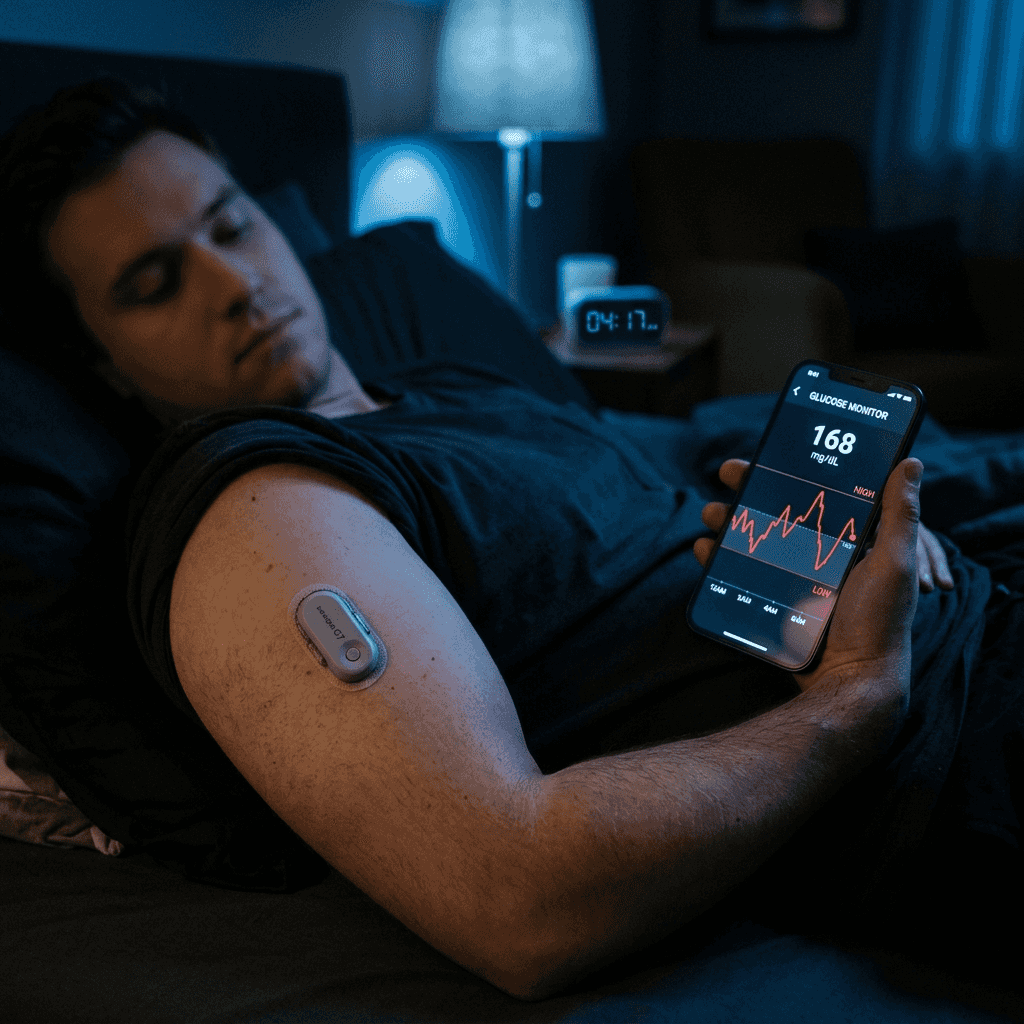
"A single night of 4‑hour sleep deprivation reduces whole‑body insulin sensitivity by up to 25%. You are effectively rendered metabolically pre‑diabetic for the subsequent 24 hours, regardless of how 'clean' your diet is."
Metabolic Sovereignty: Sleep Architecture and Glycemic Control (2026)
-
1.
The Nocturnal Cortisol Spike: Sleep loss prevents the normal midnight low point of cortisol, forcing the liver into gluconeogenesis and glycogenolysis, which raises fasting blood glucose by 10‑20 mg/dL.
-
2.
Adipose Tissue Insulin Resistance: Even after a single night of short sleep, your subcutaneous and visceral fat cells become resistant to insulin's anti‑lipolytic effect, leaking free fatty acids (FFAs) into circulation.
-
3.
The Ghrelin‑Leptin Storm: Sleep debt creates a neuroendocrine perfect storm: it increases the hunger hormone ghrelin by about 28% and suppresses the satiety hormone leptin by about 18%, driving irresistible cravings.
-
4.
GLUT4 Translocation Failure: Sleep deprivation impairs the insulin‑stimulated movement of GLUT4 glucose transporters to the cell surface, effectively "locking out" energy from skeletal muscle.
-
5.
Amygdala‑Prefrontal Disconnection: The tired brain shows hyperactivation of the amygdala (emotional and reward center) and hypoactivation of the prefrontal cortex (impulse control), making high‑calorie food choices biologically inevitable.
The mechanistic and bidirectional link between the sleep lab and the metabolic ward is far more intimate and immediate than most biohackers, and even many clinicians, fully appreciate. In 2026, the widespread consumer adoption of continuous glucose monitors (CGMs) has provided an avalanche of real‑world, real‑time data confirming a startling physiological reality: the duration and architecture of your prior night's sleep is arguably a more powerful determinant of your next day's glycemic stability and insulin sensitivity than the precise macronutrient composition of your last meal. You can meticulously follow a perfectly formulated ketogenic, low‑carb, or Mediterranean diet, but if you are chronically neglecting the optimization of your NREM (non‑rapid eye movement) slow‑wave sleep, you are engaged in a futile, Sisyphean battle against your own deeply ingrained, evolutionarily conserved biochemistry.
This full 2026 guide breaks down the intricate molecular mechanics of sleep‑induced insulin resistance. We will explore the "survival bias" of the human endocrine system that prioritizes short‑term energy availability over long‑term metabolic health, the profound mitochondrial oxidative stress caused by even modest sleep debt, the neurological hijacking of appetite and reward centers, and the evidence‑based recovery protocols needed to reclaim your metabolic sovereignty and insulin sensitivity after a night of disrupted or truncated sleep. Reclaiming your sleep architecture is not just about feeling subjectively "rested" or avoiding grogginess; it's about actively preventing the silent, systemic rust of chronic, low‑grade hyperglycemia and hyperinsulinemia that accelerates biological aging.
Sleep Deprivation and Diabetic Blood Sugar Levels
Under conditions of adequate, consolidated, and chronobiologically aligned sleep, circulating cortisol levels follow a precise and robust circadian rhythm. They should reach their absolute physiological low point (nadir) between roughly 11:00 PM and 1:00 AM. This nocturnal trough allows the parasympathetic "rest and digest" nervous system to dominate, enabling baseline insulin levels to efficiently manage hepatic glucose output and peripheral glucose disposal with minimal resistance. However, when sleep is restricted (even modestly to five or six hours) or when sleep architecture is fragmented by environmental noise, apnea events, or alcohol consumption, the brain's threat‑detection systems interpret this state of wakefulness as a signal of environmental danger or resource scarcity.
This perception of threat triggers a sustained state of hyper‑arousal within the HPA (hypothalamus‑pituitary‑adrenal) axis. The resulting compensatory and pathologically timed spike in nocturnal cortisol is biologically disastrous for metabolic health. Cortisol is a potent glucocorticoid hormone; its primary, evolutionarily conserved function is to mobilize "survival fuel" so the organism can fight or flee from a perceived predator or threat. It does this by binding to glucocorticoid receptors in the liver, forcefully activating the enzymatic pathways of gluconeogenesis (the de novo synthesis of glucose from non‑carbohydrate precursors like lactate, glycerol, and amino acids) and glycogenolysis (the breakdown of stored hepatic glycogen into free glucose). This hormonal signal tells the liver to flood the systemic circulation with glucose, providing immediate energy to the brain and skeletal muscles.
Partial Deprivation, Profound Metabolic Shift: The 6‑Night Study
Seminal research from the early 2020s, using hyperinsulinemic‑euglycemic clamps (the gold standard for measuring insulin sensitivity), showed that healthy, young, lean adults restricted to just 4 hours of sleep opportunity per night for only six consecutive nights developed glucose disposal profiles that were statistically indistinguishable from those of clinically pre‑diabetic individuals. The peripheral tissues (muscle and fat) begin to actively "ignore" or "resist" the signal of insulin because the central nervous system has prioritized immediate survival fuel over long‑term metabolic homeostasis. The cells enter a protective, insulin‑resistant state to preserve glucose for the brain.
Plus, cortisol directly antagonizes insulin action at the level of the pancreatic beta cells. It physically binds to glucocorticoid receptors on the beta cells and actively inhibits the transcription and secretion of insulin. This creates a perfect metabolic storm: your liver is being hormonally commanded to dump large amounts of glucose into the bloodstream, while simultaneously, your pancreas is being told to withhold the very hormone (insulin) required to clear that glucose and facilitate its uptake into peripheral tissues. This is the precise neuroendocrine mechanism behind why the morning after a night of poor or insufficient sleep almost always begins with a significantly higher‑than‑expected fasting glucose reading on your CGM or glucometer.
ADIPOSE TISSUE REBELLION: THE NOCTURNAL FREE FATTY ACID LEAK
One of the most important discoveries in 2026 metabolic science is that sleep deprivation affects the function and insulin sensitivity of adipose (fat) tissue just as aggressively and rapidly as it affects the brain and skeletal muscle. Your subcutaneous and visceral fat cells have their own autonomous, self‑sustaining peripheral circadian clocks, governed by the same core clock genes (CLOCK, BMAL1, PER, CRY) that operate within the suprachiasmatic nucleus (SCN). When you consistently miss deep, restorative slow‑wave sleep, the molecular clocks inside your fat cells become desynchronized from the master SCN clock. This desynchrony makes the fat cells lose their normal, healthy responsiveness to the anti‑lipolytic signal of insulin, a state called adipose tissue insulin resistance.
Under normal, well‑rested conditions, insulin binds to its receptor on the fat cell membrane and starts a signaling cascade that suppresses the activity of hormone‑sensitive lipase (HSL), the enzyme that breaks down stored triglycerides. This effectively tells the fat cell to store energy and stop releasing fatty acids into the circulation. In a sleep‑deprived state, the fat cell becomes deaf to this insulin signal. HSL stays pathologically active, and the fat cell begins leaking free fatty acids (FFAs) into the bloodstream at an accelerated rate, especially during the overnight fast. These circulating FFAs are far from benign. They travel to peripheral tissues, especially skeletal muscle and liver, where they act as potent physical and signaling blockades. They interfere with the early steps of the insulin signaling cascade, specifically by activating novel protein kinase C (PKC) isoforms that phosphorylate and inactivate IRS‑1 (insulin receptor substrate 1) on serine residues. This is the precise molecular mechanism that "jams" the cellular lock, making it physically impossible for insulin to effectively open the door for glucose entry into the muscle cell.
| Metabolic Variable | Impact of Acute Sleep Debt (1‑2 Nights) | Systemic Consequence |
|---|---|---|
| Whole‑body insulin sensitivity | Decreased by ~25% to 30% | Sustained hyperglycemia and vascular endothelial inflammation. |
| Nocturnal free fatty acids (FFAs) | Elevated nocturnal release (15‑30% increase) | Muscular and hepatic insulin resistance (IRS‑1 inhibition). |
| Postprandial glucose clearance rate | Delayed by up to 40% | Prolonged, damaging glucose spikes after mixed meals. |
| Hepatic glucose production | Increased (gluconeogenesis) | Elevated fasting glucose independent of dietary intake. |
THE GLUT4 TRANSLOCATION FAILURE: THE MOLECULAR LOCKOUT
To move circulating glucose from the bloodstream into a skeletal muscle cell or fat cell, the cell must deploy specialized membrane‑bound transporter proteins called GLUT4. In a healthy, well‑rested, insulin‑sensitive person, insulin binds to its extracellular receptor, triggering a complex intracellular cascade involving PI3K, PDK1, and Akt2. This signaling leads to the translocation of intracellular vesicles loaded with GLUT4 transporters to the cell surface, where they fuse with the plasma membrane, creating portals for glucose entry. Think of it as opening the gates of a large stadium to let a crowd in efficiently.
In 2026, we have a detailed molecular understanding that sleep debt causes a significant failure in insulin‑stimulated GLUT4 translocation. Due to the combined effects of elevated circulating FFAs (which activate inhibitory PKC isoforms), mitochondrial fragmentation and oxidative stress, and the direct antagonism of cortisol, the intracellular insulin signaling pathway is disrupted at multiple points. The command to "open the gates" is sent, but the downstream messengers fail to deliver the instruction to the GLUT4 vesicles. The gates stay stubbornly closed. So, even if enough insulin is present in the blood (or even if it's pathologically elevated in a state of compensatory hyperinsulinemia), the glucose molecules remain trapped in the bloodstream, unable to enter their cellular destination. This stagnant glucose damages the delicate, anti‑thrombotic glycocalyx lining of the vascular endothelium and causes widespread systemic oxidative stress. This is why sleep‑deprived people often feel paradoxically "tired but wired": their cells are literally starving for energy while swimming in a vast, unusable sea of sugar.
THE GHRELIN‑LEPTIN STORM: ENDOCRINE ANARCHY AND APPETITE HIJACKING
From an evolutionary and behavioral perspective, a tired brain is unequivocally a hungry brain. Acute and chronic sleep deprivation reliably trigger a neuro‑endocrine "perfect storm" that systematically dismantles willpower, impairs rational decision‑making, and hijacks appetite regulation. This storm works through the dysregulation of two primary, opposing peripheral hormones:
- Leptin (the brake): Secreted mainly by white fat cells in proportion to fat mass, leptin acts on receptors in the arcuate nucleus of the hypothalamus to signal satiety and long‑term energy sufficiency. It tells the brain, "We have plenty of energy; you can stop eating." Sleep debt, even after just one or two nights, suppresses circulating leptin levels by about 15‑20%, effectively removing or blunting the critical "fullness" and "stop eating" signal.
- Ghrelin (the gas): Secreted mainly by the P/D1 cells of the stomach lining when the stomach is empty, ghrelin is the most potent appetite‑stimulating hormone. It binds to receptors in the hypothalamus and directly drives hunger and food‑seeking behavior. Sleep debt increases circulating ghrelin levels by a staggering 25‑30%, sending an amplified and urgent "energy emergency, find food now" signal to the brain.
But the neuroendocrine sabotage goes even deeper into the brain's reward and hedonic circuitry. Pioneering research by Hanlon and colleagues has shown that sleep restriction also potently activates the endocannabinoid system, specifically by raising circulating levels of the endogenous ligand 2‑arachidonoylglycerol (2‑AG). 2‑AG binds to CB1 cannabinoid receptors in the brain's reward centers, including the nucleus accumbens and ventral tegmental area. This activation dramatically amplifies the subjective pleasure, reward, and "wanting" associated with eating highly palatable, energy‑dense foods, especially combinations of fat and refined sugar. At the same time, the sleep‑deprived brain shows functional neuroimaging changes: the amygdala (the primitive emotional and fear‑processing center) becomes hyper‑reactive to food cues, while the prefrontal cortex (PFC) (the seat of executive function, impulse control, and long‑term planning) is functionally "offline" or hypoactive due to fatigue. You are not lacking in moral character or willpower; you are neurochemically and neuroanatomically compelled to seek immediate, high‑glycemic, dopamine‑spiking rescue from the aversive state of sleepiness.
MITOCHONDRIAL FRAGMENTATION AND OXIDATIVE STRESS: THE ENGINE ROOM FIRE
Mitochondria, the ancient bacterial endosymbionts that generate most of your cellular ATP, are exquisitely sensitive sensors of cellular and systemic stress, including the stress of sleep deprivation. During deep, restorative slow‑wave sleep (NREM stage 3), a critical cellular housekeeping process called mitophagy is ramped up. Mitophagy is the selective autophagic degradation and recycling of damaged, dysfunctional, and ROS‑leaking mitochondrial fragments. At the same time, sleep promotes mitochondrial biogenesis, the synthesis of new, healthy, highly efficient mitochondria. When this essential nightly maintenance window is consistently missed or shortened, the mitochondrial network inside cells starts to fragment.
Fragmented mitochondria are structurally compromised and metabolically "leaky." They operate with much lower efficiency in oxidative phosphorylation and ATP production, and they generate a substantially greater amount of damaging reactive oxygen species (ROS) and reactive nitrogen species (RNS) as byproducts. This elevated oxidative stress directly activates redox‑sensitive pro‑inflammatory transcription factors, most notably NF‑kB. Activation of NF‑kB drives the expression of many inflammatory cytokines (TNF‑α, IL‑6) and creates a state of systemic, low‑grade inflammation. Critically, these inflammatory pathways directly interfere with insulin receptor signaling and promote serine phosphorylation of IRS‑1, which makes cellular insulin resistance worse. Chronic sleep debt thus sets up and perpetuates a vicious, self‑reinforcing loop of metabolic decay: poor sleep architecture leads to mitochondrial fragmentation and oxidative stress, which leads to systemic inflammation and NF‑kB activation, which directly impairs insulin sensitivity and glucose disposal, which in turn can further disrupt sleep quality and continuity.
THE GUT‑BRAIN‑SLEEP AXIS: MICROBIOME DISRUPTION AND ENDOTOXEMIA
An emerging and critically important frontier in 2026 metabolic research is the bidirectional relationship between sleep quality, circadian alignment, and the composition and function of the gut microbiome. The intestinal microbiota has its own robust diurnal rhythmicity, with the relative abundance of specific bacterial phyla and the production of key metabolites (especially short‑chain fatty acids like butyrate, propionate, and acetate) fluctuating across the 24‑hour day. This microbial rhythm is heavily influenced by the host's sleep‑wake and feeding‑fasting cycles.
Studies of experimental sleep restriction in humans have shown that even short‑term sleep loss (for example, two nights of 4‑hour sleep) can cause measurable, though subtle, changes in the gut microbial ecosystem. Specifically, sleep debt seems to promote an increased ratio of Firmicutes to Bacteroidetes, a microbial signature consistently linked to obesity and insulin resistance in large epidemiological studies. More importantly, sleep loss can compromise the integrity of the intestinal epithelial barrier, leading to a mild but physiologically significant state of metabolic endotoxemia (the translocation of bacterial lipopolysaccharide (LPS) from the gut lumen into the bloodstream). LPS is a potent activator of Toll‑like receptor 4 (TLR4) on immune cells, triggering the release of pro‑inflammatory cytokines that directly antagonize insulin action. This gut‑derived inflammation represents an additional, previously underappreciated pathway through which sleep debt impairs metabolic health.
Biohacker Pro‑Tip: The "Morning After" Metabolic First Aid
If you have had a demonstrably poor night's sleep (objectively less than 5.5 hours, or subjectively non‑restorative), your whole‑body insulin resistance is at its 24‑hour peak upon waking. don't, under any circumstances, start the day with a carbohydrate‑heavy breakfast. Strictly avoid fruit, oatmeal, toast, cereal, or smoothies. Instead, eat a breakfast made exclusively of 30‑40g of high‑quality, complete protein (for example, 3‑4 pastured eggs, grass‑fed steak, or wild salmon) and healthy fats (like half an avocado or a tablespoon of extra‑virgin olive oil). This specific macronutrient combination prevents the initial, exaggerated glucose spike that would otherwise trigger a self‑perpetuating "blood sugar rollercoaster" of reactive hypoglycemia, intense cravings, and profound fatigue that could echo for the next 24‑48 hours.
THE 24‑HOUR METABOLIC RECOVERY PROTOCOL: DAMAGE CONTROL AND RESET
When the damage of a sleep‑deprived night has been done, the biohacker's focus must shift strategically from "optimization" to active "damage control" and accelerated metabolic recovery. In 2026, the ethical biohacker uses a specific, evidence‑based hierarchy of interventions designed to quickly restore insulin sensitivity and lessen the glycemic impact of sleep debt.
Skeletal Muscle Contraction: The Insulin‑Independent GLUT4 Pathway
Skeletal muscle has a remarkable, metabolically lifesaving ability to absorb and use circulating glucose completely independently of insulin. This is called contraction‑mediated glucose uptake. The mechanical stress and calcium flux from muscle contraction directly activate the AMPK signaling pathway, which in turn forces GLUT4 transporters to move to the muscle cell surface. If you are acutely sleep‑deprived and facing a day of impaired insulin signaling, a 20‑30 minute bout of low‑intensity movement (a brisk Zone 2 walk, light resistance training with bands or body weight) acts as a powerful physiological "cheat code." It forces glucose out of the bloodstream and into the muscle cells, effectively clearing the cortisol‑induced hepatic glucose dump even when your insulin receptors are temporarily compromised. This is the single most effective immediate intervention.
Berberine or Dihydroberberine: The AMPK Activation Shortcut
Berberine is a naturally occurring isoquinoline alkaloid from various medicinal plants (such as Berberis vulgaris and Coptis chinensis). it's a potent, well‑documented allosteric activator of AMP‑activated protein kinase (AMPK), a central cellular energy sensor often called the "metabolic master switch." Activating AMPK mimics many of the beneficial metabolic effects of exercise and calorie restriction, including enhanced glucose uptake in skeletal muscle, suppression of hepatic gluconeogenesis, and improved mitochondrial function. Taking 500 mg of standard berberine (or 200 mg of the more bioavailable dihydroberberine) 20‑30 minutes before the first meal of a sleep‑deprived day can chemically "mimic" the insulin‑sensitive state of a well‑rested body, significantly blunting the postprandial glucose response and reducing the associated oxidative stress. Note: berberine should be cycled and is generally not recommended for continuous, long‑term daily use.
Apple Cider Vinegar (ACV) Pre‑Meal
The acetic acid in raw, unfiltered apple cider vinegar has been shown in multiple human trials to slow gastric emptying and reduce the postprandial glycemic response to a carbohydrate‑containing meal. While the primary strategy should be to avoid carbohydrates when sleep‑deprived, if you must eat them, taking 1‑2 tablespoons of ACV diluted in a large glass of water 10‑15 minutes before the meal provides an extra layer of metabolic protection by blunting the glucose spike and modestly improving insulin sensitivity.
Metabolic Alarm: Sleep Loss & Insulin Sensitivity
Restricting sleep to under five hours for just a few consecutive nights impairs peripheral insulin sensitivity by up to 40%. Without restorative deep sleep, insulin receptors on skeletal muscle cells fail to bind efficiently, mimicking the physiological mechanisms that lead to elevated, pre-diabetic or diabetic blood sugar levels and placing severe stress on the pancreas to overproduce insulin.
Conclusion: Managing Blood Sugar Levels
The powerful link between the duration and quality of our sleep and the efficiency of our glucose metabolism is the final frontier of truly personalized, preventative metabolic health. We can no longer afford, intellectually or physiologically, to view sleep as a negotiable luxury, a sign of laziness, or a passive state of unconsciousness. it's the fundamental, non‑negotiable neurobiological and endocrine infrastructure upon which your daily blood sugar stability, long‑term cardiovascular health, cognitive performance, and optimal body composition are built. A single, isolated night of 4 hours of sleep makes you, from a purely metabolic and cellular perspective, biologically 10 to 15 years older in terms of insulin sensitivity and glucose tolerance.
By fiercely prioritizing the protection and optimization of slow‑wave sleep (NREM stage 3) through consistent sleep‑wake timing, light hygiene, thermal management, and targeted micronutrition, and by using the tactical "damage control" protocols outlined above when sleep is unavoidably compromised, you consciously move from being a passive victim of your circumstances and cravings to being the active, empowered architect of your own metabolic longevity. In the high‑stakes, data‑driven era of 2026, the most radical, counter‑cultural, and profoundly health‑promoting act is the disciplined, nightly protection of your sacred, irreplaceable nocturnal hours. Master your sleep architecture, or your dysregulated metabolism will inevitably, and inexorably, master you.
Peer-Reviewed Clinical Validations & Extended Deeper Reading:
- Impact of sleep Restriction on Glucose Metabolism (Gold Standard Clamp Study): Spiegel, K., Leproult, R., & Van Cauter, E. (1999). "Impact of sleep debt on metabolic and endocrine function." The Lancet, 354(9188), 1435-1439. The foundational study detailing the 25-30% drop in insulin sensitivity. Read Study
- Nocturnal Cortisol and sleep Fragmentation: Leproult, R., Copinschi, G., Buxton, O., & Van Cauter, E. (1997). "sleep loss results in an elevation of cortisol levels the next evening." sleep, 20(10), 865-870. Read Study
- Endocannabinoids and Hedonic Eating: Hanlon, E. C., Tasali, E., Leproult, R., et al. (2016). "sleep Restriction Enhances the Daily Rhythm of Circulating Levels of Endocannabinoid 2-Arachidonoylglycerol." sleep, 39(3), 653-664. Read Study
- GLUT4 Translocation Failure and Adipose Insulin Resistance: Donga, E., van Dijk, M., van Dijk, J. G., et al. (2010). "A Single Night of Partial sleep Deprivation Induces Insulin Resistance in Multiple Metabolic Pathways in Healthy Subjects." The Journal of Clinical Endocrinology & Metabolism, 95(6), 2963-2968. Read Study
- Mitophagy and sleep Debt: Everson, C. A., Henchen, C. J., Szabo, A., & Hogg, N. (2014). "Cell injury and repair resulting from sleep loss and sleep recovery in laboratory rats." sleep, 37(12), 1929-1940. Read Study
- sleep Deprivation and the Gut Microbiome: Benedict, C., Vogel, H., Jonas, W., et al. (2016). "Gut microbiota and glucometabolic alterations in response to recurrent partial sleep deprivation in normal-weight young individuals." Molecular Metabolism, 5(12), 1175-1186. Read Study