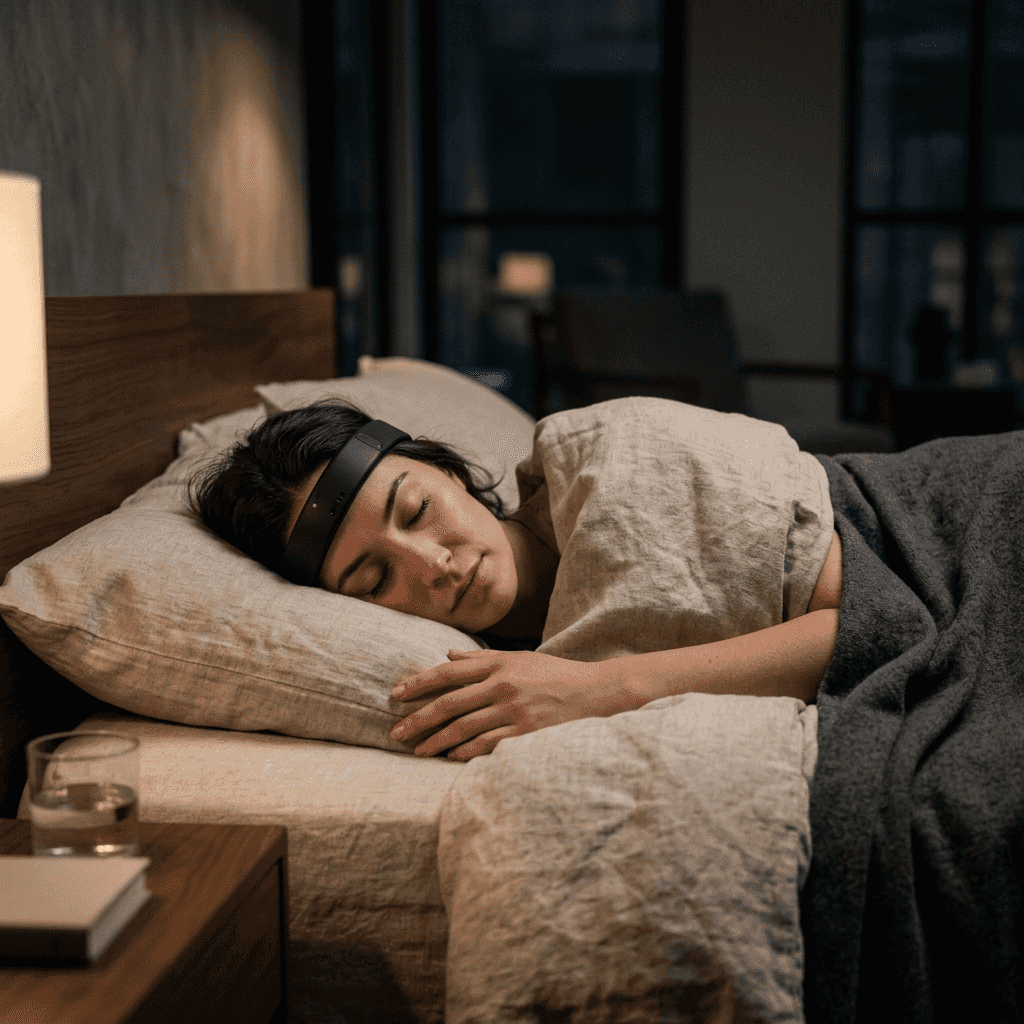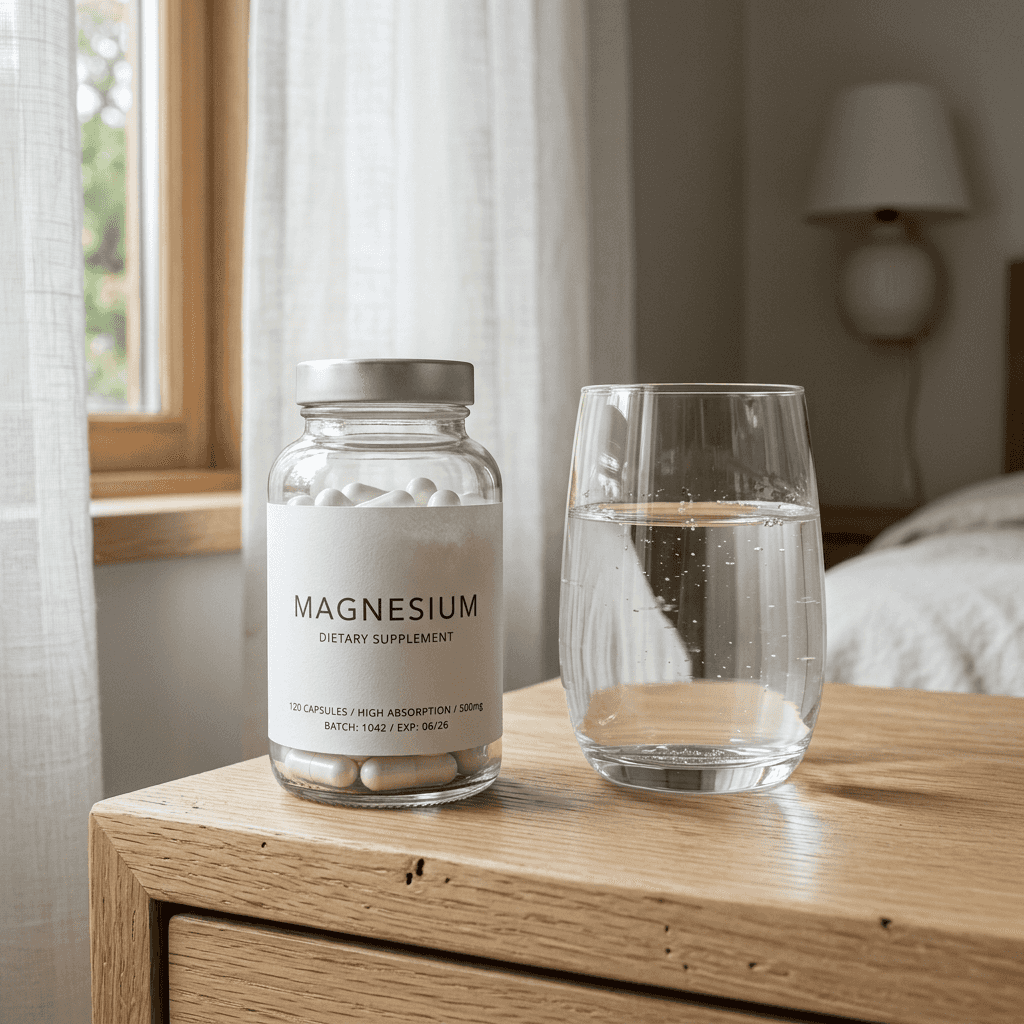
Sleeping like an Olympian is not about having an expensive mattress. It is about changing the air you breathe. When you sleep your body can be tricked into thinking it is at an altitude. This makes your body produce red blood cells and makes your heart stronger. All of this happens while you are resting.
Hypoxic sleep Biohacking: 2026 Core Pillars
-
1.
The HIF-1α Master Switch: When you breathe in oxygen your body starts to change. It makes red blood cells and makes your heart stronger.
-
2.
Erythropoietin (EPO) Surge: When you are in a place with oxygen your body starts to make more EPO. This helps make red blood cells.
-
3.
Mitochondrial. Efficiency: When you are in a place with oxygen for a long time your body starts to make new parts that help turn food into energy.
-
4.
The "Live High Train Low" (LHTL) Paradigm: Sleeping at an altitude and training at a low altitude is a good way to get the benefits of high altitude without the problems.
-
5.
Hypoxic Preconditioning: When you are in a place with oxygen sometimes your body gets stronger and can handle problems like a heart attack.
For a time only athletes who trained at high altitude could get these benefits. Now with technology anyone can sleep at a high altitude and get these benefits. This is called Simulated Altitude sleep Biohacking. It helps your body get stronger and healthier.
This information is about how your body changes when you sleep at an altitude. It talks about how your body makes red blood cells and gets stronger. We will look at how this works and how you can do it at home.
The HIF-1α Pathway: Sensing Low Oxygen Levels
Your body has a way of sensing when there is not enough oxygen. When this happens your body starts to change and get stronger. This is called the HIF-1α pathway.
When you are in a place with oxygen your body starts to make more red blood cells. This is because your body is trying to get oxygen to your muscles. Your body also starts to make parts that help turn food into energy.
Biohacker Pro-Tip: Iron Status is Important
If you want to sleep at an altitude you need to make sure you have enough iron in your body. Iron is important for making blood cells. If you do not have iron you will not get the benefits of sleeping at a high altitude.
ERYTHROPOIETIN (EPO) AND HEMATOLOGICAL ADAPTATIONS
When you sleep at an altitude your body starts to make more EPO. This helps make red blood cells. After a weeks you will have more red blood cells and your body will be able to carry more oxygen.
| Physiological Adaptation | Time Course | Magnitude of Change | Performance Impact |
|---|---|---|---|
| Plasma EPO Elevation | A few hours to days | 2 to 4 times normal | Starts making more red blood cells |
| Increased Hemoglobin Mass | 2 to 4 weeks | +5% to +15% | Better oxygen delivery; VO2 max up 3-6% |
| Muscle Capillarization (VEGF) | 4 to 8 weeks | +10% to +20% capillary density | Improved oxygen extraction; shorter diffusion distance |
| Mitochondrial Efficiency | 3 to 6 weeks | Less ROS per ATP; enhanced PGC-1α | Better metabolic efficiency and fatigue resistance |
| Buffering Capacity (pH) | 1 to 2 weeks | More bicarbonate and carbonic anhydrase | Enhanced tolerance to lactic acid |
MITOCHONDRIAL. Metabolic EFFICIENCY
When you sleep at an altitude your body starts to make new parts that help turn food into energy. This helps your body get stronger and more efficient.
Key Molecular Pathways Activated by Hypoxia
HIF-1α → EPO
Helps make more red blood cells and carry more oxygen.
HIF-1α → VEGF
Helps grow new capillaries in muscles and brain.
AMPK → PGC-1α
Increases the number of mitochondria and improves energy production.
Nrf2 Activation
Boosts the body's own antioxidant defenses (like SOD, Catalase, Glutathione).
Carbonic Anhydrase
Improves CO2 transport and helps keep blood pH balanced.
2,3-DPG Increase
Makes hemoglobin release oxygen more easily to tissues.
THE "LIVE HIGH, TRAIN LOW" (LHTL) PARADIGM
The way to get the benefits of high altitude is to sleep at a high altitude and train at a low altitude. This helps you get stronger without losing your ability to train hard.
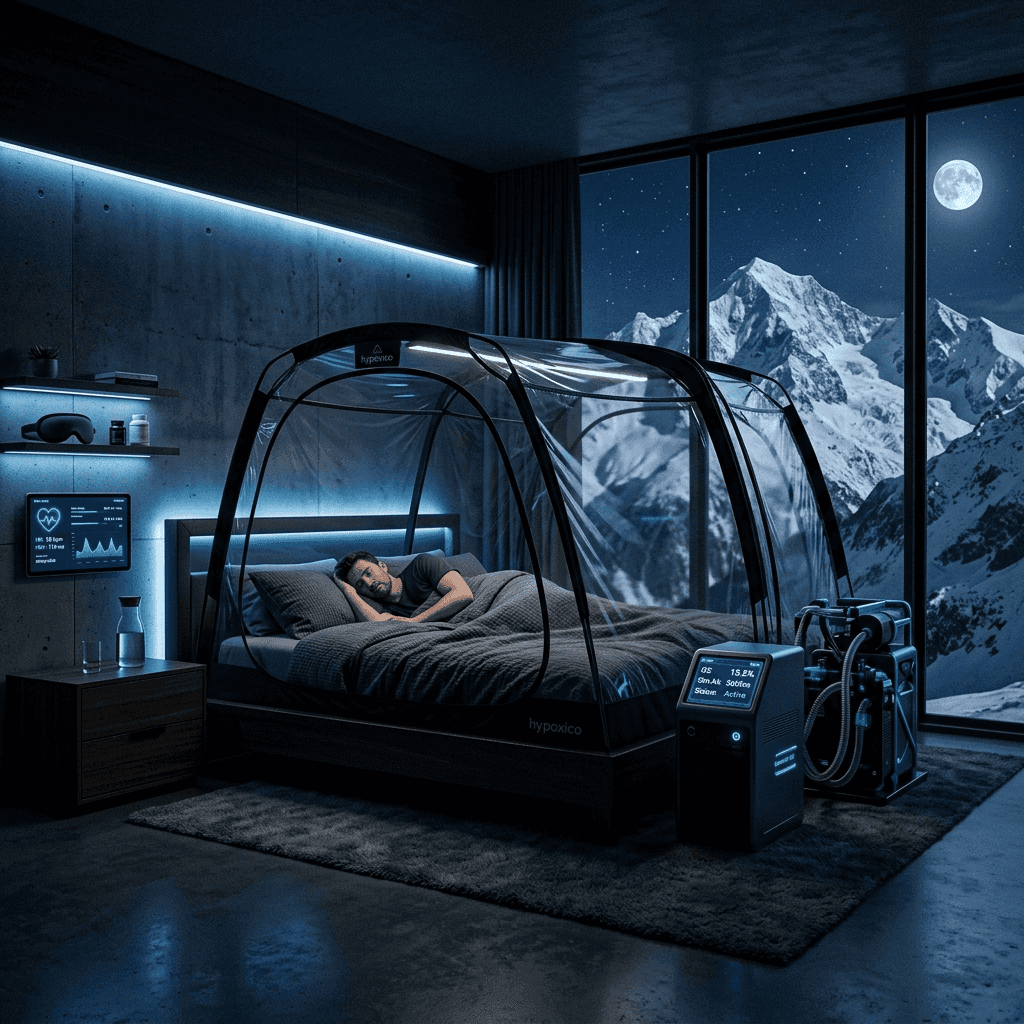
The LHTL model is a way to solve a problem that athletes have. The athlete sleeps in a tent that makes it feel like they are at a high altitude so their body gets used to having less oxygen. This helps their body make red blood cells and get better at using oxygen when they exercise.. When they train they do it at sea level where there is plenty of oxygen. This way they can still do high-intensity workouts. Get the benefits of having more red blood cells.
In 2026 people can use tents at home to sleep at a high altitude and then train at sea level. For example you can sleep in a tent that makes it feel like you are at 9,000 feet. Then you can get out of the tent and do your workout at sea level.
THE LHTL IMPLEMENTATION PROTOCOL
Objective: The goal is to help your body get better at using oxygen and to make red blood cells while still being able to do high-intensity workouts.
- sleeping Altitude: You should set the tent to make it feel like you are at 2500-3000 meters. This is the altitude to help your body make more red blood cells.
- Duration: You should sleep at this altitude for 8-10 hours a night for least 4 weeks. Some athletes sleep at this altitude for 6-8 weeks before a competition.
- Training Location: When you train you should do it outside the tent at sea level. Do not try to do high-intensity workouts inside the tent.
- Iron Management: You should also make sure to take care of your iron levels because your body needs iron to make blood cells.
- Hydration: You should drink plenty of water because sleeping at an altitude can make you dehydrated.
wearables FOR HOME HYPOXIC sleep: TENTS, GENERATORS, AND MONITORING
If you want to sleep in a tent at home you need to have the right equipment. You need a generator that can make the air in the tent feel like it is at a high altitude. You also need a tent that can keep the air inside it. The generator uses technology to remove some of the oxygen from the air so it feels like you are at a high altitude.
| Device Category | Typical FiO2 Range | Simulated Altitude | Primary Use Case | Approx. Cost (2026) |
|---|---|---|---|---|
| Entry-Level Hypoxic Generator | 15% - 12% | 2500m - 4500m | Sleeping intermittent hypoxia | $2,500 - $5,000 |
| High-Flow Generator + Tent System | 15% - 9% | 2500m - 6500m | Serious LHTL for endurance athletes | $6,000 - $12,000 |
| Portable Hypoxic Mask (Training) | Adjustable (9-21%) | Sea Level to 6500m | Intermittent Hypoxic Training (IHT) during rest/low-intensity exercise | $300 - $800 |
You should also have a special device that can monitor your oxygen levels while you sleep. This is important to make sure that you are not getting little oxygen. You should also have a device that can monitor the air in the tent to make sure that it is safe to breathe.
Biohacker Pro-Tip: The Acclimatization Ramp
One thing to remember is to start. Do not try to sleep at an altitude right away. Start at an altitude and gradually increase it over time. This will help your body get used to the altitude and avoid any problems.
HYPOXIC PRECONDITIONING: CARDIAC AND NEUROPROTECTION
Sleeping at an altitude can also be good for your heart and brain. It can help your body get better at dealing with stress. Can even help prevent heart attacks and strokes. This is because your body gets used to having oxygen so it learns to be more efficient at using it.
CONTRAINDICATIONS, SAFETY, AND MONITORING
Sleeping at a high altitude is not for everyone. Some people should not do it because it can be dangerous. For example people with heart disease or lung disease should not sleep at an altitude. People who are pregnant or have sleep apnea should also not do it.. People who smoke should not sleep at a high altitude because it can make their body even more stressed.
- You have serious heart problems (like uncontrolled high blood pressure, previous heart attack, or heart failure).
- You have lung disease (severe COPD, uncontrolled asthma, or history of collapsed lung).
- You have had a stroke or have a brain aneurysm.
- You have sickle cell disease or trait (can trigger a crisis).
- You have untreated sleep apnea.
- You are pregnant.
- You smoke, because it already reduces how much oxygen your blood can carry.
If you do decide to sleep at an altitude you need to be careful. You should monitor your oxygen levels. Make sure that you are not getting too little oxygen. You should also watch for signs of altitude sickness, such, as headaches and nausea. If you get any of these symptoms you should stop sleeping at an altitude and talk to a doctor.
Absolute Safety Requirements for Hypoxic sleep
- Medical Clearance: Talk to a doctor who knows about altitude medicine before starting.
- Pulse Oximetry: Wear a good pulse oximeter every night. Set an alarm if your oxygen drops below 82%.
- CO2 Monitoring: Make sure the tent has enough ventilation and CO2 levels stay below 2000 ppm.
- No Alcohol or Sedatives: Never drink alcohol or take sedatives (like sleeping pills, benzos, opioids) while in the tent.
- Emergency Exit: The tent should have a quick-release zipper so you can get out fast if you feel unwell.
- Partner Awareness: If you sleep with someone, make sure they know how to help you in an emergency.
Safety Notice: Monitoring Nighttime Oxygenation
Exposing the human body to simulated altitude sleep forces adaptation to low oxygen levels. While this triggers the erythropoietin (EPO) cascade and increases capillary density, sleeping in hypoxic tents presents risks. Biohackers must use continuous pulse oximetry tracking to ensure arterial oxygen saturation (SpO2) does not fall below 85% for prolonged periods, which could trigger autonomic distress and sleep fragmentation.
Conclusion: Adapting to Low Oxygen Levels
Sleeping at an altitude is a good way to get healthier and stronger. It helps your body make red blood cells and get more efficient at turning food into energy. This is called Hypoxic sleep Biohacking.
Hypoxic sleep Biohacking is a way to make your body stronger and healthier. It is about sleeping at an altitude and training at a low altitude. This helps you get the benefits of altitude without the problems.
If you follow the safety rules, start slowly, and give your body time to adapt, you can turn your bedroom into a high‑altitude training ground and unlock better endurance, energy, and long‑term health.
Peer-Reviewed Clinical Validations & Extended Foundational Reading:
- HIF-1 and Oxygen Sensing: Semenza, G. L. (2012). "Hypoxia-inducible factors in physiology and medicine." Cell, 148(3), 399-408. Read Review
- Live High, Train Low Meta-Analysis: Bonetti, D. L., & Hopkins, W. G. (2009). "Sea-level exercise performance following adaptation to hypoxia: a meta-analysis." Sports Medicine, 39(2), 107-127. Read Meta-Analysis
- Mitochondrial Adaptations to Hypoxia: Jacobs, R. A., Lundby, C., Robach, P., et al. (2016). "Mitochondrial function in human skeletal muscle following high-altitude exposure." Experimental Physiology, 101(2), 219-229. Read Study
- Iron Requirements for Altitude Adaptation: Govus, A. D., Garvican-Lewis, L. A., Abbiss, C. R., et al. (2015). "Pre-altitude serum ferritin levels and daily iron supplementation predict the erythropoietic response to altitude training." PLoS One, 10(6), e0129841. Read Study
- Hypoxic Preconditioning and Cardioprotection: Mallet, R. T., Manukhina, E. B., Ruelas, S. S., et al. (2018). "Cardioprotection by intermittent hypoxia conditioning: evidence, mechanisms, and therapeutic potential." American Journal of Physiology-Heart and Circulatory Physiology, 315(2), H216-H232. Read Review
- Safety of Intermittent Hypoxic Exposure: Serebrovskaya, T. V., & Xi, L. (2015). "Intermittent hypoxia training as non-pharmacologic therapy for cardiovascular diseases: Practical analysis on methods and equipment." Experimental Biology and Medicine, 240(3), 292-302. Read Review