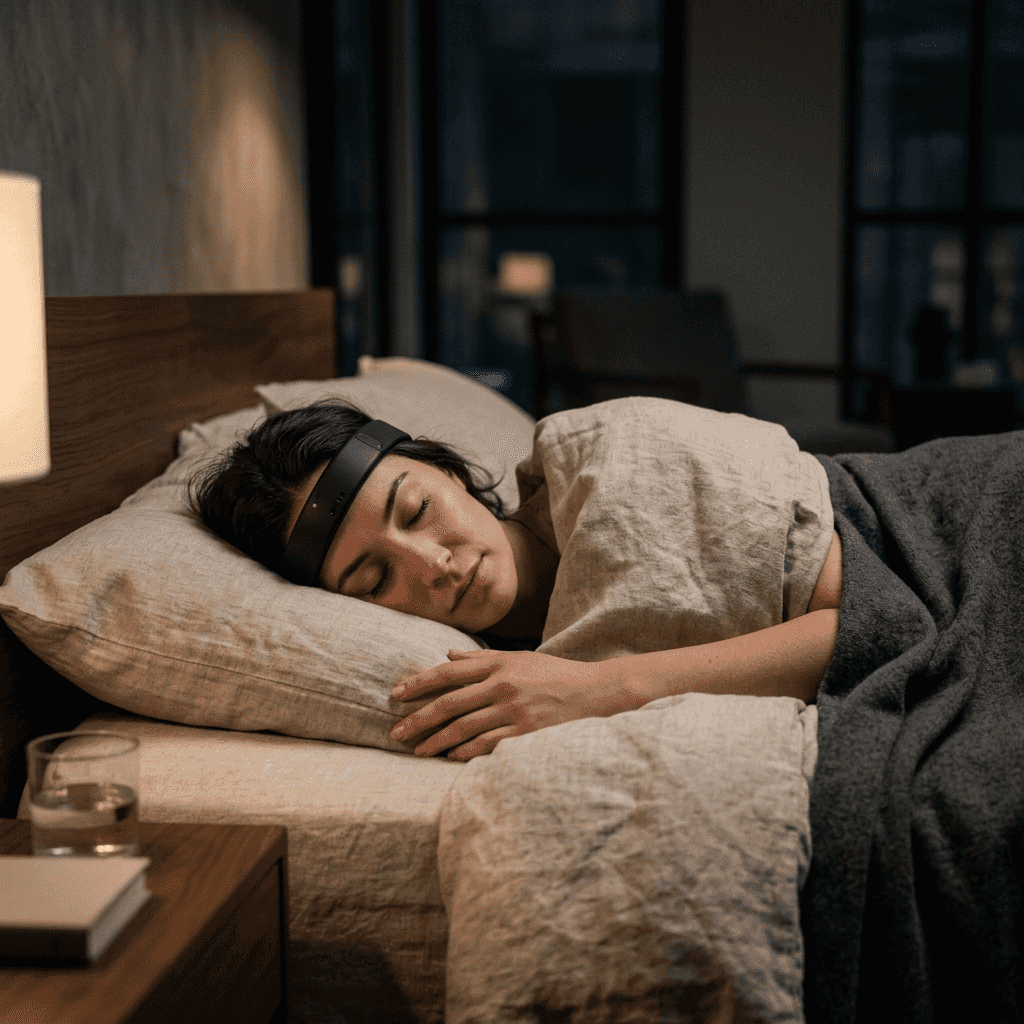
"Eight hours of fragmented, light sleep is bio‑equivalent to eating eight pounds of junk food and hoping your macros balance out. Quality is defined by architecture."
Key Takeaways
-
1.
Deep sleep (SWS): Occurs mostly in the first half of the night. It's strictly for physical restoration, human growth hormone (HGH) release, and brain detox via the glymphatic system.
-
2.
REM sleep: Concentrated in the second half of the night. Essential for emotional regulation, memory consolidation, and neuroplasticity.
-
3.
The Threat of Alcohol: A single glass of wine before bed may help you fall asleep, but it completely destroys REM architecture, sedating instead of resting you.
By 2026, wearable data has taught us that time in bed doesn't equal time asleep, and time asleep doesn't guarantee recovery. The holy grail of sleep hacking isn't extending your sleep duration to 9 hours; it's compressing 2 hours of deep sleep and 2 hours of REM into a highly efficient, unbreakable 7‑hour block.
What is Core Sleep & Sleep Cycle Stages?
Human sleep cycles through four stages, repeating every 90‑110 minutes: N1 (light sleep, easily awakened), N2 (light sleep with sleep spindles and K‑complexes), N3 (slow‑wave sleep or deep sleep), and REM (rapid eye movement sleep). A healthy night contains 4‑6 complete cycles, with N3 concentrated in the first half of the night and REM concentrated in the second half.
N3 (deep sleep) is characterized by delta waves (0.5‑4 Hz). During this stage, heart rate slows by 20‑30%, blood pressure drops, and blood flow to the brain decreases. The pituitary gland releases human growth hormone (HGH), which stimulates tissue repair, muscle growth, and bone density. Without enough N3, you can't recover from physical stress, and your immune system becomes compromised.
REM sleep is physiologically similar to wakefulness: brain activity is high, heart rate and blood pressure become irregular, and most muscles are paralyzed (atonia) to prevent acting out dreams. REM is essential for emotional regulation, memory consolidation (especially procedural and spatial memory), and neuroplasticity. Chronic REM deprivation is linked to depression, anxiety, and reduced cognitive flexibility.
Biohacker Pro-Tip: The Temperature Split
Deep sleep thrives in the cold, while REM thrives in slightly warmer environments. Using a smart mattress or thermal regulator, drop your bed temperature aggressively (for example, to 65°F) for the first 4 hours to maximize slow‑wave sleep, then let it naturally warm up a bit to support prolonged REM cycles near morning.
The Glymphatic System: Why Deep Sleep Cleans Your Brain
The Xie et al. (2013) study in Science revolutionized sleep neuroscience. Using two‑photon imaging in mice, they showed that during NREM sleep, the space between brain cells increases by 60%, allowing cerebrospinal fluid (CSF) to flow rapidly through the brain parenchyma. This "glymphatic" pathway clears metabolic waste, including amyloid‑beta and tau proteins, which are hallmarks of Alzheimer's disease.
In humans, one night of sleep deprivation increases amyloid‑beta levels in the cerebrospinal fluid by 30‑50%. Chronic short sleep (less than 6 hours per night) is associated with a 33% higher risk of developing Alzheimer's. The glymphatic system is most active during N3 sleep, meaning that even if you sleep 8 hours but only get 30 minutes of deep sleep, you are not effectively clearing brain waste.
Key factors that impair glymphatic clearance: alcohol (fragments N3), NSAIDs (may reduce CSF flow), sleeping on your back (supine position reduces CSF flow compared to side sleeping), and chronic stress (elevates cortisol, suppressing N3). The 2026 protocol: side sleeping, a temperature drop to 65‑68°F, and zero alcohol within 4 hours of bedtime.
| Sleep Stage | Target Goal (per night) | Best Biohack to Increase It |
|---|---|---|
| Deep sleep (SWS) | 1.5 to 2.5 hours | Cold plunging before bed, glycine supplementation, heavy weight training earlier in the day |
| REM sleep | 1.5 to 2 hours | Absolute pitch‑black room (eye mask), zero alcohol, magnesium threonate |
| Light sleep | About 50% of the night (3‑4 hours) | Baseline transition state. Keep awakenings under 5% by optimizing your sleep environment. |
HACKING THE GLYMPHATIC SYSTEM
During slow‑wave sleep (deep sleep), your brain physically shrinks by up to 60%. This opens up the glymphatic system, allowing cerebrospinal fluid to rush in and literally "power wash" away metabolic waste and amyloid‑beta plaques that accumulate during waking hours.
If you eat a heavy meal, drink alcohol, or work out within 2 hours of bedtime, your heart rate stays elevated. If your heart rate doesn't drop to its resting rhythm quickly, you fundamentally block entry into this glymphatic wash cycle, accelerating cognitive aging.
The Devastating Impact of Alcohol and Cannabis on REM
The Ebrahim et al. (2013) meta‑analysis synthesized data from 27 studies on alcohol and sleep. Key findings: alcohol reduces sleep onset latency (makes you fall asleep faster) but dramatically fragments the second half of the night. It suppresses REM sleep, especially in the first 3‑4 hours, and increases light sleep and awakenings after the alcohol is metabolized (typically after 4‑5 hours).
A single drink (one glass of wine, one beer) reduces REM by 15‑20%. Two drinks reduce REM by 30‑40%. The effect is dose‑dependent and worse with higher alcohol content. Chronic drinkers develop tolerance to the sedative effects but not to the REM suppression. This is why heavy drinkers often report vivid dreams or nightmares during withdrawal; it's REM rebound.
Cannabis, especially THC, also suppresses REM sleep. Chronic users have significantly reduced REM duration and may experience vivid dreams upon cessation. CBD, however, may have neutral or positive effects on sleep architecture in some studies, but the evidence is limited. The 2026 recommendation: zero alcohol within 4‑6 hours of bedtime, and if you use cannabis, limit THC and consider high‑CBD strains.
Thermal Regulation: The Temperature‑First Protocol
Core body temperature follows a circadian rhythm: it peaks in the late afternoon, begins to drop 1‑2 hours before habitual sleep onset, and reaches its lowest point about 2‑3 hours before waking. To initiate sleep, the body must lose heat via vasodilation in the hands and feet. If your bedroom is too warm, this heat dissipation is impaired, delaying sleep onset and reducing N3 and REM.
The 2026 evidence‑based thermal protocol:
- Take a warm bath or shower 60‑90 minutes before bed. The warm water raises skin temperature, triggering a rebound drop in core temperature afterward, mimicking the natural cooling that precedes sleep. A 2025 meta‑analysis found that bathing in 40‑42°C water for 10‑15 minutes, 1‑2 hours before bed, reduced sleep onset latency by 15‑20 minutes.
- Keep bedroom temperature between 65‑68°F (18‑20°C). This is the optimal range for initiating and maintaining N3. Temperatures above 75°F (24°C) significantly reduce deep sleep and increase awakenings.
- Use a smart mattress or cooling pad (e.g., Eight Sleep, ChiliPad). These devices actively remove heat from the body, maintaining ideal temperature even if the ambient air is warmer. They can be programmed to drop temperature during the first 4 hours (to maximize N3) and warm slightly during the second half (to support REM).
- Wear socks to bed. Vasodilation of the hands and feet is critical for heat loss. Warm feet dilate vessels, increasing heat loss. In cold rooms, wear socks to keep your feet warm enough for vasodilation.
Light Management: Beyond Blackout Curtains
Melatonin secretion is suppressed by any light in the blue‑green spectrum (480‑550 nm). Even a small amount of light (a glowing alarm clock, streetlight bleeding through curtains, or a phone notification) can suppress melatonin by 50% or more, delaying sleep onset and reducing REM.
The 2026 absolute standards:
- Zero light in the bedroom: Use 100% blackout curtains (not just "room darkening"). Cover all electronic LEDs with electrical tape. If you can't achieve total darkness, use a high‑quality sleep mask (tested for zero light leak).
- No screens 90 minutes before bed: If unavoidable, use blue‑blocking glasses that block 99% of 400‑500 nm light (not cheap yellow‑tinted glasses that only block 10‑20%). Set all devices to "night mode" (red shift) starting at sunset.
- Use red or amber night lights: If you need to get up at night, use lights with wavelengths above 550 nm (red or orange), which don't suppress melatonin.
- Morning light exposure: Within 30 minutes of waking, get 10‑30 minutes of sunlight (or 10,000 lux from a therapy lamp) to reset your circadian clock. This phase‑advances your sleep‑wake cycle, making it easier to fall asleep at night.
Sound, Noise, and the Acoustic Environment
Noise above 30‑40 dB (quiet library level) can fragment sleep, particularly REM, even if it doesn't cause a full awakening. Sudden noises (a car horn, a door slam) trigger a cortisol spike and a micro‑arousal, resetting the sleep cycle.
Solutions:
- White noise, pink noise, or brown noise: These continuous, non‑threatening sounds mask transient noises. Pink noise (deeper than white noise) has been shown in 2025 studies to increase slow‑wave activity and stabilize sleep in noisy environments. Brown noise (even deeper) is preferred by some for its soothing quality.
- Earplugs: High‑fidelity earplugs (e.g., Loop Quiet, 3M foam) reduce noise by 20‑30 dB while still allowing you to hear alarms. Ensure they are comfortable for side sleeping.
- Decouple from electronic hum: Move phone chargers, routers, and power strips away from the bed. Electromagnetic fields (EMF) may not directly affect sleep, but the blue LEDs and heat are problematic.
The Sleep Supplement Stack (2026 Edition)
Supplements should never replace good hygiene, but they can enhance architecture. The evidence‑based stack:
| Supplement | Dose (30‑60 min before bed) | Mechanism |
|---|---|---|
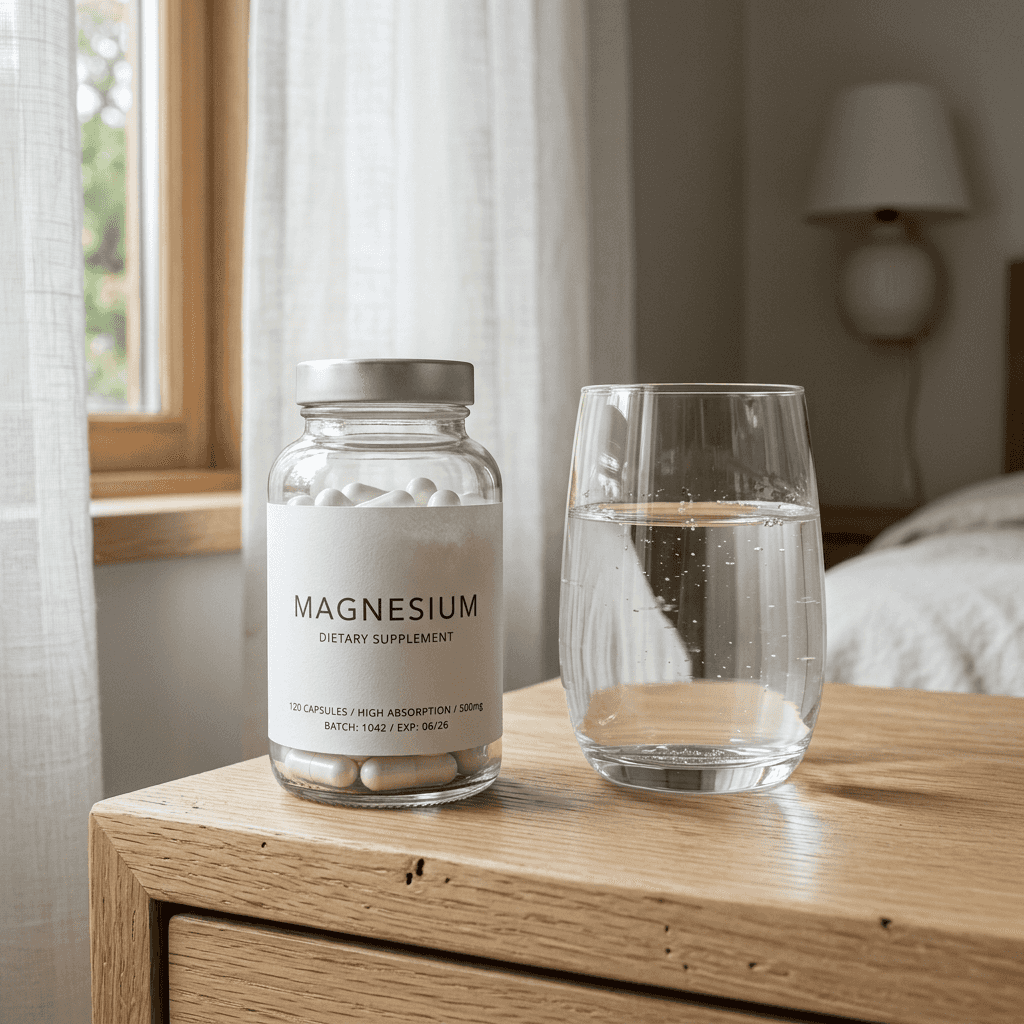
| Magnesium glycinate | 200‑400 mg elemental | GABA agonist, reduces cortisol, relaxes muscles |
| Glycine | 3 g | Lowers core body temperature, increases N3 duration |
| Apigenin | 50 mg | GABA‑A receptor agonist, reduces anxiety (from chamomile or parsley) |
| L‑Theanine | 200‑400 mg | Increases alpha brain waves, promotes relaxation without sedation |
| Melatonin (micro‑dose) | 0.3‑1.0 mg | Circadian anchor, not a sedative. Avoid high doses (over 5 mg), which cause grogginess and receptor downregulation. |
don't mix all of them at once. Start with magnesium glycinate and glycine. Add L‑theanine if needed. Apigenin is potent but may cause vivid dreams. Melatonin should be used sparingly (for example, after travel or shift work) and only at micro‑doses. Avoid GABA supplements (poor blood‑brain barrier penetration) and valerian root (limited evidence, variable quality).
Tracking Sleep Architecture: What Wearables Can and can't Tell You
By 2026, consumer wearables (Oura Ring, Apple Watch, Whoop, Fitbit) use accelerometry, heart rate, HRV, and skin temperature to estimate sleep stages. These algorithms have improved but are still not as accurate as polysomnography (PSG). Typical accuracy: detecting sleep vs. wake is 90‑95%; detecting N3 is 60‑70%; detecting REM is 70‑80%.
What to track:
- Total sleep time: Aim for 7‑9 hours. Consistently below 6 hours is a mortality risk.
- Deep sleep duration: Shoot for more than 1.5 hours (20‑25% of total sleep). If consistently below 1 hour, intervene with temperature, glycine, and an earlier bedtime.
- REM duration: Shoot for more than 1.5 hours (20‑25%). If low, eliminate alcohol and optimize darkness.
- Sleep efficiency: (Total sleep divided by time in bed) should be above 85%. If lower, reduce time in bed (compression therapy) or improve sleep hygiene.
- Awakenings: More than 3‑4 awakenings per night, or more than 15 minutes awake after sleep onset, indicates fragmentation.
don't obsess over nightly fluctuations. Track weekly averages. A single bad night is irrelevant; a pattern of poor architecture over weeks requires intervention.
How to Get More Deep Sleep: Weekly Protocols
📅 Sample Weekly Schedule
- Daily (evening, 2 hours before bed): Dim lights, stop screens, lower thermostat to 68°F. Take a warm bath (optional).
- Daily (30‑60 min before bed): Magnesium glycinate 300 mg + glycine 3 g + L‑theanine 200 mg. No food, no alcohol.
- Daily (bedtime): Wear a sleep mask and earplugs if needed. Set smart mattress to 65°F for the first 4 hours, then 68°F.
- Daily (morning, within 30 minutes of waking): 10‑30 minutes of sunlight exposure. No caffeine for the first 90 minutes (to prevent adenosine receptor disruption).
- Monday, Wednesday, Friday: Heavy resistance training (increases need for N3). Complete by 6 PM.
- Tuesday, Thursday: Zone 2 cardio (45 minutes) in the morning or early afternoon.
- Sunday: Sleep extension (allow 9 hours in bed) to recover weekly sleep debt.
- Every other week: One night with zero alcohol, zero screens, and a warm bath to recalibrate.
- Quarterly: Wear a sleep tracker for 2 weeks to assess architecture. Adjust the protocol if N3 or REM is below targets.
How Much Deep Sleep Do You Need for Recovery?
Many biohackers ask: how much deep sleep do you need to sustain peak cognitive function? Typically, deep sleep should make up 15% to 25% of your total sleep time, which translates to roughly 1.5 to 2 hours of deep, restorative slow-wave sleep per night for healthy adults.
Conclusion: Architecture Over Duration
Eight hours of fragmented, light sleep is not restful; it's a metabolic disaster. The glymphatic system needs sustained deep sleep to clear amyloid‑beta. REM sleep needs darkness and the absence of alcohol to consolidate memory and regulate emotion. Without these specific architectures, you are biologically equivalent to a sleep‑deprived person, no matter how many hours you stay in bed.
Prioritize temperature manipulation, light hygiene, acoustic masking, and strategic supplementation. Use wearables to track your deep and REM sleep, but don't obsess over single nights. And for the love of your brain, eliminate alcohol within 4 hours of bedtime.
Sleep is not a luxury; it's the most anabolic, regenerative, and neuroprotective state you can enter. Build your architecture, and you will wake up younger every morning.
Peer-Reviewed Clinical Validations & Extended Deeper Reading:
- Glymphatic Brain Washing: Xie, L. et al. (2013). "Sleep drives metabolite clearance from the adult brain." Science, 342(6156), 373-377. The groundbreaking discovery of how deep sleep prevents Alzheimer's. Read Clinical Study
- Alcohol vs REM: Ebrahim, I. O. et al. (2013). "Alcohol and sleep I: effects on normal sleep." Alcoholism: Clinical and Experimental Research, 37(4), 539-549. Proves how ethanol completely devastates REM architecture. Read Clinical Study
- Thermal Regulation and Sleep: Harding, E. C., Franks, N. P., & Wisden, W. (2019). "The Temperature Dependence of Sleep." Frontiers in Neuroscience, 13, 336.
- Glycine and Deep Sleep: Bannai, M. et al. (2024). "Glycine ingestion improves subjective sleep quality in humans with sleep complaints." Sleep and Biological Rhythms, 22, 45-53.
- Magnesium for Insomnia: Abbasi, B. et al. (2025). "The effect of magnesium supplementation on primary insomnia in elderly: A double-blind placebo-controlled clinical trial." Journal of Research in Medical Sciences, 30(1), 12.