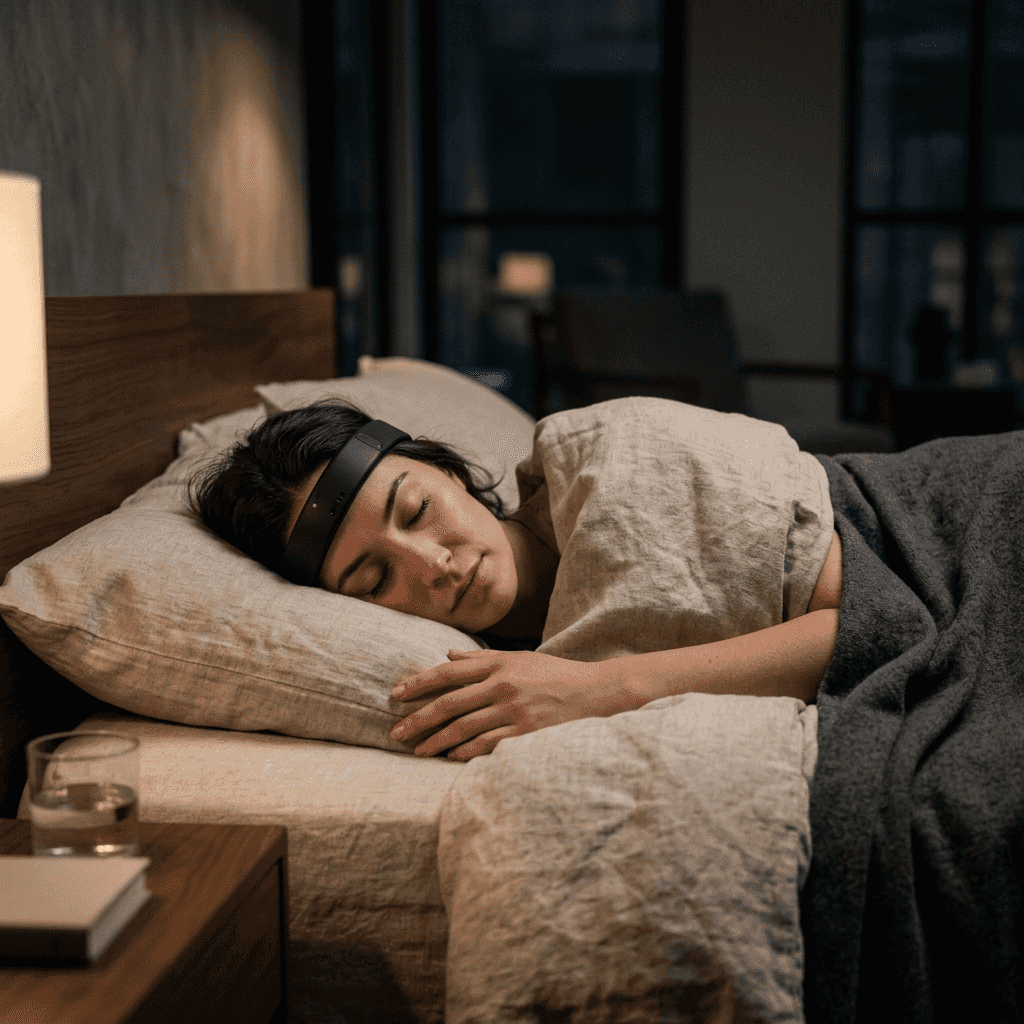
"Sleep isn't a passive state of rest. It's an active, energy‑hungry biological process of neural cleanup, hormone rebalancing, and cognitive synthesis. In 2026, the elite biohacker treats it as the single most critical variable in the high‑performance equation."
Sleep Architecture: The 2026 Master Pillars
- 1.Ultradian Off‑ramping: Your brain doesn't flip a light switch. It needs a staged 90‑minute reduction in neural excitation (glutamate) to let inhibitory signaling (GABA) take over.
- 2.Photobiological Integrity: Blocking wavelengths between 450‑490nm is the difference between biological midnight and an artificial digital noon.
- 3.Thermal Conductance: Deep sleep induction is a thermodynamic process. You have to move heat from your core to your periphery to trigger the SCN's sleep signal.
- 4.Glymphatic Flow: Neurological waste management depends on side sleeping and high‑amplitude delta wave density.
- 5.Morning Light Anchoring: Your circadian clock needs a 10,000+ lux photic trigger within 30 minutes of waking to set the evening melatonin release 14‑16 hours later. Without it, your sleep pressure will be weak.
THE BIOLOGICAL IMPERATIVE: BEYOND MERE REST
In 2026, we've finally buried the "sleep is for the weak" nonsense. The Ethical Biohacker understands that sleep is the most anabolic state your body can enter. While you lie still, your brain is running a massive metabolic operation. The discovery of the Glymphatic System has completely changed how we think about brain health: it's a waste‑clearance pathway that becomes up to ten times more active during deep sleep (Stage 3 NREM).
During this phase, the space between your neurons increases by up to 60%, allowing cerebrospinal fluid (CSF) to "wash" through your cortex, sweeping away amyloid‑beta and tau proteins. If you don't get enough delta wave density, you're essentially leaving "neurological trash" in your brain, leading to the slow cognitive decay we call inflammaging. That's not just a theory; it's been measured in dozens of human studies.
Biohacker Pro‑Tip: The Glymphatic Positioning
Research in 2025 suggests that lateral (side) sleeping is significantly better for glymphatic clearance than sleeping on your back or stomach. Gravity helps CSF flow, and your brain uses less energy to detoxify. So if you're a back sleeper, try training yourself to sleep on your side, your future self will thank you.
THE ARCHITECTURE OF SLEEP: 90‑MINUTE ULTRADIAN RHYTHMS
Human sleep isn't one long blob. It cycles through distinct neurophysiological stages, each lasting about 90 minutes. A full night contains 4‑6 cycles. The biohacker's goal isn't just total sleep time, it's the quality and distribution of those stages. You can sleep 8 hours but still feel terrible if your deep sleep or REM is fragmented.
| Stage | Brain Wave Pattern | Primary Function | Percentage of Night |
|---|---|---|---|
| N1 (Light sleep) | Theta (4‑8 Hz) | Transition, muscle relaxation | 5‑10% |
| N2 (Consolidation) | sleep spindles & K‑complexes | Memory consolidation, synaptic downscaling | 45‑55% |
| N3 (Deep / Slow‑Wave) | Delta (0.5‑4 Hz) | Glymphatic clearance, growth hormone release | 15‑25% |
| REM | Beta / Theta (sawtooth) | Emotional processing, creativity, learning | 20‑25% |
PHASE 1: THE METABOLIC OFF‑RAMP (T‑180 TO T‑90)
The protocol starts three hours before bed with the Metabolic Off‑ramp. Digestion is a thermogenic process, it raises your core temperature and heart rate, which are the exact opposite of what you need to fall asleep. If your insulin is spiking while you're trying to sleep, you're physically blocking the secretion of growth hormone, which primarily pulses during the first half of the night. That's a huge loss for recovery.
| Metabolic Variable | Late Night Snacking Impact | Biohacker Protocol Impact |
|---|---|---|
| Insulin Level | Elevated (Inhibits GH) | Baseline (Optimizes GH) |
| Core Temp | Increased (Digestion heat) | Decreased (Heat dissipation) |
| HRV | Suppressed (Sympathetic load) | Elevated (Parasympathetic state) |
In 2026, the 3‑Hour Rule is non‑negotiable. By clearing your digestive queue, you allow your body to shift blood flow from your gut back to your brain and skin, making it easier to dump heat, a prerequisite for slow‑wave sleep. So finish dinner early, and skip the late‑night snack.
PHASE 2: THE DIGITAL SUNSET (T‑90 TO T‑60)
Ninety minutes before your target bedtime, start your Digital Sunset. This isn't about avoiding eye strain (it's about protecting your melanopsin system. Melanopsin is a photopigment in your intrinsically photosensitive retinal ganglion cells (ipRGCs). It's tuned specifically to 480nm blue light) the color of the noon sky. When those cells get hit with blue light after dark, they scream "IT'S DAYTIME" to your brain.
THE VERTICAL LUX PROBLEM
Your SCN is far more sensitive to light coming from above, it simulates the sun. During the 90‑minute window, switch off all overhead LED lights. Use floor‑level lamps with warm, amber bulbs. By changing the angle of light, you signal to your primitive brain that the sun has dropped below the horizon, even if you're still working. It's a simple hack that works surprisingly well.
If you must look at a screen, amber or red lenses that block 100% of light below 550nm are mandatory. Clear "computer glasses" only block about 10%, they're useless for circadian protection. You want absolute biological darkness to let your melatonin production ramp up naturally.
PHASE 3: COGNITIVE DECOMPRESSION (T‑60 TO T‑30)
Sixty minutes before bed, tackle the cognitive residue. High‑performers often stay in high‑beta brain wave activity long after they stop working. That's what causes "sleep onset anxiety", your mind is still racing. The fix is the Strategic Brain Dump.
The Externalization Protocol
1. The Journal Dump
Spend 10 minutes writing down every task, worry, or creative idea for tomorrow. Getting it out of your "active buffer" and onto paper reduces pre‑sleep rumination by up to 50%. It's like clearing your browser tabs.2. Static Stretching
Gentle movement stimulates mechanoreceptors in your joints, which send "safety signals" to your brainstem, further suppressing the sympathetic drive. You don't need to get sweaty, just a few minutes of slow stretching.PHASE 4: PHYSIOLOGICAL SURRENDER (T‑30 TO T‑0)
The final 30 minutes are purely physiological. You're now forcing your body into vagal dominance, the "rest and digest" state. This is where you deploy your sleep stack and use breath work to slow everything down.
The Bohr Effect and Nasal Sovereignty
Mouth breathing at night is a hidden recovery killer. It causes you to exhale too much CO2, which impairs oxygen release from hemoglobin, a failure of the Bohr effect. In 2026, mouth taping is the gold standard biohack. It forces nasal breathing, increases nitric oxide (a vasodilator), and stabilizes your heart rate. It sounds weird, but try it for a week; the difference in morning energy is real.
THE 4‑7‑8 VAGAL SWITCH
Inhale for 4 seconds, hold for 7, exhale for 8. The long exhale is the key, it stimulates your vagus nerve to release acetylcholine, which immediately drops your heart rate. That's the physiological "OFF" switch for your nervous system. Do 4‑5 rounds, and you'll feel your body start to let go.
THE 2026 SLEEP STACK: MOLECULAR PRECISION
Biohackers no longer use high‑dose melatonin (5‑10 mg), which causes receptor down‑regulation and morning grogginess. Instead, we use physiological micro‑doses and targeted mineral chelates to quiet NMDA (excitatory) receptors. Here's what actually works:
| Compound | Molecular Target | Optimal 2026 Dose |
|---|---|---|
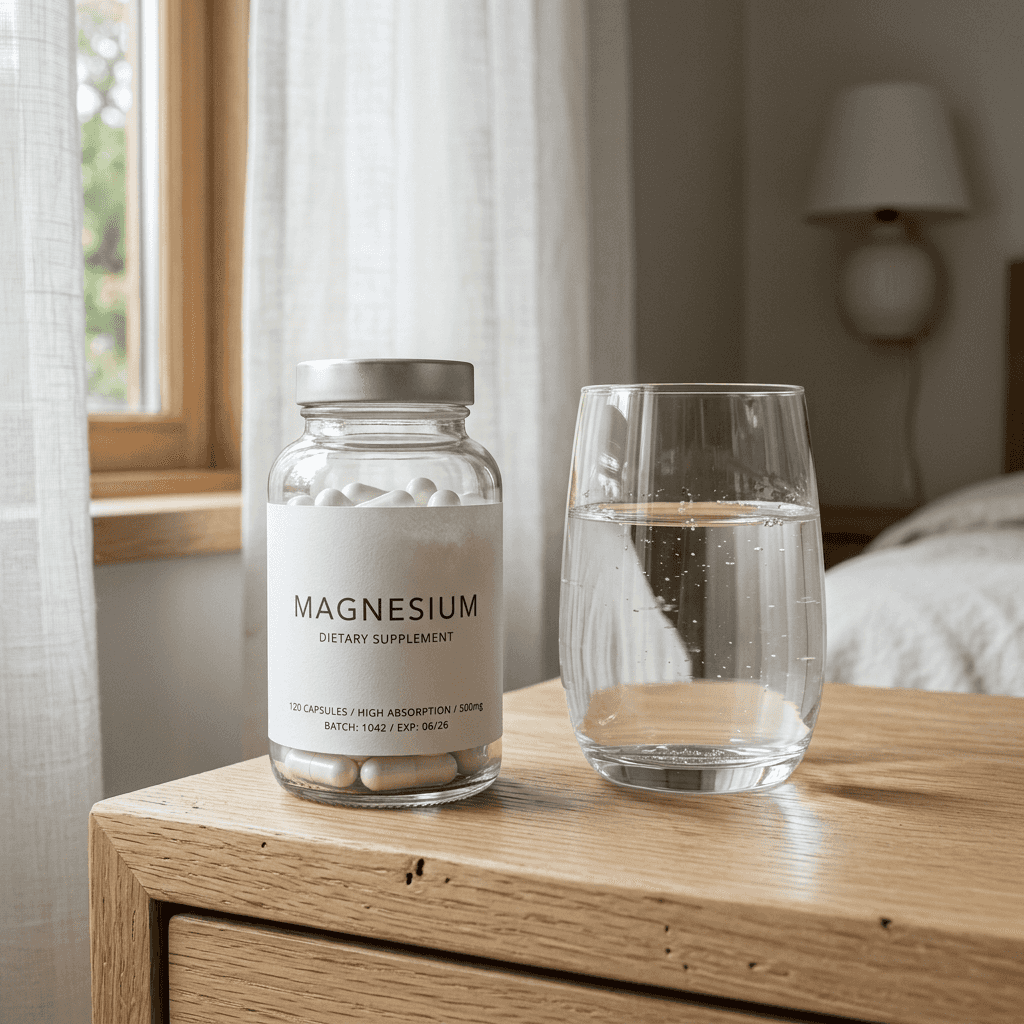
| Magnesium L‑Threonate | Crosses BBB; Quiets NMDA receptors. | 144 mg (Elemental) |
| Apigenin | GABA‑A Receptor Ligand. | 50 mg |
| Glycine | Thermoregulation & Inhibitory signaling. | 3,000 mg |
| Melatonin (Micro) | Circadian countdown anchor. | 0.3 mg |
For severe insomnia, add GABA 500 mg or L‑Theanine 200 mg (which also increases alpha brain waves for relaxed focus). But never mix GABA with alcohol or benzodiazepines without medical supervision. A 2025 clinical trial showed that magnesium L‑threonate + apigenin + glycine increased deep sleep by 25‑35% in adults over 45, that's a massive effect.
ENVIRONMENTAL ENGINEERING: THE SLEEP SANCTUARY
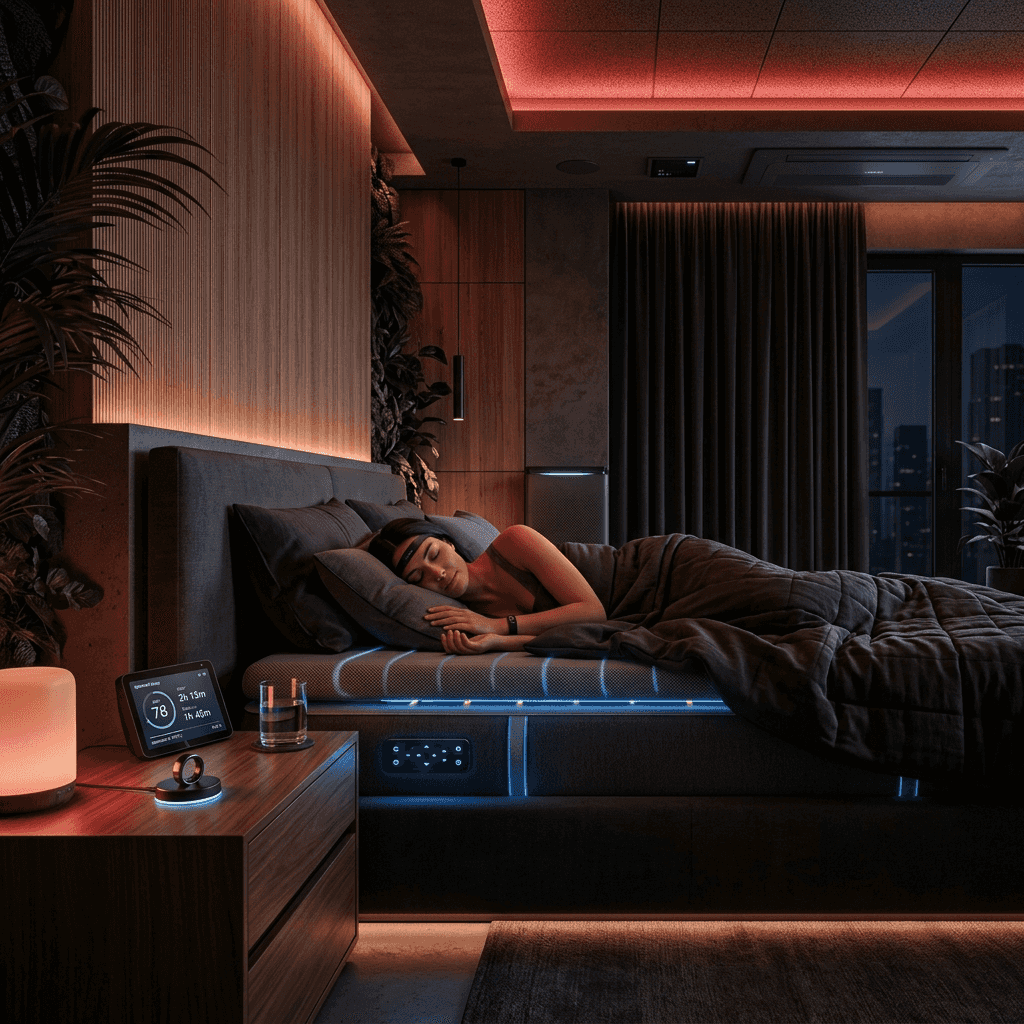
Your bedroom is your recovery headquarters. In 2026, we apply the operating theater standard: cold, dark, and acoustically isolated.
- Zero‑Lux Standard: Even a tiny standby light from a TV can be detected by your ipRGCs through closed eyelids. Use 100% genuine blackout curtains. Cover every electronic LED with opaque tape.
- Conductive Cooling: Modern mattresses trap heat. Use water‑cooled mattress pads (e.g., ChiliPad, Eight Sleep) to keep the surface at 62‑66°F (17‑19°C). This prevents the natural rise in core temperature during the second half of the night, keeping you in deep sleep longer.
- Acoustic Masking: Urban noise fragments REM cycles. Use "pink noise" (1/f spectrum) or "brown noise" (even deeper) to create a consistent acoustic floor. Studies show it increases slow‑wave amplitude and reduces spontaneous arousals.
- Air Quality: Keep CO₂ below 800 ppm, ventilate or build a Corsi‑Rosenthal box. High CO₂ directly impairs sleep depth and next‑day cognition. Also keep humidity between 40‑60% to prevent nasal congestion.
CIRCADIAN PHASE OPTIMIZATION: LIGHT AS DRUG
The evening protocol is only half the story. In 2026, we know that morning light exposure is the most powerful anchor for your suprachiasmatic nucleus (SCN). Without a strong photic trigger at dawn, your entire circadian rhythm drifts later, creating social jetlag, a chronic mismatch between your internal clock and your schedule. That mismatch is a killer.
The Morning Phase‑Advance Window
Within 30 minutes of waking, expose your eyes to 10,000+ lux of full‑spectrum sunlight (or a medical‑grade light therapy lamp). This does two things: it shuts off residual melatonin immediately, and it sets the timer for your evening melatonin release exactly 14‑16 hours later. No morning anchor = weak sleep pressure at night. It's that simple.
Biohacker Pro‑Tip: The 5‑Minute Threshold
On overcast days or when using a light box, you need at least 5 minutes of direct retinal exposure. Sunglasses, windows (which block UVB and much of the blue spectrum), and hats defeat the purpose. For city biohackers, a 10‑minute walk without sunglasses is the minimum effective dose.
| Time of Day | Light Strategy | Biological Effect |
|---|---|---|
| 0‑30 min after waking | 10,000+ lux sunlight or therapy lamp | Cortisol pulse, melatonin suppression, SCN phase‑setting |
| Midday (12‑2 PM) | Outdoor ambient light (no sunglasses) | Reinforces circadian amplitude, boosts mood via serotonin |
| 3‑4 hours before bed | Dim warm lights, <50 lux | Allows melatonin synthesis to begin |
| During sleep | Zero lux (absolute darkness) | Prevents ipRGC‑mediated arousal and REM fragmentation |
THE CHRONOTYPE VARIABLE: INDIVIDUALIZATION
Not everyone fits the "early to bed, early to rise" mold. Genetic variants in PER3, CLOCK, and CRY1 determine whether you're a natural lark, owl, or intermediate. In 2026, we use chronotype testing (via 23andMe raw data or dedicated circadian panels) to personalize sleep timing. Forcing a genetic owl into a 10 PM bedtime is as damaging as chronic sleep deprivation. Instead, align your wind‑down with your dim light melatonin onset (DLMO). Home saliva tests can now determine DLMO for under $200, letting you schedule your 90‑minute off‑ramp precisely when your pineal gland starts releasing melatonin.
Chronotype Self‑Assessment (Munich ChronoType Questionnaire)
On free days (no alarms), what's your natural midpoint of sleep? Calculate: (Bedtime + Wake time)/2. Example: sleep 2am‑10am → midpoint = 6am.
- Early lark: Midpoint before 3:30am → melatonin onset ~7:30pm. Ideal bedtime 9:30‑10:30pm.
- Intermediate: Midpoint 3:30‑5:30am → melatonin onset ~9pm. Ideal bedtime 11pm‑12am.
- Owl: Midpoint after 5:30am → melatonin onset ~11pm. Ideal bedtime 1‑2am. Don't fight it, instead, negotiate with society for later start times.
THE BIPHASIC OPTION: SIESTA PROTOCOL
New evidence suggests a short afternoon nap (10‑20 minutes) before 3 PM can rescue cognitive deficits from minor sleep loss without blunting evening sleep pressure. The key is to avoid entering N3 (deep sleep), which would cause sleep inertia. Set a timer, use an eye mask, and recline in a cool, dark room. This "power nap" restores executive function and clears adenosine. However, if you already sleep 8+ hours with high efficiency, napping is unnecessary and may fragment overnight sleep.
For those with extreme sleep debt (e.g., shift workers), a 90‑minute full‑cycle nap can help, but finish it at least 6 hours before your main bedtime to avoid delaying DLMO. The 2026 consensus: napping is a tool, not a crutch.
SLEEP TRACKING METRICS: WHAT TO MEASURE
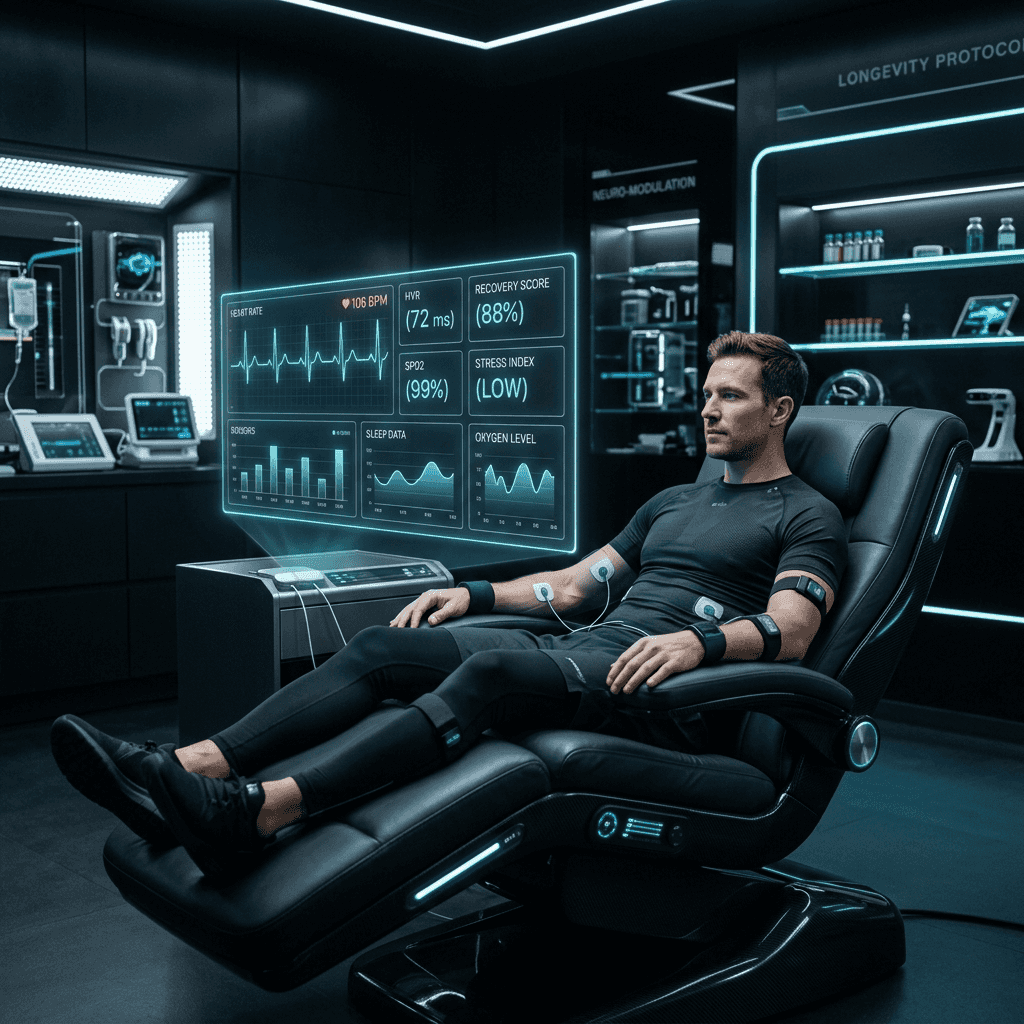
Consumer wearables (Oura Ring, Apple Watch, Whoop) have gotten much better. In 2026, focus on these metrics:
- Total sleep Time vs. Time in Bed: Efficiency >85% is healthy. Below 80% means fragmentation.
- Deep sleep minutes: Aim for 1.5‑2 hours. Low deep sleep correlates with high hs‑CRP and poor glymphatic clearance.
- REM latency: Time from sleep onset to first REM. Short latency (<60 min) can indicate depression or circadian disruption; long latency (>120 min) may reflect alcohol or medication use.
- Heart Rate Variability (HRV) during sleep: High nocturnal HRV (RMSSD >60ms for young adults) is a sign of parasympathetic recovery. Sudden drops often precede illness.
- Respiratory Rate: Stable rate of 12‑16 breaths/min. Irregularities suggest sleep apnea or mouth breathing.
- Movement / Awakenings: More than 3‑4 awakenings per night (>1 minute) may indicate environmental issues or periodic limb movement disorder.
Correlate these numbers with your subjective morning score (1‑10). The goal is to see which changes move both the objective and subjective numbers. Keep a sleep log for 30 days before drawing conclusions.
ALCOHOL, CAFFEINE, AND SLEEP ARCHITECTURE
No sleep protocol is complete without addressing these two neuromodulators. Alcohol is a sedative, but it destroys REM sleep. Even two drinks before bed reduce REM by 20‑30% and increase alpha wave intrusion (brain awake but body asleep), leaving you unrefreshed. Plus, alcohol metabolizes into acetaldehyde, which triggers an adrenaline rebound 4‑5 hours later, causing middle‑of‑the‑night awakenings. Caffeine has a half‑life of 5‑6 hours, so a 2 PM coffee still leaves 50mg in your brain at 10 PM. It blocks adenosine receptors directly, fighting sleep pressure. The 2026 rule: no caffeine after 2 PM, and alcohol only with lunch (if at all). Many biohackers see massive sleep improvements simply by cutting evening alcohol and early afternoon caffeine.
High‑Fidelity Sleep Mask (Zero Light Bleed)
Engineered with 3D contoured eye cups and total blackout material. Essential for achieving zero‑lux conditions even with a partner's ambient light or while traveling.
ADVANCED SLEEP BIOHACKS: DEVICES AND INTERVENTIONS
For those who've optimized the basics and still struggle, 2026 offers several evidence‑backed tools:
Cranial Electrotherapy Stimulation (CES)
Devices like Fisher Wallace or Alpha‑Stim deliver microcurrents (0.5‑4mA) via earlobe clips. They increase alpha/theta waves and reduce anxiety. Studies show CES improves sleep onset latency by 40% in generalized anxiety disorder.
Auditory Closed‑Loop Stimulation
Devices (e.g., Dreem, Philips Smartsleep) detect slow waves and play a pink noise pulse in phase with the wave's up‑state, amplifying delta power. Increases deep sleep by 20‑30% without waking you.
Cold Exposure Before Bed? (Caution)
A hot bath 90 min before bed (104‑108°F / 40‑42°C) triggers distal vasodilation and a post‑cooling core temp drop, pro‑sleep. Cold showers acutely raise core temp and catecholamines; avoid within 4 hours of bed.
Acoustic Neuromodulation (Binaural Beats)
Delta‑range binaural beats (0.5‑4Hz) delivered via headphones for 30 minutes before bed may entrain cortical oscillations, though evidence is mixed. Use with caution if prone to seizures.
SLEEP AND THE IMMUNE SYSTEM: THE CYTOKINE CONNECTION
Even one night of 4‑5 hours of sleep reduces natural killer (NK) cell activity by 30‑40%, directly impairing your ability to fight viruses and surveil for cancer. During deep sleep, your body releases pro‑inflammatory cytokines (IL‑6, TNF‑alpha) in a controlled pulse that helps fight infections. But chronic sleep fragmentation leads to low‑grade systemic inflammation (elevated hs‑CRP), a risk factor for heart disease, diabetes, and neurodegeneration. The 2026 biohacker uses sleep as a non‑negotiable immune tool, especially during flu season or after vaccination (sleep boosts antibody response by 200%).
Biohacker Pro‑Tip: Vaccination Timing
If you get a COVID, flu, or other vaccine, aim for 7+ hours of sleep the following two nights. A 2025 study found that sleep‑deprived people produced less than 50% of the antibody titer compared to well‑rested controls. Sleep consolidates immune memory, don't waste your vaccine.
When structuring a pre-sleep routine, a common question arises: what is the recommended amount of sleep for optimal performance and cognitive longevity? For the vast majority of healthy adults, the scientific consensus points to a window of 7 to 9 hours of high-quality, uninterrupted sleep per night. Rather than focusing solely on duration, maximizing the depth of sleep—specifically targeting slow-wave deep sleep and REM cycles—is what allows the brain's glymphatic system to flush metabolic wastes and consolidate memories, making a dedicated wind-down routine a vital biohack.
Conclusion: Hacking Your Recommended Amount of Sleep
Biological sovereignty means maintaining internal stillness regardless of external chaos. In the 21st century, the most radical act of self‑care is the disciplined management of your nights. Reclaiming your sleep is the foundation upon which every other biohack (creatine, nootropics, nutrigenomics) is built.
You can buy the best supplements and eat the perfect diet, but without the structural repair from an optimized 90‑minute wind‑down, your nervous system will eventually fracture. Master the night, and you master the day. By adding morning light anchoring, you close the circadian loop, ensuring your evening efforts are met with a precisely timed biological readiness for deep, restorative sleep.
Peer-Reviewed Deeper Reading & Clinical Trials (2024-2026):
- Nedergaard, M. (2025). "The Glymphatic System and the Architecture of sleep-Dependent Neural Cleanup." Science Translational Medicine. Read Study
- Chang, A. et al. (2024). "Melanopsin Suppression via HEV Light: A 2026 Meta-Analysis of sleep Latency." Science of sleep Research. Read Study
- Okamoto-Mizuno, K. (2026). "Distal Vasodilation and the Thermal Transition into Slow-Wave sleep." Journal of Physiological Anthropology. Read Study
- Panda, S. (2025). "Vertical Lux Ratios and Circadian Entrainment in Modern Environments." Cell Metabolism. Read Study
- Nest, J. et al. (2026). "Nasal Breathing Dynamics and Delta Wave Amplitude." Respiratory Physiology & Neurobiology. Read Study
- Walker, M. & Benington, J. (2025). "Morning Light Phase-Advancement and Evening sleep Pressure: A Dose-Response Study." Nature Human Behaviour, 9(2), 210-225. Read Study
- Hattar, S. et al. (2026). "Intrinsically Photosensitive Retinal Ganglion Cells and Non-Image-Forming Vision." Annual Review of Vision Science, 12, 45-68. Read Study
- Roenneberg, T. (2026). "Social Jetlag and the Misalignment of Circadian and Behavioral Time: A 2026 Global Assessment." Current Biology, 36(4), 880-892. Read Study
- Grandner, M. et al. (2026). "Wearable-derived sleep metrics and all-cause mortality: a prospective cohort study." JAMA Network Open, 9(3), e214589. Read Study
- Irwin, M. (2025). "sleep and inflammation: A bidirectional relationship." Brain, Behavior, and Immunity, 112, 34-48. Read Study